
The new Anti-Agricultural Economic Sabotage Act to be signed by President Marcos Jr today replaces Republic Act No. 10845 by broadening its scope and imposing stricter penalties for hoarding, profiteering, and cartel operations in the agricultural sector. However, farmers’ groups remain skeptical if the new law will indeed curb and punish big-time agricultural smugglers, hoarders and profiteers. ”Given the intent of this legislation, we are yet to see if it will effectively curb agricultural smuggling or if it will mirror existing laws, which have failed to identify, arrest, and prosecute major smugglers and hoarders,” stated the farmers’ group Kilusang Magbubukid ng Pilipinas (KMP). Ramos added: Sa kalakaran ngayon ng todong liberalisasyon ng agrikulura, kakambal ng importasyon ang malakihang smuggling.
Current anti-smuggling laws have proven inadequate in addressing rampant smuggling, hoarding, and price manipulation in agriculture. “Local farmers and food producers continue to suffer due to the unchecked actions of criminal organizations within the sector,” said Danilo Ramos, KMP chairperson.
Under the new law, agricultural smuggling, hoarding, profiteering, cartel operations, and financing of these crimes are classified as acts of economic sabotage, carrying penalties of life imprisonment and fines amounting to three times the value of the agricultural and fishery products involved. Those aiding these crimes, such as through the transport and storage of smuggled goods, face penalties of 20 to 30 years in prison and fines equal to twice the value of the products.
A bill introduced by Makabayan representatives in the 19th Congress proposed lowering the threshold for large-scale rice smuggling from PhP10 million to PhP1 million and recognized hoarding, profiteering, and cartel operations as forms of economic sabotage.
“While this new law aims to protect farmers’ livelihoods and ensure food security, we are still uncertain if it will hold accountable those who exploit the system through illegal imports and price manipulation. The current trend of aggressive agricultural liberalization, coupled with rampant smuggling, must be addressed,” Ramos added.
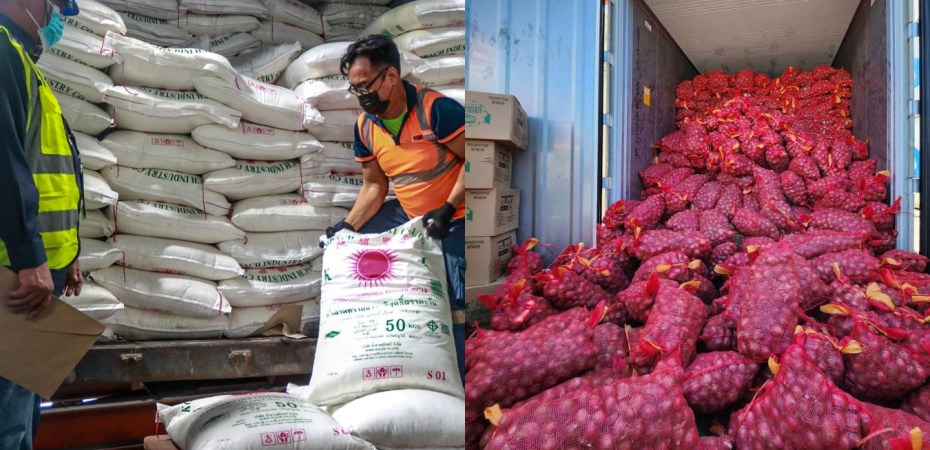
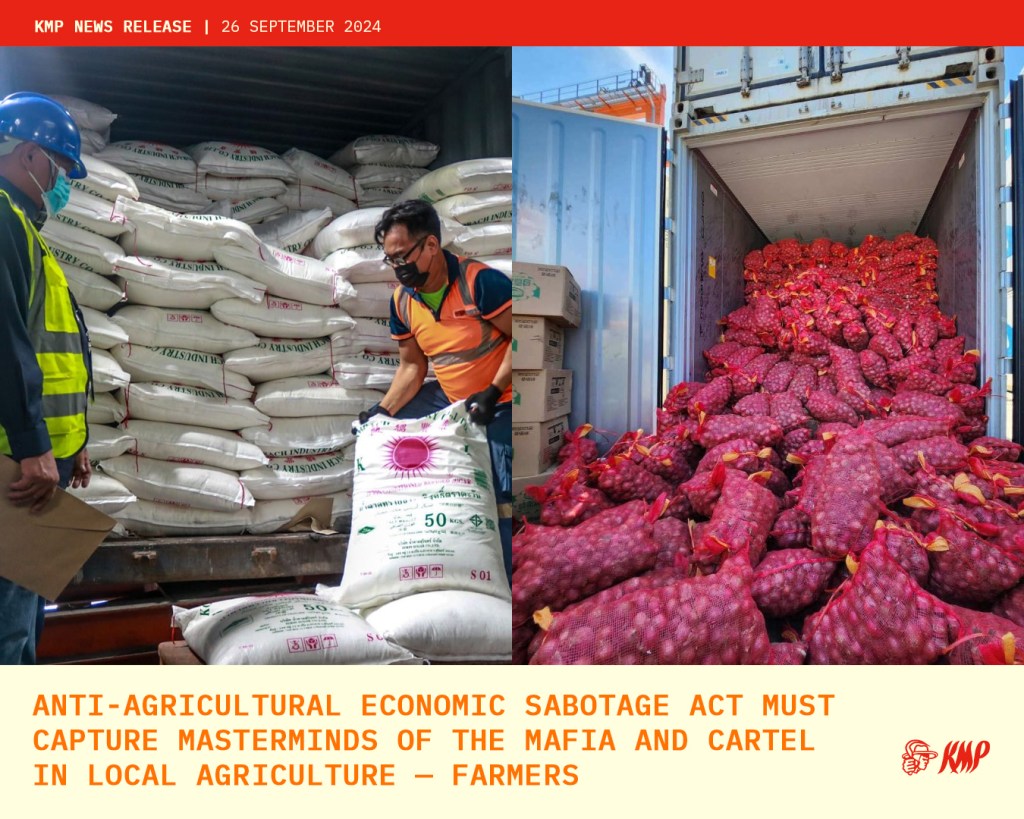
Producers and agricultural stakeholders have expressed frustration over the widespread smuggling of rice, onions, and temperate vegetables, which jeopardizes farmers’ livelihoods and affects farm gate prices. Current laws and enforcement agencies like the Department of Agriculture (DA) and the Bureau of Customs (BOC) lack the power to combat agricultural smuggling effectively. Besides smuggling, serious issues such as hoarding, profiteering, cartel activities, and other market abuses must be recognized as punishable offenses.
“No smuggler or hoarder has faced court, and the ringleaders behind these acts continue their operations unimpeded. Local farmers, food producers, and agricultural stakeholders have suffered enough. The solution is to genuinely apprehend and punish the masterminds and the entire organized network within the agriculture industry,” Ramos emphasized.
He further noted that Malacañang and the DA must recognize that crimes such as agricultural smuggling, hoarding, profiteering, and cartel operations have arisen from the government’s policy of unregulated importation and liberalization.
In the past five years since the Rice Liberalization Law, local rice farmers have lost PhP261 billion in income due to the influx of rice imports. A few years ago, in response to rising pork prices, the government approved executive orders for the importation of an additional 250,000 metric tons (MT) of pork products. Sugar orders issued by the DA and the Sugar Regulatory Administration (SRA) have resulted in unrestricted sugar imports, with 440,000 MT in 2022 and an additional 150,000 MT planned for 2023. The DA even sold smuggled sugar seized by the Bureau of Customs. This October 1, approximately 30,000 metric tons of imported fish will enter local markets.
Recent revelations about hoarding and price manipulation of onions have resulted in soaring prices, and the ongoing sugar importation issues are just the tip of the iceberg. The fight against smuggling, hoarding, profiteering, and cartel operations in the agricultural sector is an ongoing battle against bureaucratic corruption and profit-driven greed. ##
 updates from the peasant movement of the Philippines