
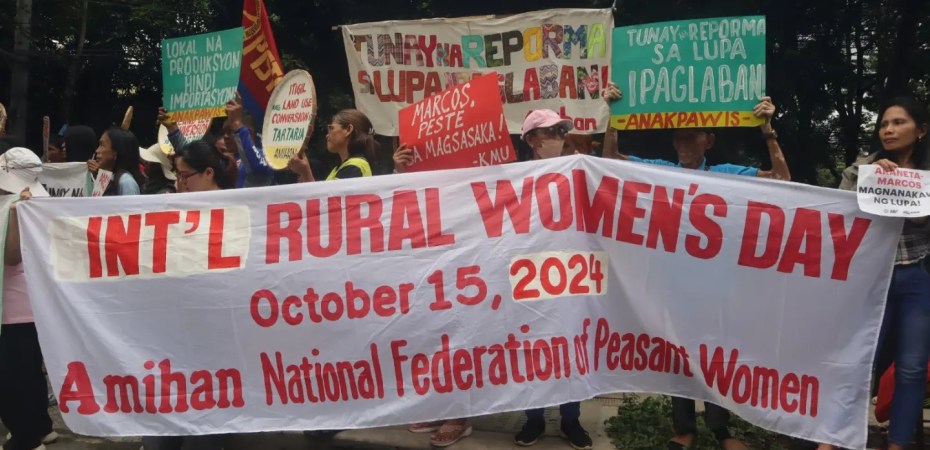
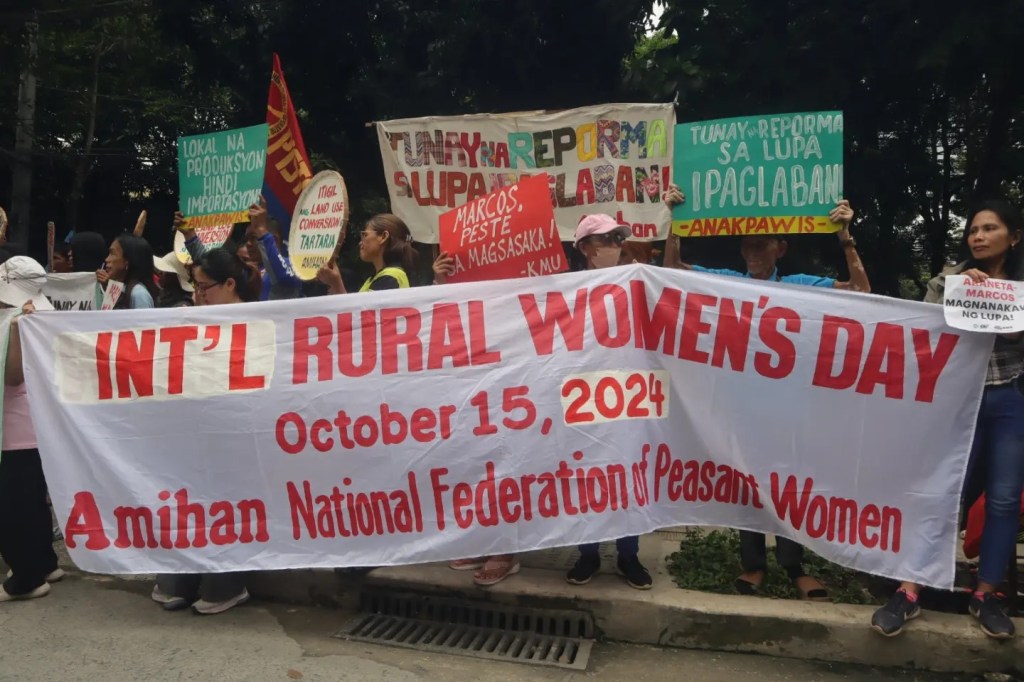
Today, October 15, we mark International Rural Women’s Day, a United Nations initiative established in 2008 to recognize rural women’s vital role in food security and poverty alleviation. This year’s global theme, “Planting for a Better Future: Rural Women Growing Good Food for All,” reflects the harsh realities faced by many rural women in the Philippines.
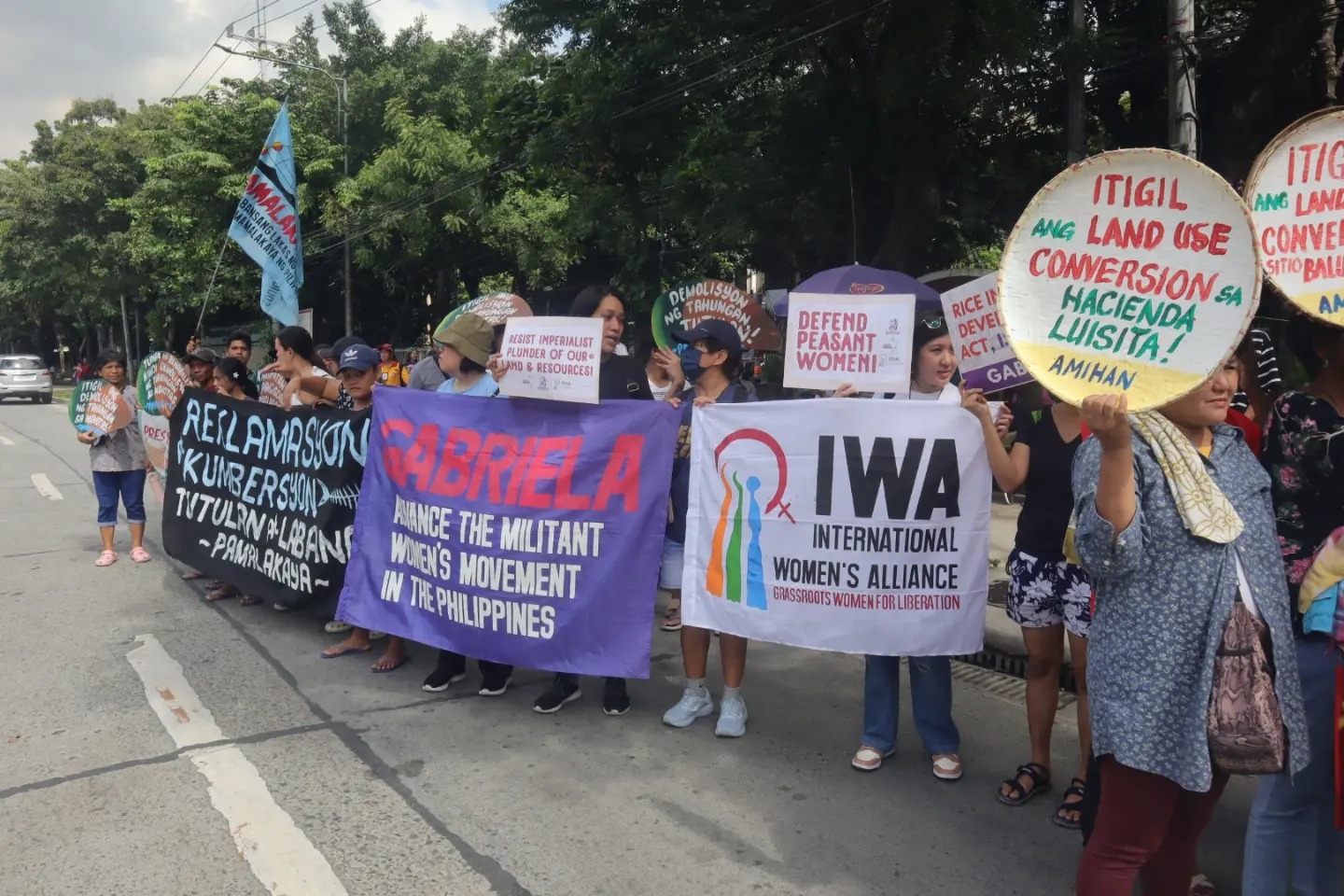
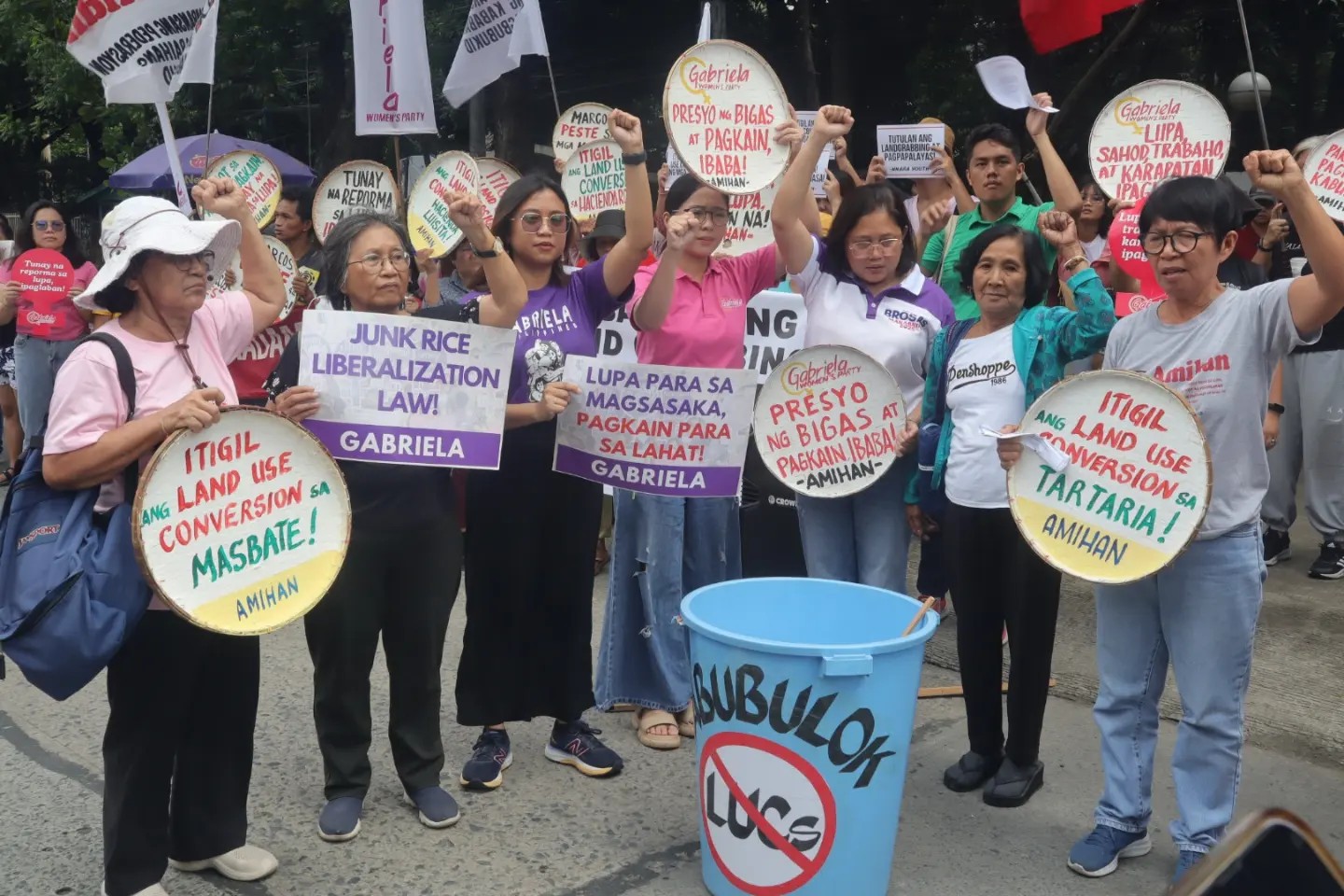
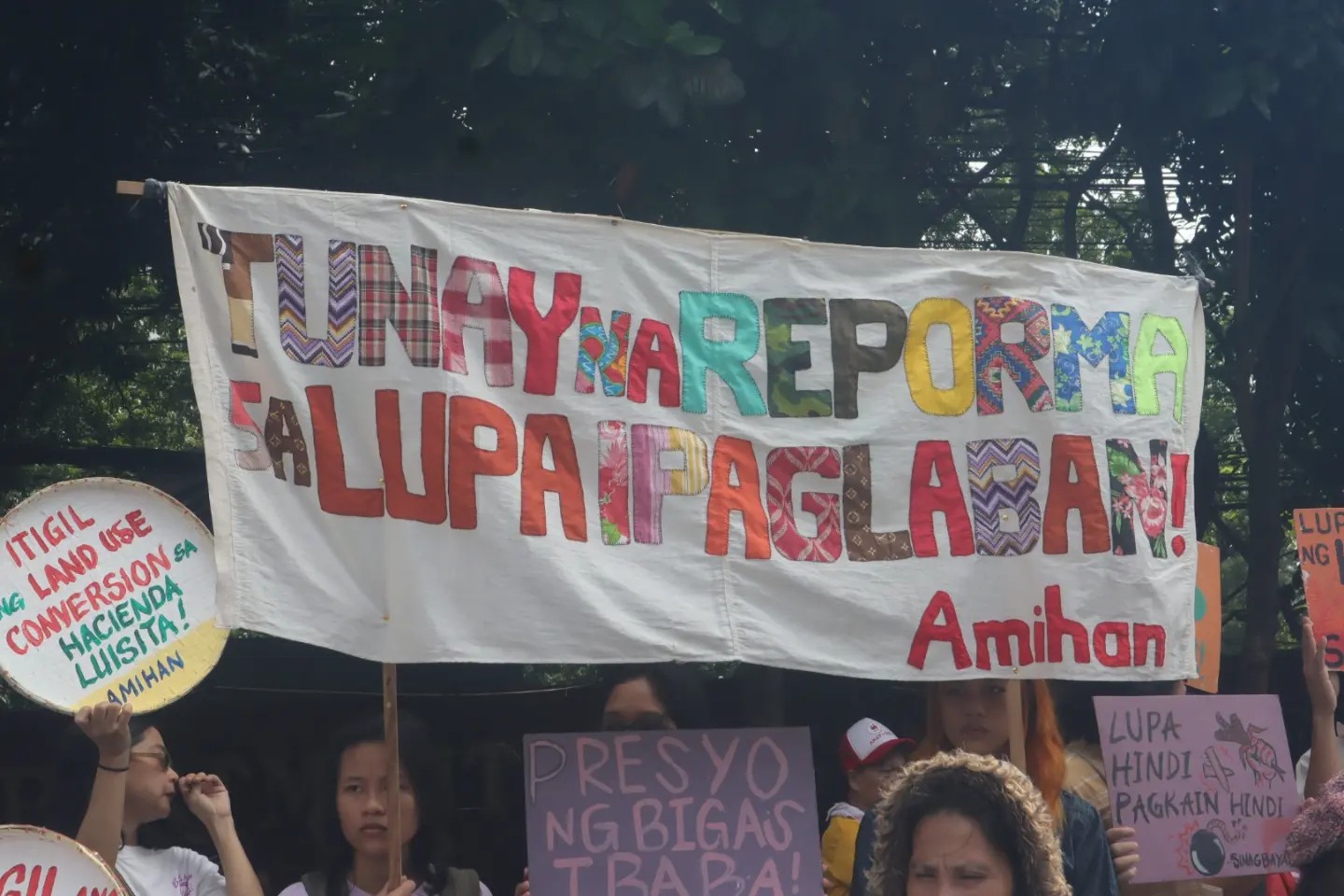
On this occasion, rural women from various landholdings held a picket at the Department of Agrarian Reform (DAR) Central Office in Quezon City. Women farmers from Bulacan, Laguna, and Cavite protested the continued lack of genuine agrarian reform under the Marcos Jr administration.
They highlighted several land-grabbing incidents and land-use conversion threats affecting farmers, including:
– Araneta Estates in San Jose Del Monte City
– Lupang Ramos in Dasmariñas, Cavite
– Over 1,000 hectares in Hacienda Luisita under TADECO, Aboitiz, and Ayala Land Inc.
– Cancellation of CLOAs and CLTs in Nueva Ecija
– Expansion of oil palm plantations in Negros covering over 6,000 hectares
– Government-approved projects like reclamation and the Laguna Lake Road Network that result in land dispossession
“We demand genuine agrarian reform, fair agricultural product prices, and the right to food and land. Women farmers are leading the fight for a just and equitable future,” said Cecil Rapiz, chairperson of Alyansa ng Magbubukid sa Bulacan.
In San Jose Del Monte, women farmers are at the forefront of the Bagsakan Farmers Market, asserting their land and cultivation rights.
Across the country, women farmers face severe economic challenges, including crippling debts from micro-lending companies that charge exorbitant interest rates. Daily necessities such as food, education, medicine, and utilities further strain their finances. Meanwhile, import liberalization policies in rice, corn, and pork have devastated local markets, driving farmgate prices to unsustainable levels.




In Cagayan Valley, women farmers suffer from landlessness, extreme poverty, and exploitation, earning only P250–P350 daily, far below the minimum wage of P450. Despite their hard work—seasonal farm labor, caregiving, and side jobs—their income remains insufficient. The estimated daily cost of living for a family of five in Cagayan Valley is P1,101.
In Mindoro, despite fertile lands ideal for growing rice, coconut, corn, and fruits like lanzones and rambutan, women farmers remain impoverished and landless. They are crucial to cultivating the island’s agricultural wealth but face land monopolies, land-use conversion, and rising debt. Mangyan indigenous farmers are particularly exploited, earning just Php150-200 for 12 hours of farm labor.
Rural women’s struggles receive inadequate support. Government aid programs often favor the elite, while many rural women are excluded. Worse, those who voice their grievances are met with repression.
Women farmers will also join the World Hunger Day protest tomorrow and the nationwide peasant-led protest on October 21 in Manila and other major provinces.
 updates from the peasant movement of the Philippines