
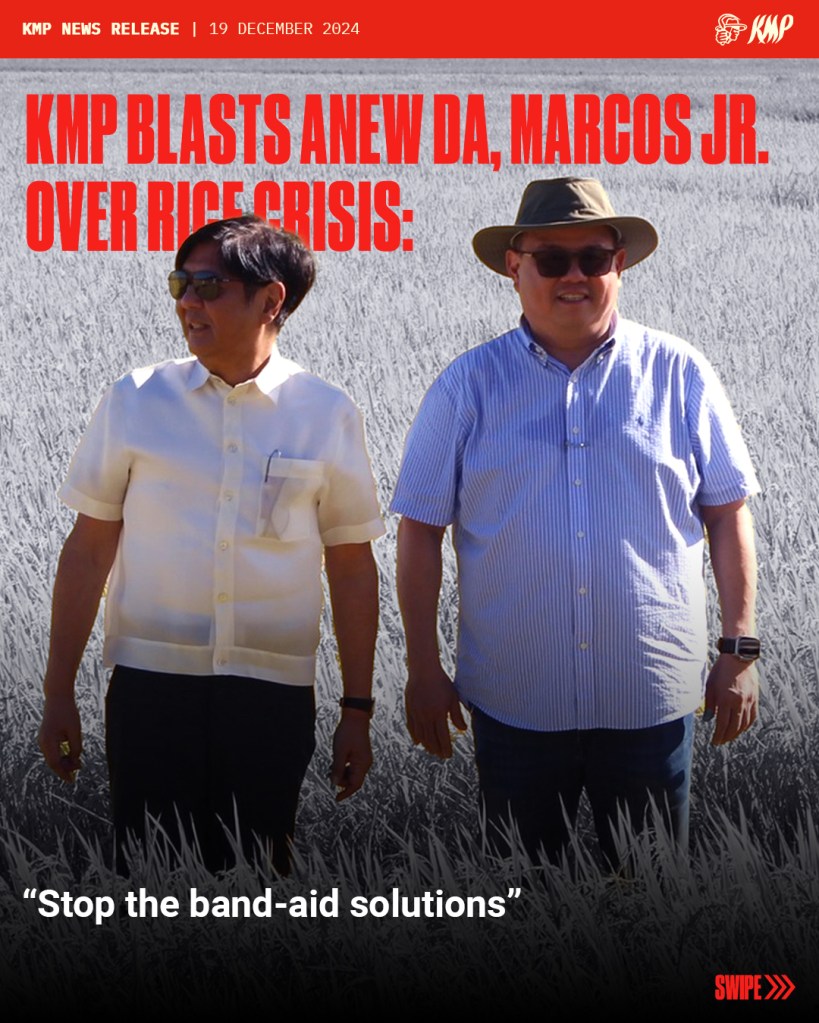
The Kilusang Magbubukid ng Pilipinas (KMP) criticized anew President Ferdinand Marcos Jr. for his administration’s epic failure to bring down rice prices and support local farmers, as latest data confirms that rice imports in 2024 have hit historic highs.
“This administration’s patchwork policies have done nothing to solve the lingering rice crisis. Farmers are poorer, and consumers are paying more for rice,” said Danilo Ramos, KMP chairperson and Makabayan senatorial candidate. “The government’s band-aid solutions, like the KADIWA rice initiative and tariff reductions, are only cosmetic fixes that in fact worsen deeply-rooted problems.”
“Over-reliance on rice imports is proof of Marcos Jr’s tokenistic response, and lack of a genuine and long-term solutions to the rice crisis,” Ramos said. “Instead of strengthening local rice production, the government is importing at record levels, further entrenching the country’s dependence on rice from Vietnam and Thailand. This is a betrayal of our farmers and the Filipino people.”
The Philippines is once again the world’s largest rice importer for crop year 2024-2025, with projected imports reaching a staggering 4.7 million metric tons.
Rice crisis made worse
Key government data reveal a worsening rice crisis under the Marcos Jr administration:

1. Record rice imports: Projections show the Philippines importing 4.7 million metric tons of rice for 2024-2025, solidifying its position as the world’s top rice importer. This is despite the country’s substantial local production capacity.
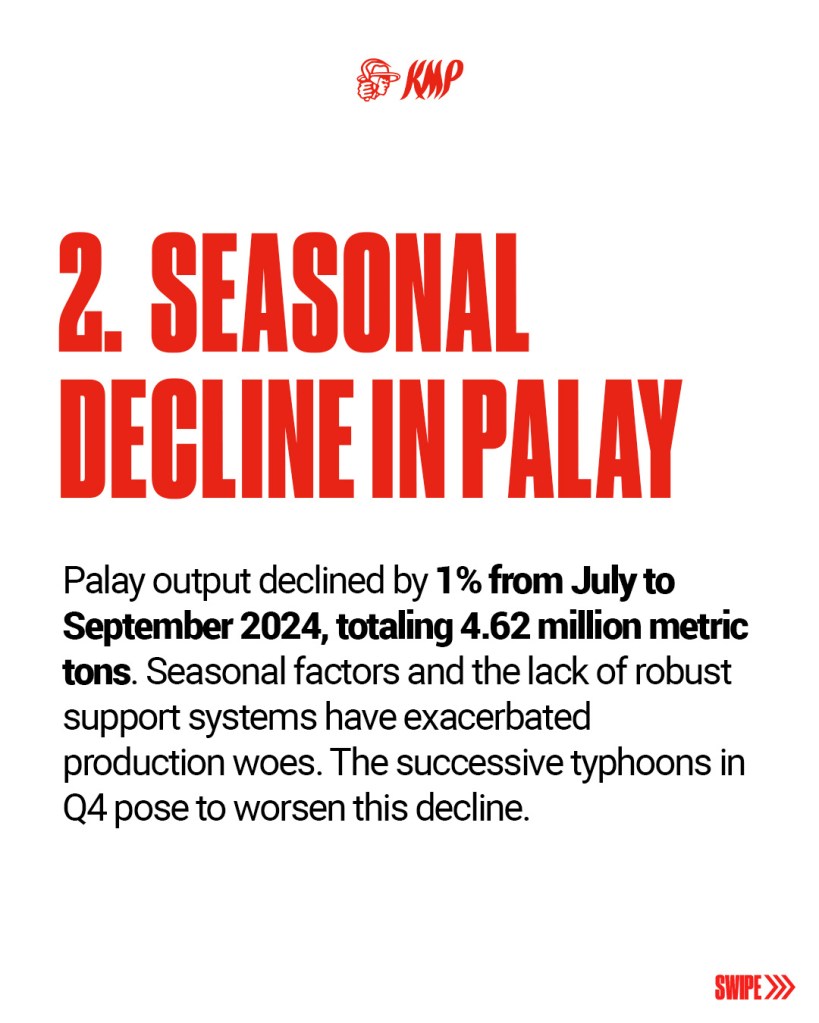
2. Seasonal decline in palay production: Palay output declined by 1% from July to September 2024, totaling 4.62 million metric tons. Seasonal factors and the lack of robust support systems have exacerbated production woes. The successive typhoons in Q4 pose to worsen this decline.
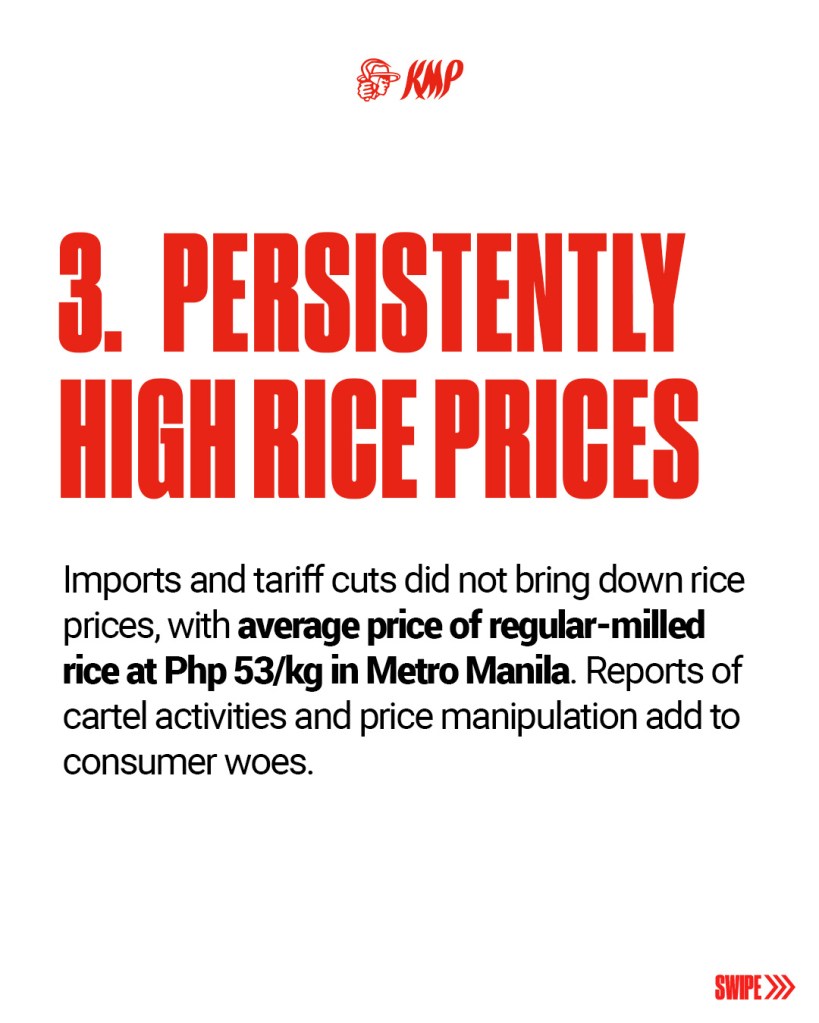
3. Persistently high rice prices: Imports and tariff cuts did not bring down rice prices, with average price of regular-milled rice at Php 53/kg in Metro Manila. Reports of cartel activities and price manipulation add to consumer woes.
Flawed programs and policies
According to Ramos, the administration’s supposed key interventions are far from satisfactory in addressing the rice crisis. “While KADIWA stores aim to provide affordable rice, the scale of these programs is insufficient to meet national demand. The amendment to RA 11203, the extension of Rice Competitiveness Enhancement Fund or RCEP and increased funding are insufficient to counter the damage caused by low farm gate prices and unregulated imports. Regarding hoarding and profiteering, there has been very little progress in addressing price manipulation despite numerous legislative investigations and public outcry.”
“DA and Malacanang must stop their obsession with imports and adopt a farmer-first approach,” the Makabayan senatorial candidate said. We emphasize genuine land reform as a long-term solution to the rice crisis, with the the following urgent actionable measures:
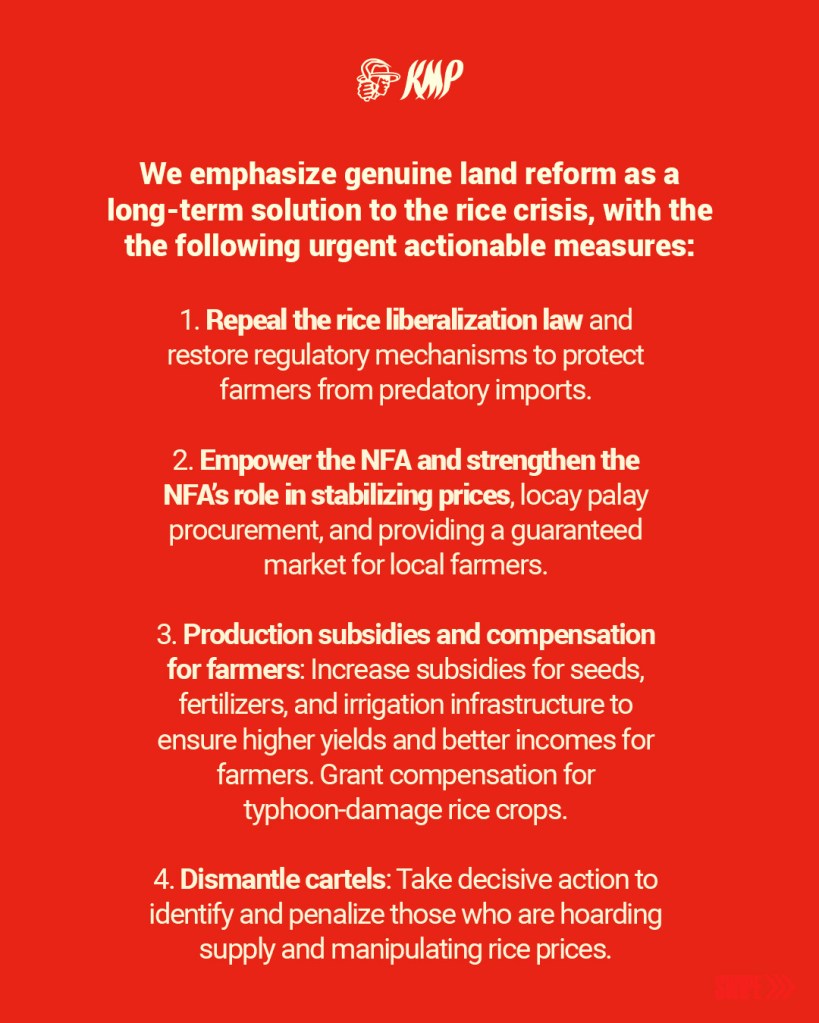
1. Repeal the rice liberalization law and restore regulatory mechanisms to protect farmers from predatory imports.
2. Empower the NFA and strengthen the NFA’s role in stabilizing prices, locay palay procurement, and providing a guaranteed market for local farmers.
3. Production subsidies and compensation for farmers: Increase subsidies for seeds, fertilizers, and irrigation infrastructure to ensure higher yields and better incomes for farmers. Grant compensation for typhoon-damage rice crops.
4. Dismantle cartels: Take decisive action to identify and penalize those who are hoarding supply and manipulating rice prices.
“The Marcos Jr. administration’s policies are recipes for disaster. Filipino farmers and consumers deserve better. The government must comprehensively overhaul its agricultural policies and make local food production a national priority,” Ramos concluded. #
 updates from the peasant movement of the Philippines