
Farmers highlight role of political dynasties in perpetuating landlessness, rural poverty, and social inequality in PH
“Political dynasties have long dominated the Philippine political landscape, solidifying their power through control over land, resources, and political positions. These entrenched families have played a crucial role in maintaining a system that perpetuates landlessness, rural poverty, and social inequality.”
According to the Kilusang Magbubukid ng Pilipinas (KMP), most of the country’s political dynasties have been directly involved in land grabbing and large-scale land-use conversion (LUC), dispossessing farmers, indigenous peoples, and rural communities. For instance, the Villar dynasty, through its vast real estate empire, has acquired over 9,000 hectares of residential and commercial land, benefiting from government policies that prioritize urban development over agricultural livelihoods. The same can be said for the Marcos and Cojuangco-Aquino families, whose control over Hacienda Luisita and vast lands in Ilocos Norte symbolizes the systemic failure of agrarian reform from PD 27 to CARP.
In Negros Occidental, powerful clans like the Marañon family have maintained haciendas and expanded plantations. The latest is the conversion of ancestral lands into the 6,600 hectares oil palm plantations and other eco-tourism projects.
“Political dynasties are often deeply embedded in various industries, using their political influence to expand their economic control. The Duterte and Romualdez families, for example, have strong ties to large-scale mining operations and economic zones in Davao and Benguet, which have resulted in the displacement of local farmers and indigenous groups. These ventures not only exploit natural resources but also exacerbate environmental degradation,” according to Rafael Mariano, chairperson emeritus of KMP
The old Fortich political dynasty in Bukidnon facilitated the entry of Dole Philippines into the province in the early 1900s, converting 26,000 hectares of prime agricultural land into pineapple plantations, further marginalizing small farmers and indigenous peoples. This practice is mirrored by other dynasties across the country, whose economic interests align with neoliberal policies that favor land-use conversion for commercial gain over food security.
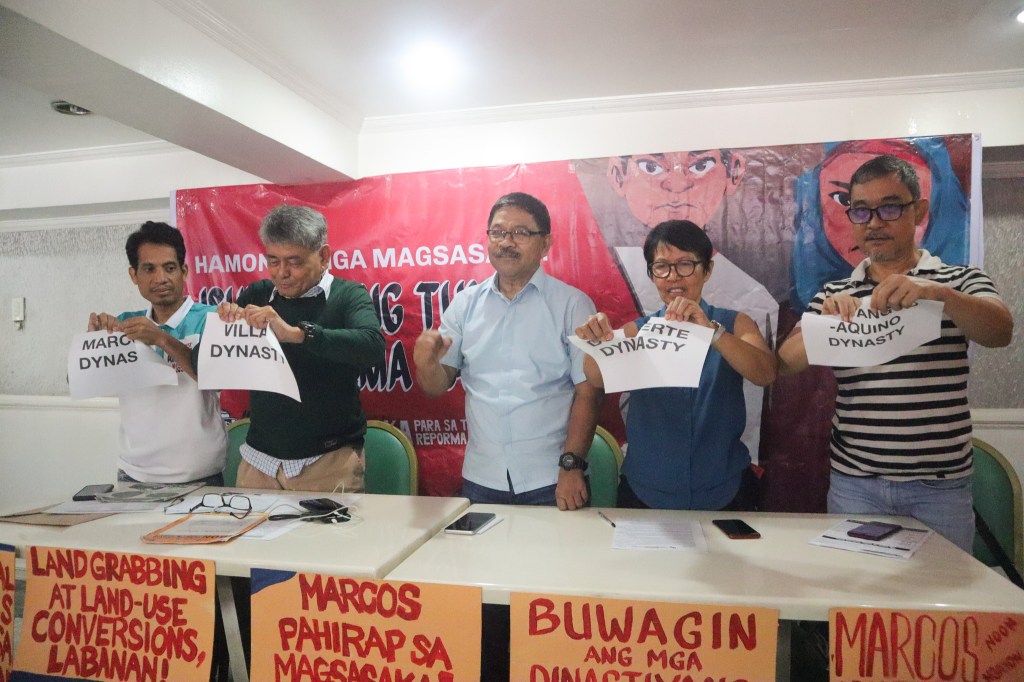
For his part, Danilo Ramos, chairperson of KMP and also a Makabayan Senatorial candidate said “many of these political dynasties have been instrumental in blocking genuine agrarian reform and free land distribution. The Marcoses, Cojuangco-Aquinos, and Villar families, for instance, have used their political power to maintain control over large estates and agricultural lands, preventing the redistribution of land to tenant-farmers. This resistance to land reform has reinforced the cycle of poverty and inequality in rural areas, where landlessness remains a significant issue.”
“Furthermore, policies such as the Rice Liberalization Law, pushed by dynastic politicians like Cynthia Villar, have exacerbated the problems faced by small farmers. The massive influx of imported rice has undermined local farmers’ income, driving them deeper into poverty while benefiting importers and the rice cartel,” according to Cathy Estavillo of AMIHAN and Gabriela Women’s Partylist
“The dominance of political dynasties ensures that wealth and resources remain concentrated in the hands of a few, while the majority of the population, particularly in rural areas, continues to suffer from poverty and inequality. The expansion of private estates, mining concessions, and tourism zones—often at the expense of agricultural lands—deprives rural communities of their primary source of livelihood. The lack of land tenure for small farmers also contributes to chronic poverty, food insecurity, and social unrest.”
In a study by the Ateneo School of Government reveals a staggering increase in “fat dynasties” from 1988 to 2019, with their presence growing from 19% to 29%. Each election cycle sees approximately 170 new political positions filled by relatives of incumbent officials. These dynasties are not only able to bypass term limits instituted by the 1987 Constitution—designed as a safeguard against the dominance of political families post-Marcos—but also strengthen their hold over their regions by fielding multiple family members in office.
The overlapping economic and political interests of these families have perpetuated a cycle of landlessness that deprives rural communities of meaningful access to land, further entrenching social inequality.
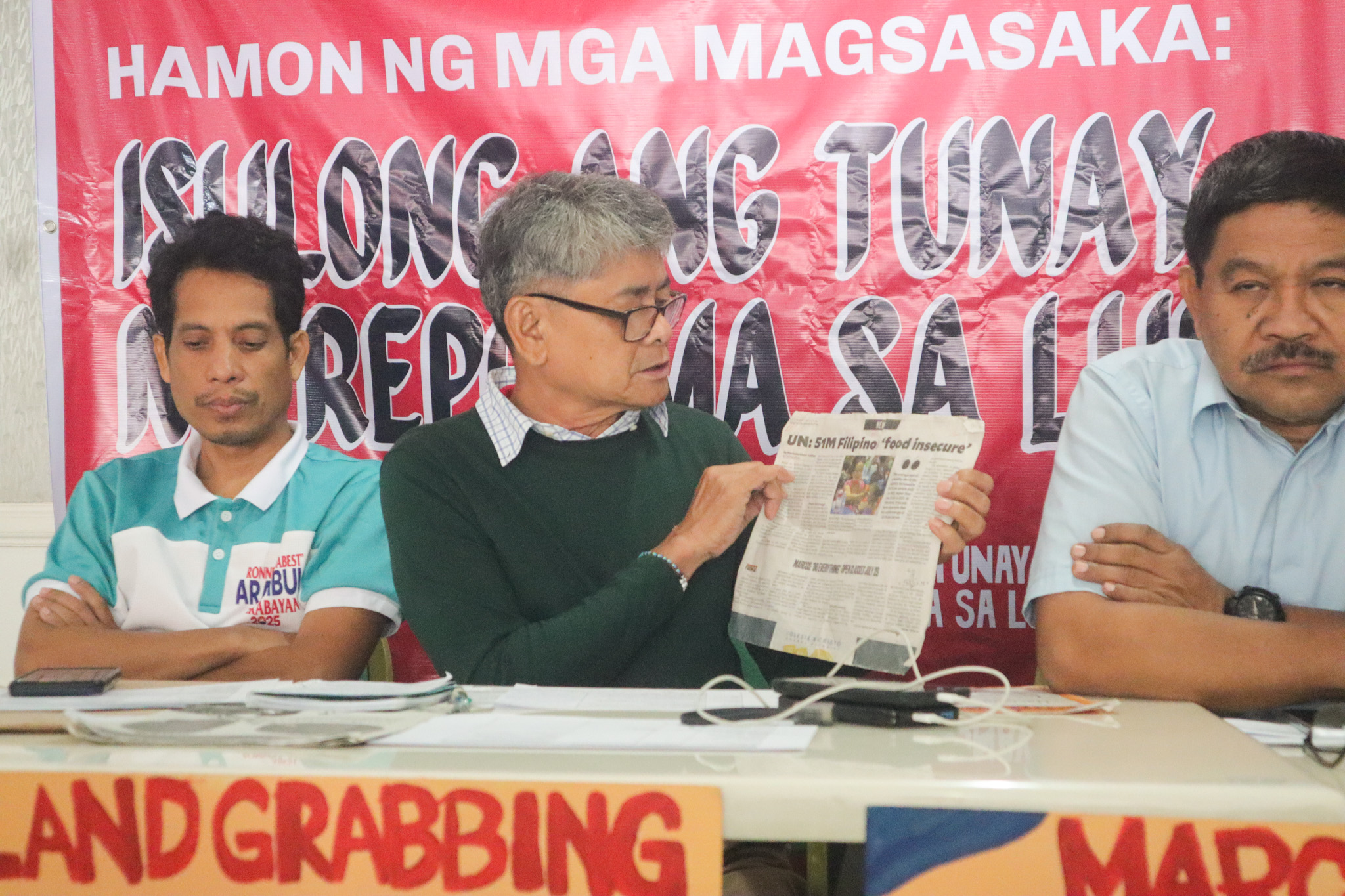
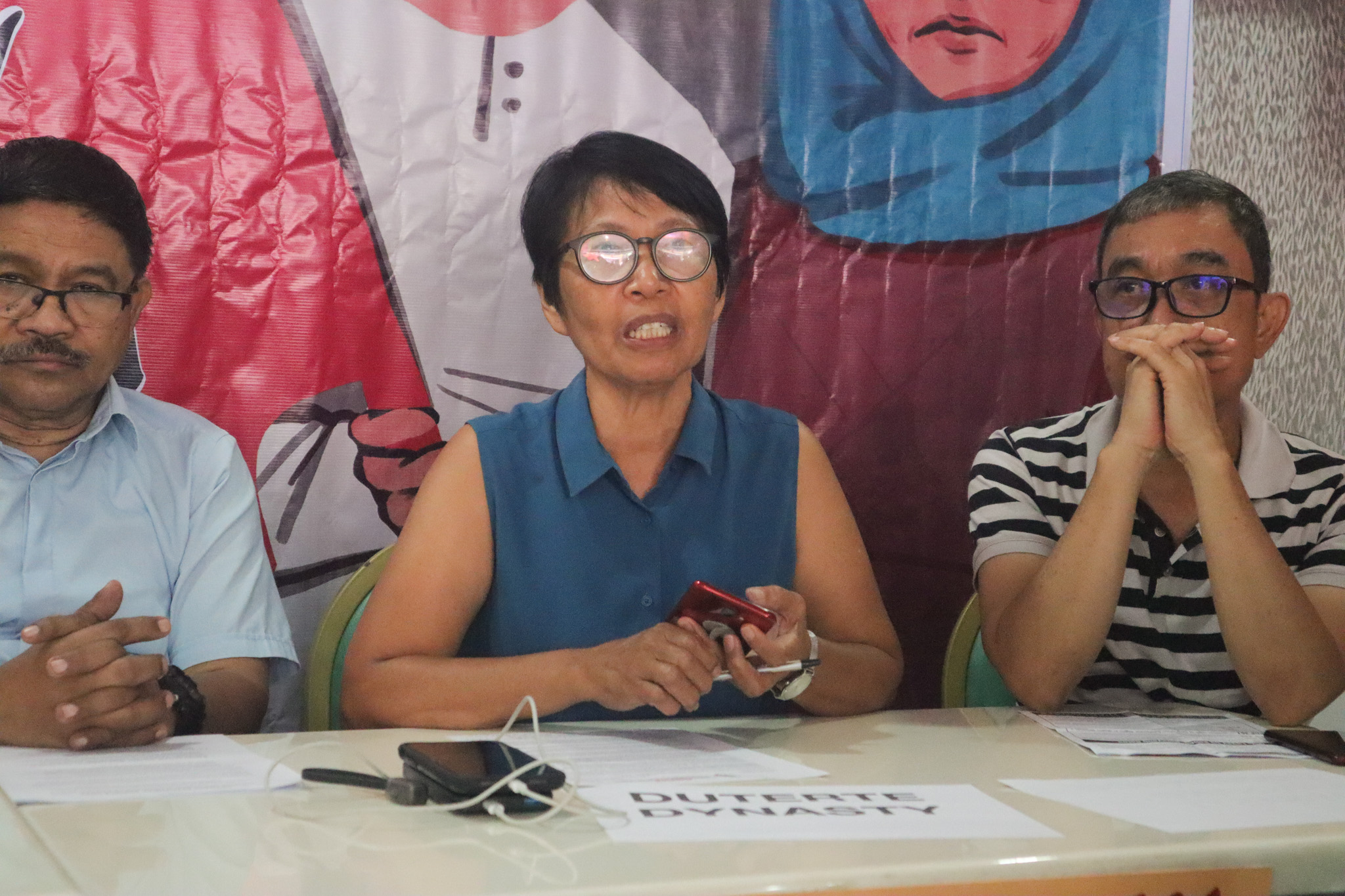
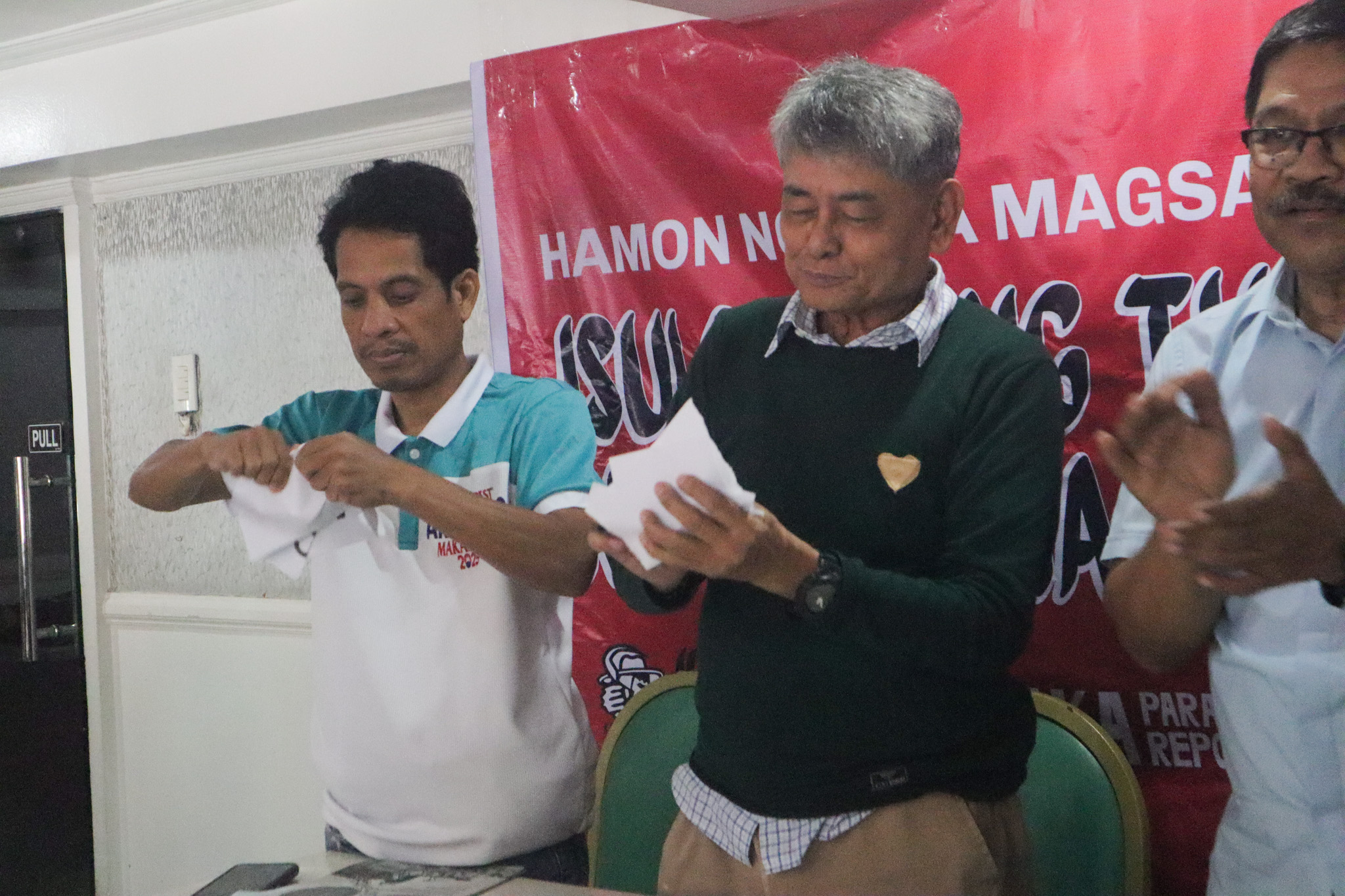
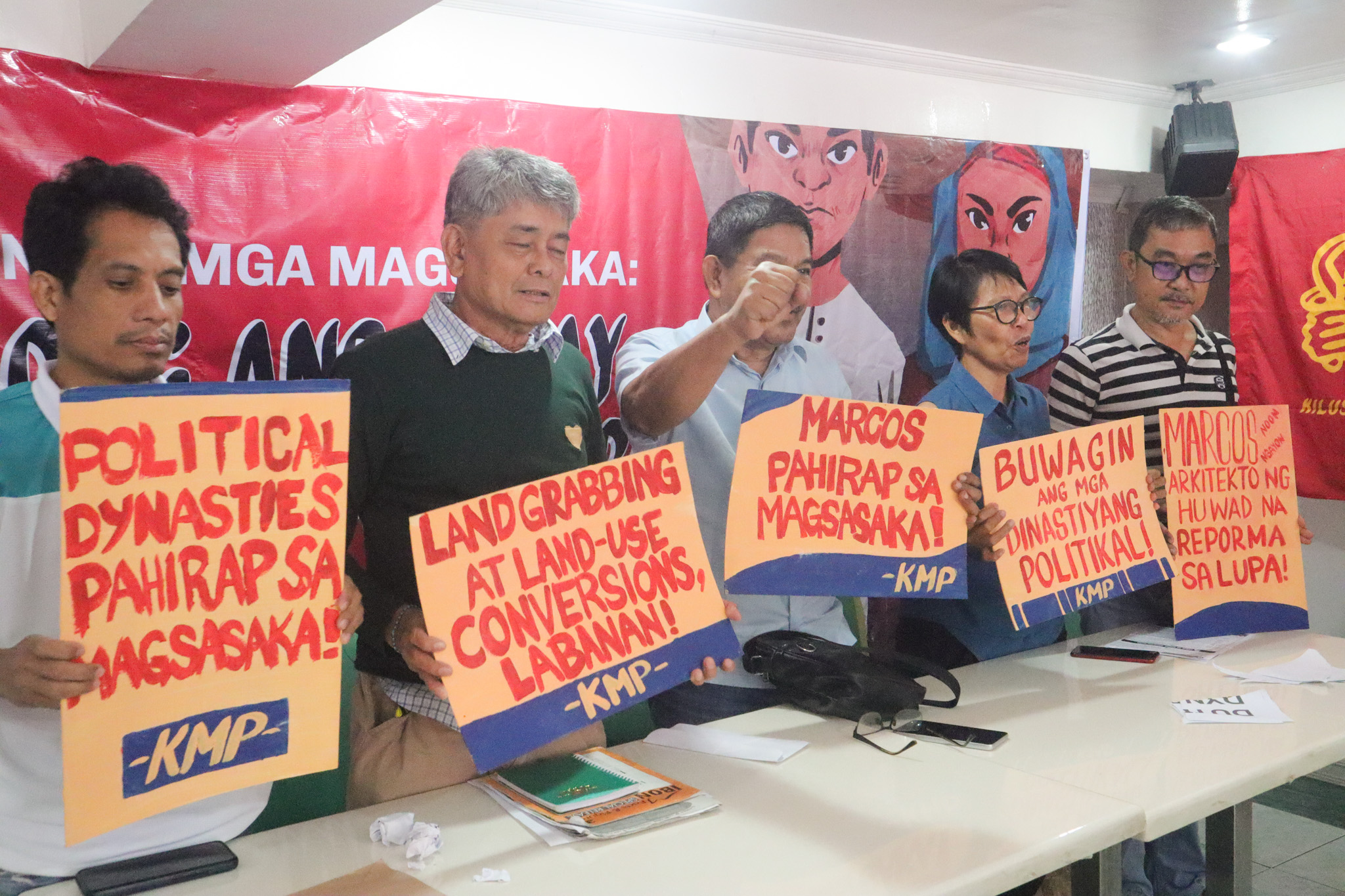
“The stranglehold of political dynasties on land, political power, and economic resources led to devastating effects on rural communities across the country. As these families continue to prioritize their economic interests, often through land-use conversion and opposition to agrarian reform, the cycle of landlessness, rural poverty, and social inequality is sustained. Genuine agrarian reform and significant political reforms to dismantle dynastic control are crucial to addressing these deeply rooted issues,” added Ramos.
KMP and other peasant organizations will lead in the following activities this October peasant month:
October 11: BLACK FRIDAY PROTESTS
October 13: Defend Bagsakan, Defend Bungkalan Fair @ UP Diliman Palma Hall
October 15: International World Rural Women’s Day @ DAR
October 16: World Hunger Day @ DA
October 20: Solidarity Cultural Night @ Quezon City
October 21: Nationally-coordinated farmer-led protests, Metro Manila and major cities
 updates from the peasant movement of the Philippines