
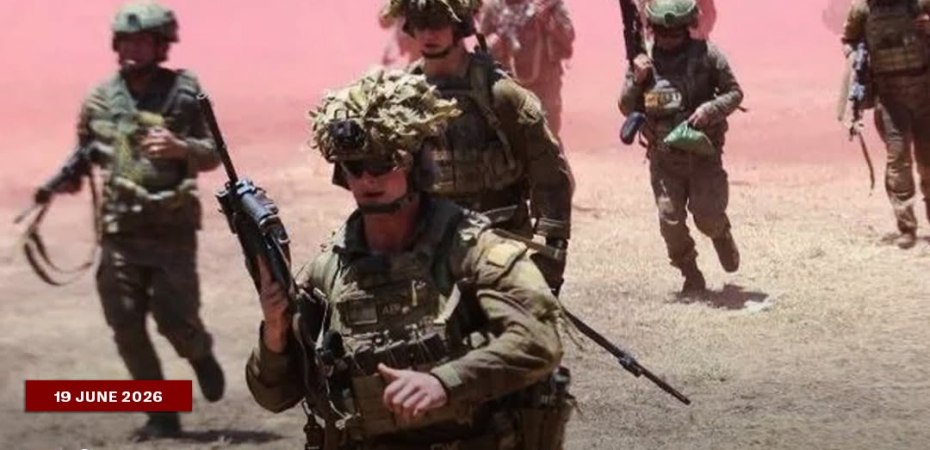
The Kilusang Magbubukid ng Pilipinas (KMP) strongly condemns the ongoing Philippines-Australia Army-to-Army Exercise (KASANGGA) 2026 and the series of US-led military exercises conducted in Bicol under Balikatan and Salaknib. These war drills have brought hardship and disruption to the lives and livelihoods of farmers, fisherfolk, and rural communities in Camarines Sur and other parts of the region.
Earlier this year, Camarines Sur became one of the sites of Salaknib 2026, a joint military exercise involving the Armed Forces of the Philippines (AFP) and the United States Army. Since May, residents have reported the presence of foreign troops, military vessels, checkpoints, and large-scale troop movements across coastal and upland communities in Pasacao, Balatan, San Fernando, Libmanan, Ragay, and neighboring municipalities. The launch of KASANGGA 2026 in Pili, Camarines Sur further intensifies the militarization of the region.
The greatest burden of these military exercises falls on farmers and fisherfolk whose daily livelihood depends on access to the land and sea. Reports from local organizations indicate that military operations have resulted in heightened restrictions in coastal and agricultural communities, including no-sail zones, suspension of water activities, checkpoints, and tighter controls over movement in areas used by farmers to reach their farms and by fisherfolk to access fishing grounds.
In Barangay Balogo, Pasacao, residents were forced to evacuate during live-fire exercises. Fisherfolk were prevented from going out to sea, while farming activities were disrupted as military operations occupied and restricted access to areas surrounding their communities. Many families lost income for days as military authorities imposed restrictions in the name of security.
“KASANGGA and other military exercises are being promoted as measures for national security, but for farmers and fisherfolk, they mean blocked access to farms, no-sail zones in fishing grounds, loss of income, and greater uncertainty in already difficult economic conditions,” said KMP Secretary General Ronnie Manalo.
KMP also denounced the forced evacuation of residents and the conduct of live-fire exercises in civilian communities. The bombing and firing drills in the coastal and upland areas of Pasacao have reportedly caused fear and disruption among residents while threatening marine ecosystems and fish breeding grounds that sustain local livelihoods.
“The government boasts of successful military exercises while communities endure displacement, restrictions, and economic losses. What kind of security is achieved by forcing families out of their homes and depriving them of their means of livelihood?” Manalo said.
KMP further criticized the enormous public spending allocated for military modernization and war exercises while agriculture remains neglected. Farmers continue to suffer from low farmgate prices, rising production costs, inadequate irrigation, expensive fuel, and insufficient government support.
“Instead of investing public funds in food production, irrigation, farm subsidies, disaster compensation, and genuine agrarian reform, the Marcos administration is allowing the countryside to become a training ground for foreign military forces,” Manalo added. “The government has resources for war games but claims it has no funds to address the worsening crisis faced by farmers and fisherfolk.”
KMP likewise expressed concern over the growing concentration of military activities in areas targeted by large-scale energy, infrastructure, and ecotourism projects. In Pasacao and nearby municipalities, communities have raised questions about the relationship between increased militarization and the expansion of corporate projects that threaten agricultural lands, coastal resources, and local livelihoods.
“The growing military presence in areas where large corporate projects are being developed raises legitimate concerns among rural communities. Farmers and fisherfolk fear that militarization is being used not to protect them but to secure the interests of big corporations and foreign investors,” Manalo said.
KMP echoes the demand for immediate compensation for all farmers, fisherfolk, transport workers, vendors, and other residents whose livelihoods were disrupted by military restrictions, evacuation orders, and the suspension of economic activities during the exercises.
“The true measure of national security is whether people have food on their tables, secure livelihoods, land to cultivate, and freedom from poverty and displacement,” Manalo stressed.
KMP amplifies the call of Bicolano farmers, fisherfolk, and residents to oppose Balikatan, Salaknib, Kasangga, and all military activities that deepen foreign intervention and militarization in rural and food producing communities. KMP demands an end to military exercises that disrupt civilian life and livelihood and calls on the government to prioritize genuine agrarian reform, food security, and national sovereignty amid intensifying economic crisis and climate impacts. ###

