
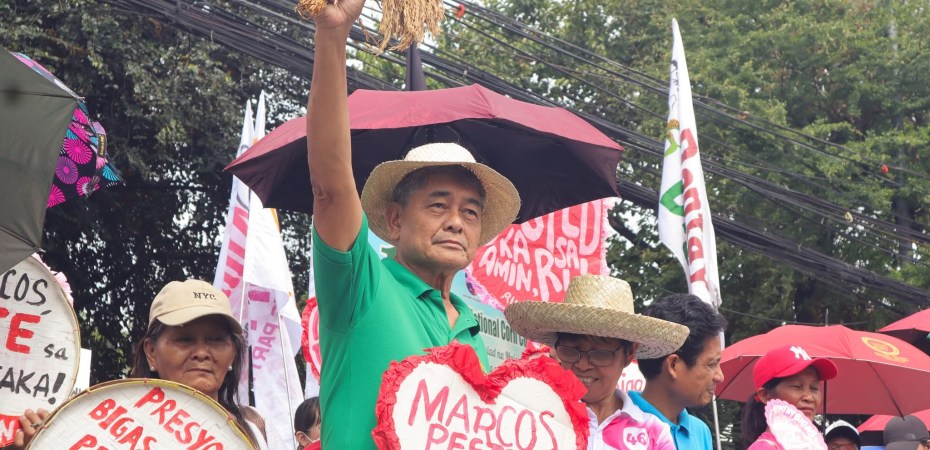
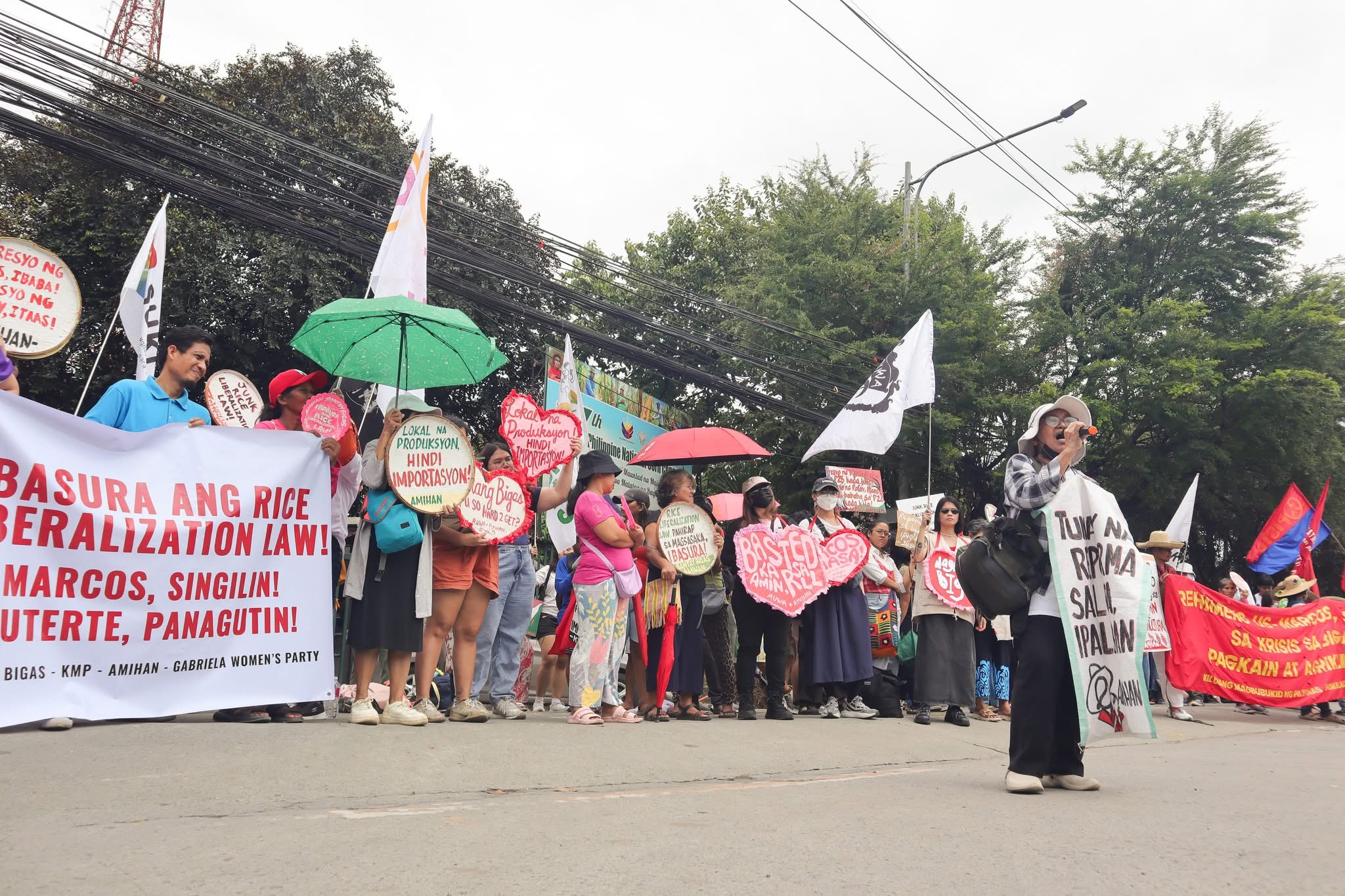
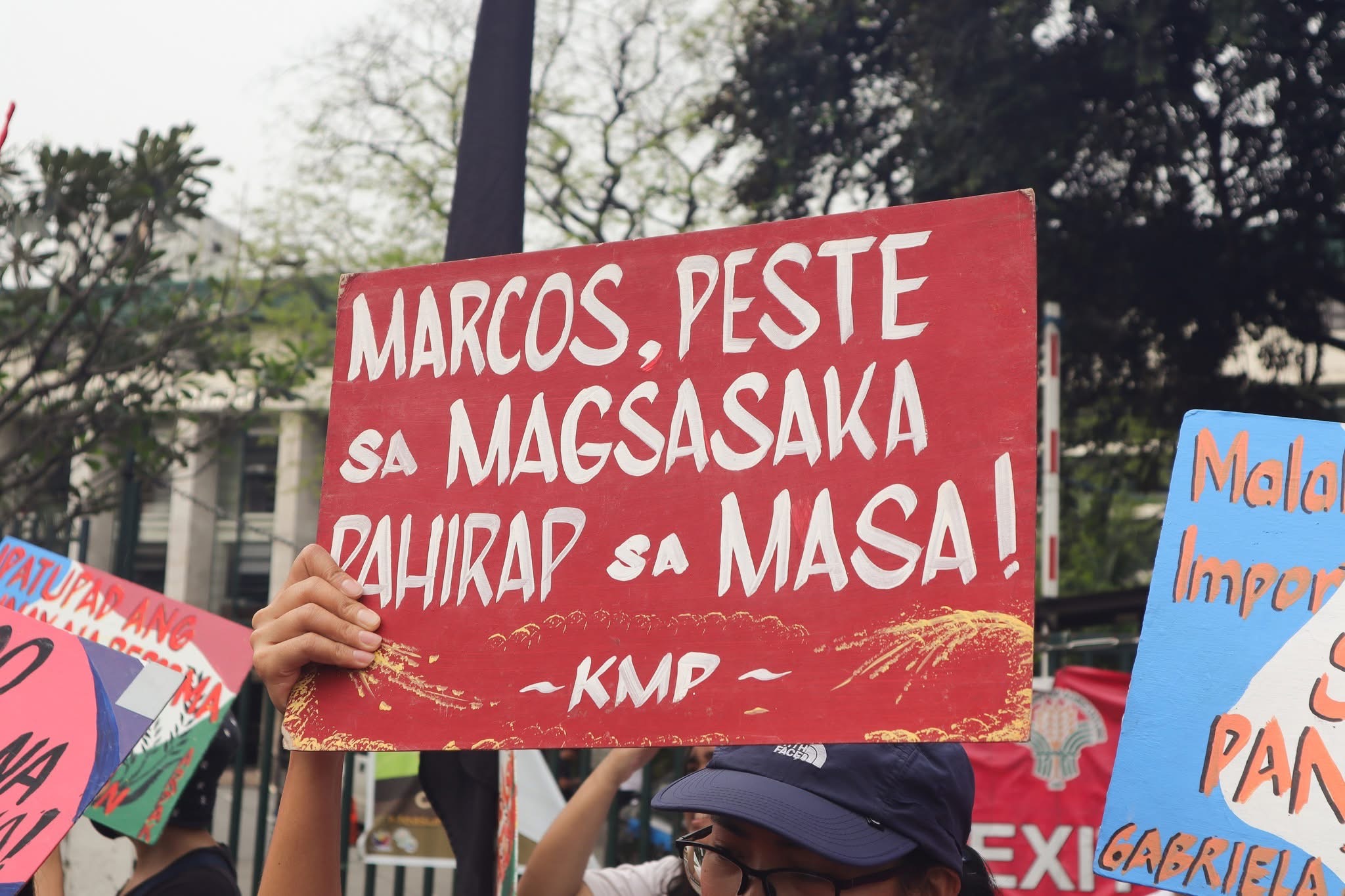
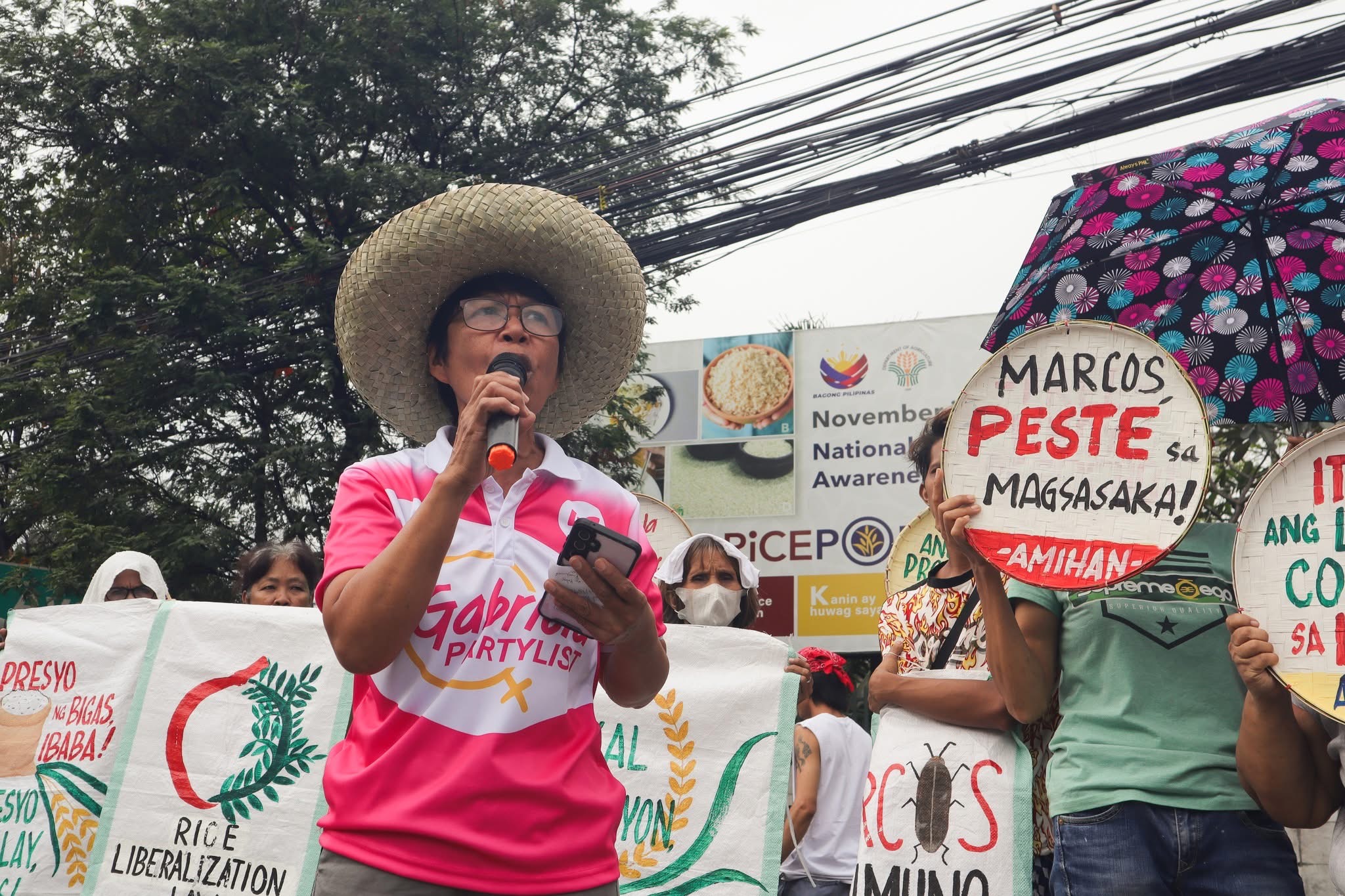
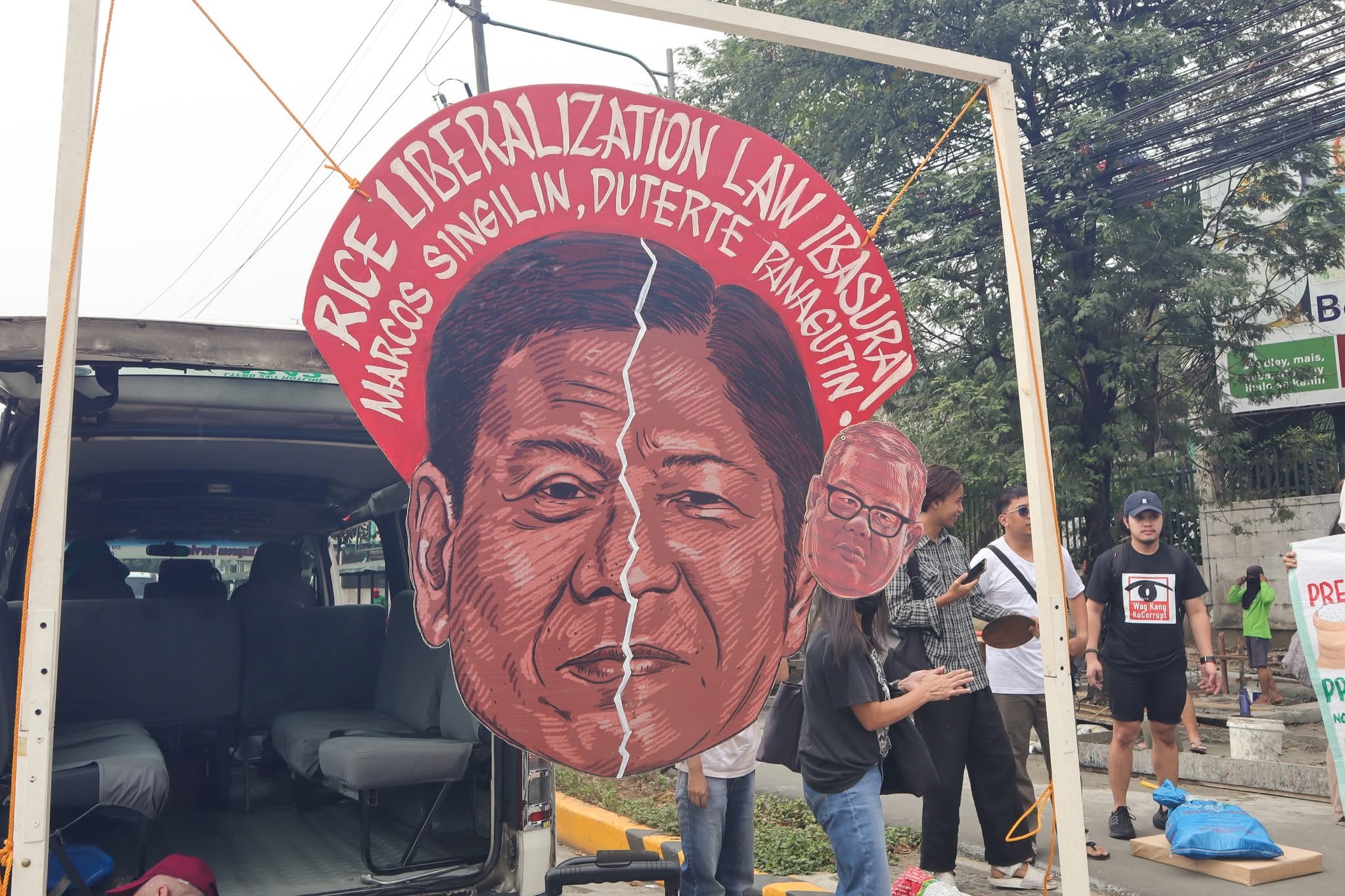
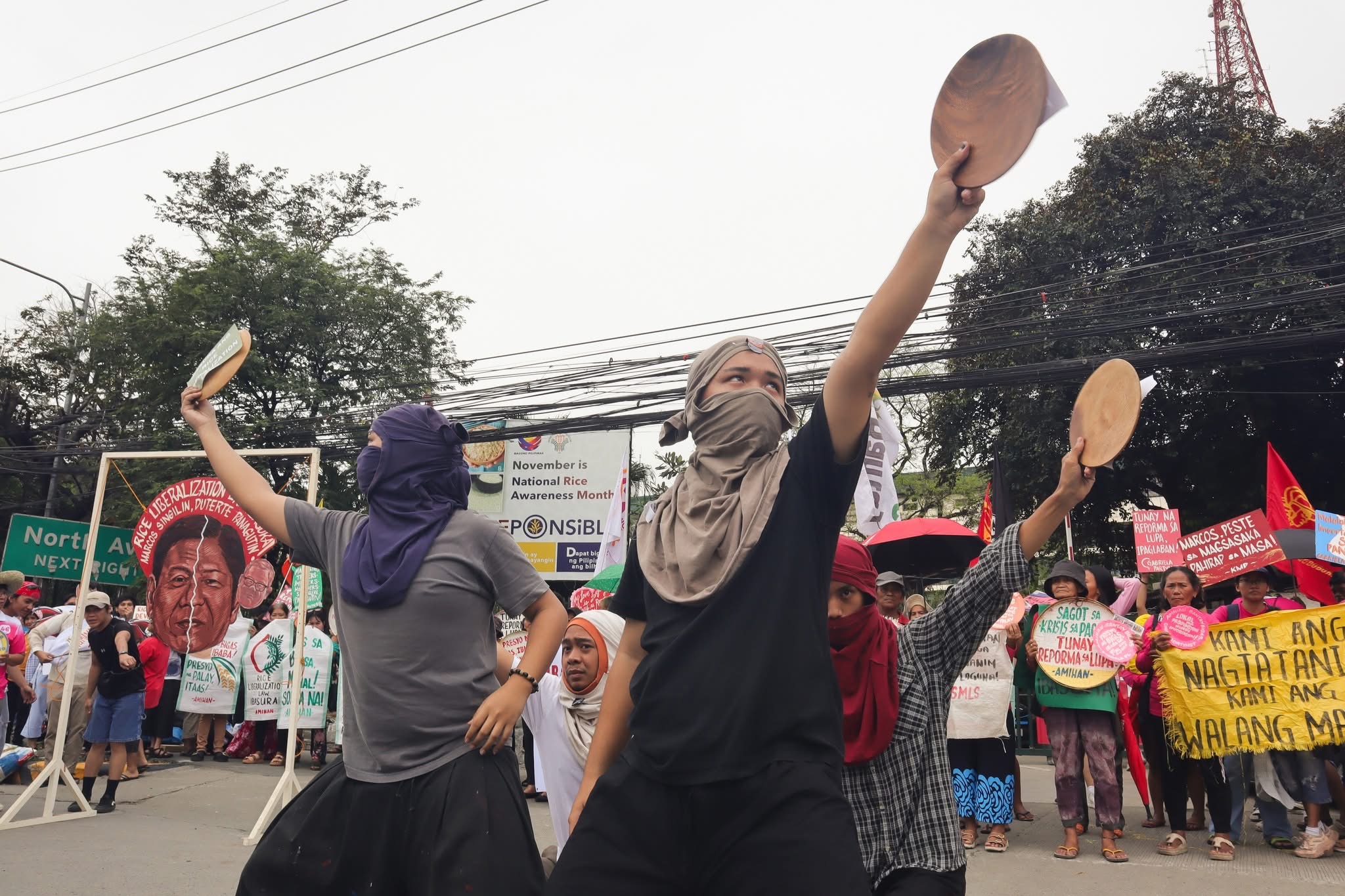
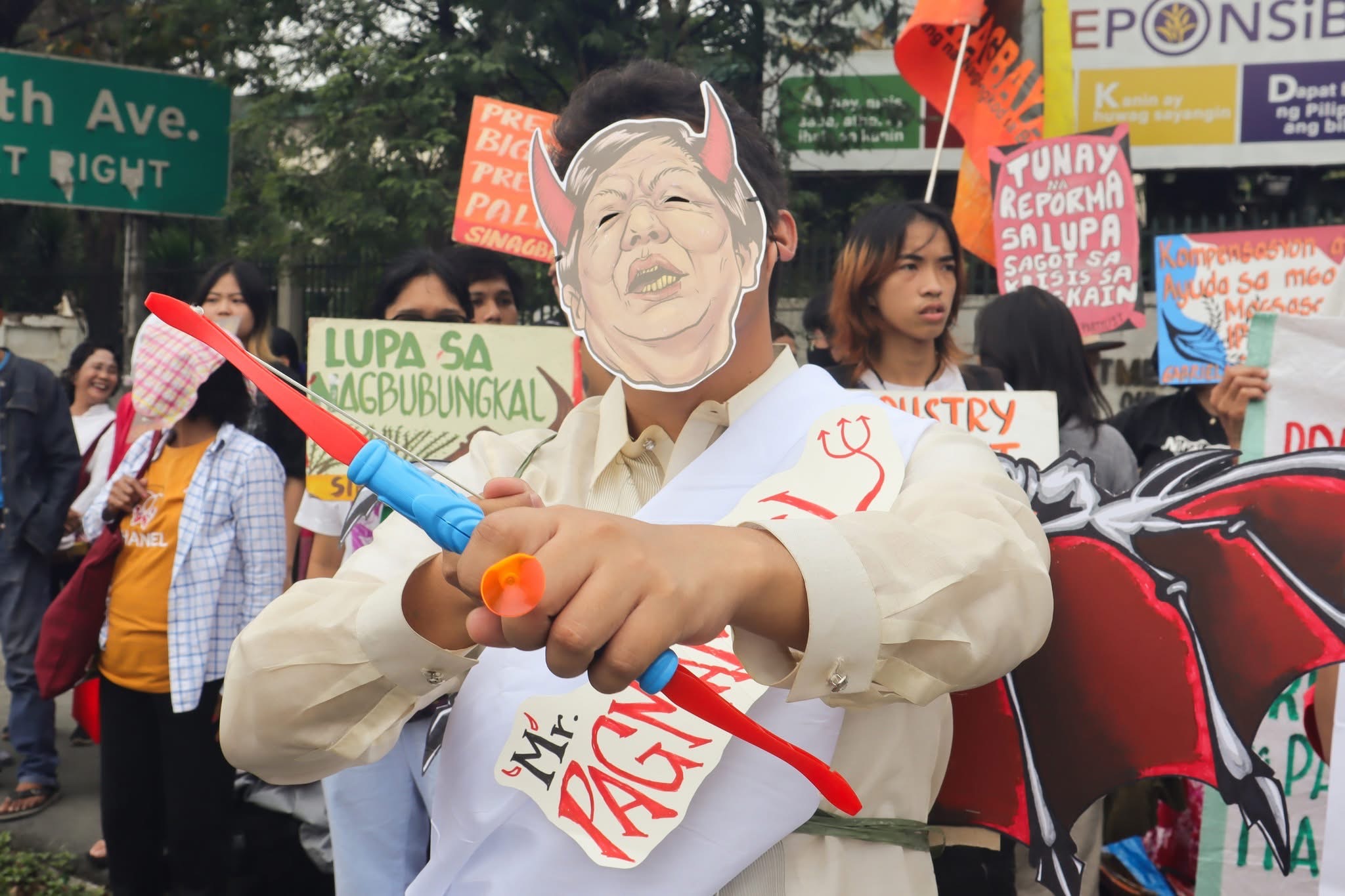
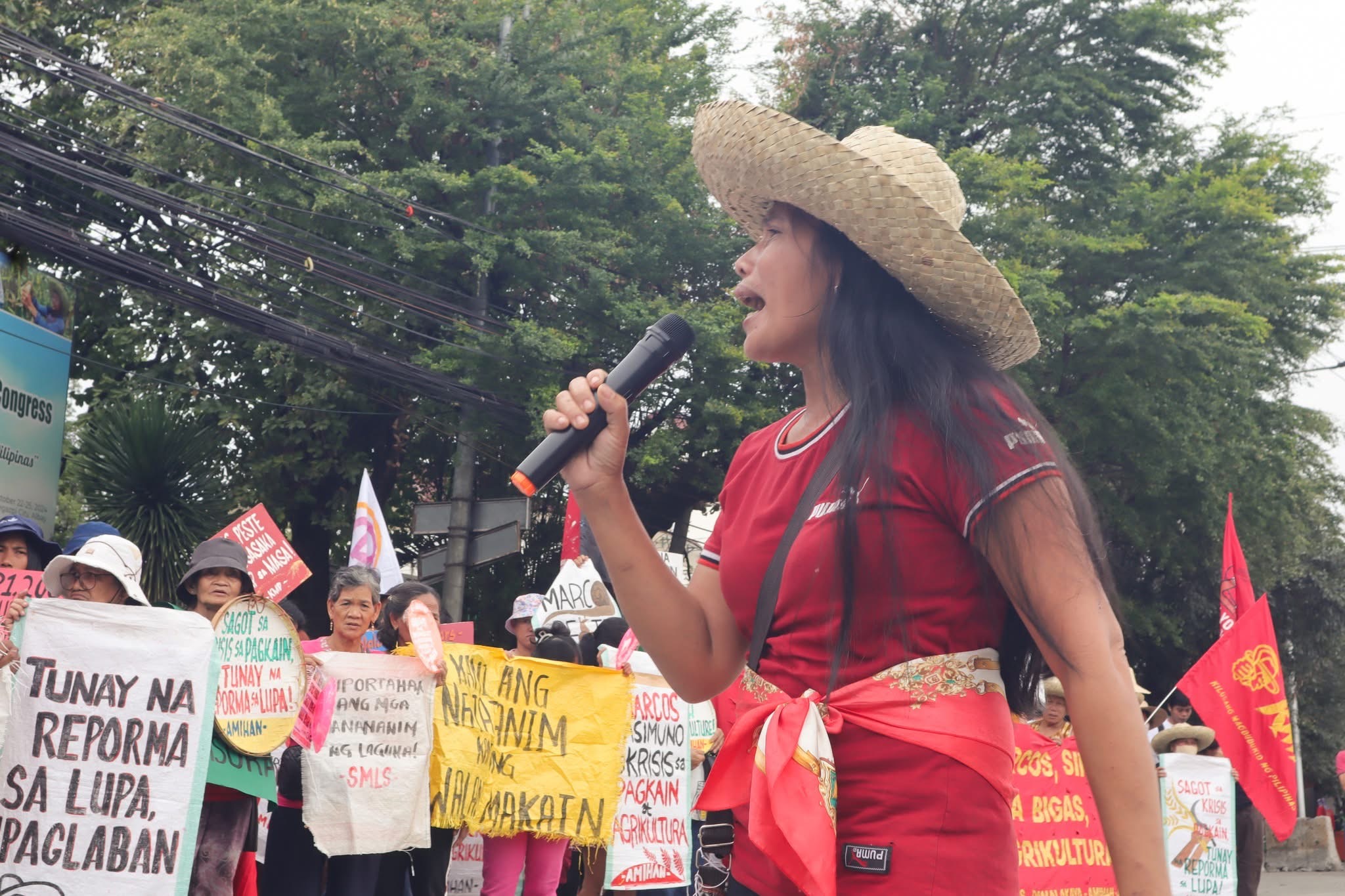
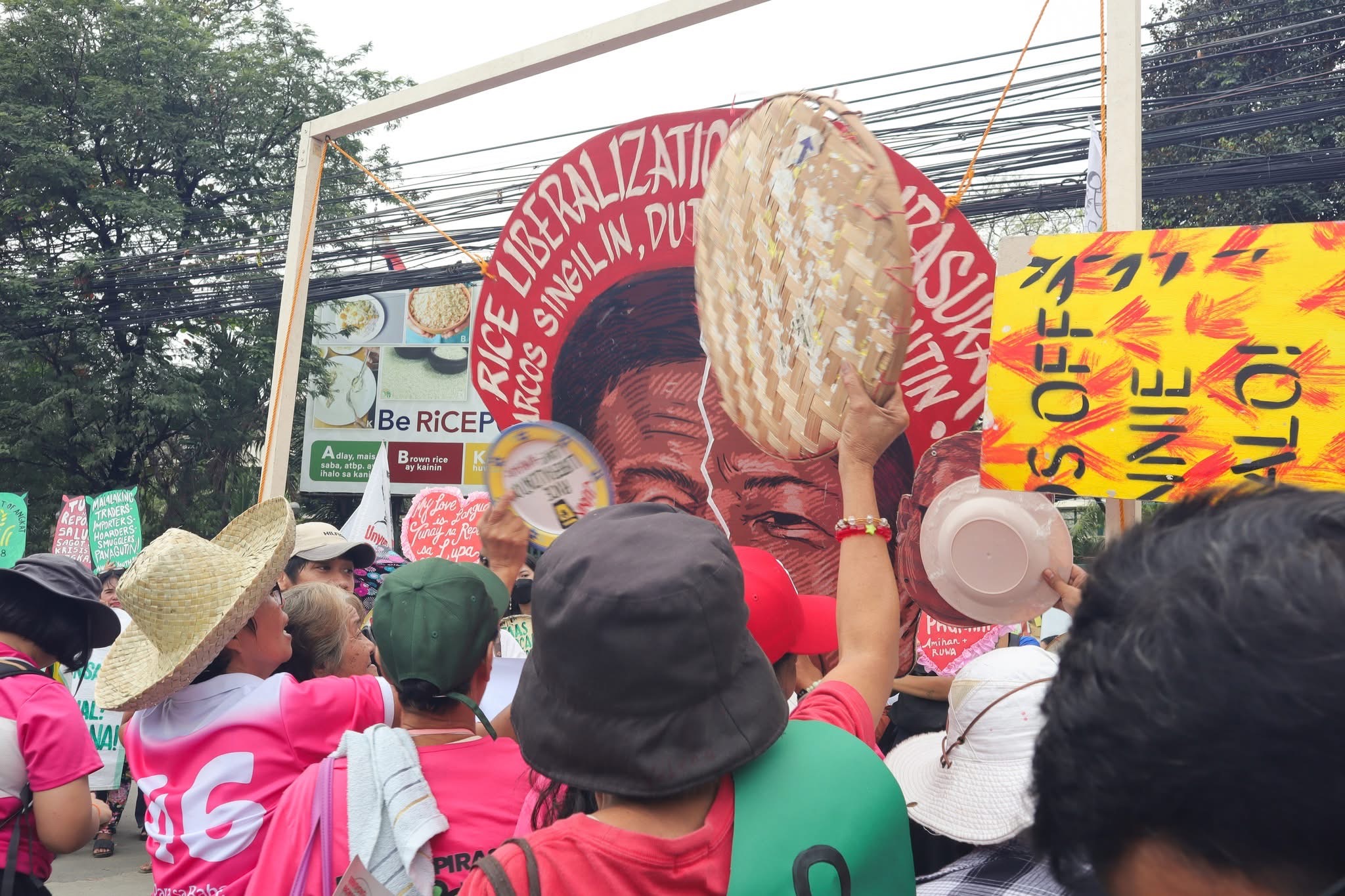
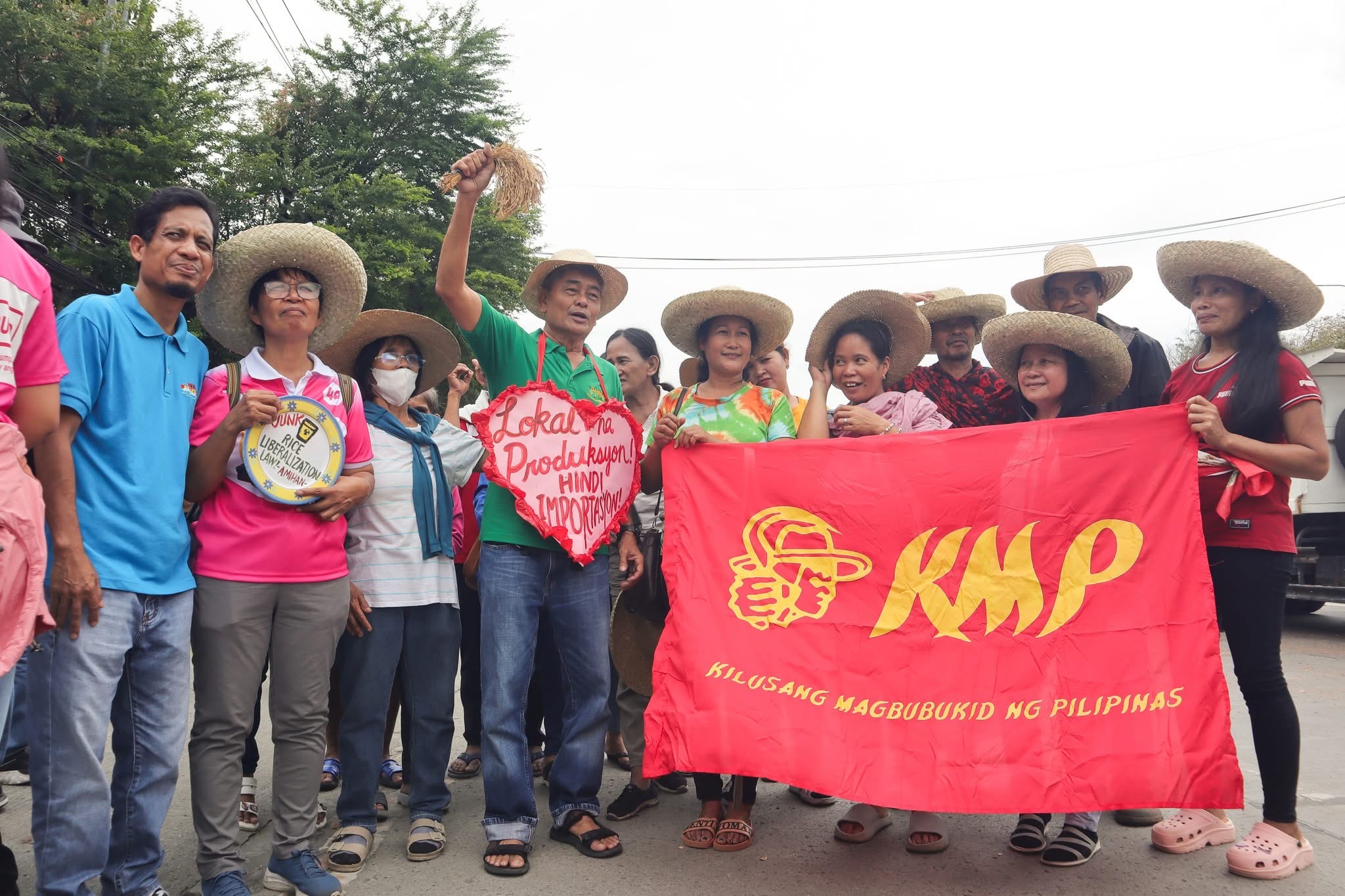
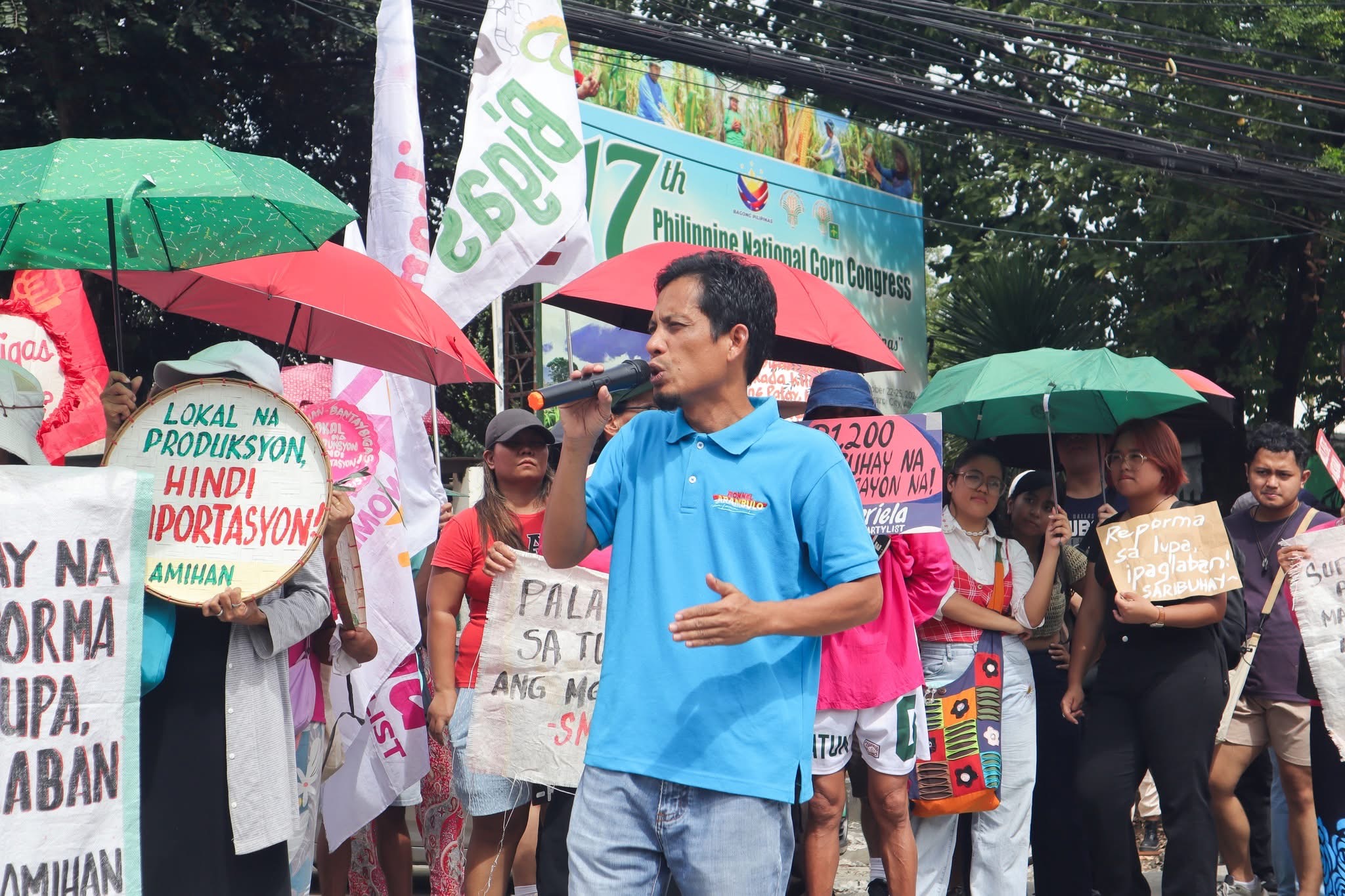
Six years after the enactment of the Rice Liberalization Law (RA 11203), the policy has proven to be a catastrophe for Filipino rice farmers while enriching a handful of importers. In a protest at the Department of Agriculture today, the Kilusang Magbubukid ng Pilipinas (KMP) and AMIHAN National Federation of Peasant Women denounce the disastrous effects of rice liberalization, which has led to increased dependence on rice imports, weakened local production, and worsened food security across the nation.
“The Rice Liberalization Law is an utter failure. It has not stabilized the rice supply nor lowered prices for consumers. It has pushed farmers deeper into poverty while benefiting big importers and traders who now dominate the rice market,” said Danilo Ramos, chairperson of KMP and a Makabayan senatorial candidate. “Our domestic rice industry is collapsing under this flawed policy, and the statistics speak for themselves.”
Rice liberalization led to declining domestic rice production. Before the implementation of the RLL, rice production was already growing at a snail’s pace. From 2012 to 2018, rice land area increased by 2%, productivity by 3%, and total production by 6%. However, in the years following its enactment (2019-2024), production grew even slower. The area planted to rice has shrunk by 0.03%, productivity growth has slowed to just 1.5%, and overall production growth has stagnated at 6 percent.
While imports boomed, only a few importers dominated the market. Rice imports have skyrocketed by 752% since 2018, with the country’s rice import bill doubling from Php737 million in 2018 to Php1.65 billion in 2023. Despite the dramatic increase in import volume, the number of importers has actually decreased — from 211 in 2019 to just 154 in 2024. Worse, only 10 importing businesses now control nearly 40% of total rice imports, creating an oligopolistic or cartel in the market that further manipulates rice prices at the expense of consumers and farmers alike.
The impact on rice farmers has been devastating. Between 2018 and 2023, farmers’ net income per hectare dropped by Php6,268, marking a 19% decline. Rising production costs, which increased by Php2/kg to reach Php14/kg (a 16% surge), have further eroded farmers’ earnings. While farmgate prices rose by 14%, wholesale and retail prices surged even more, by 20% and 24% respectively—showing that consumers are also suffering under this policy.
Rice liberalization only led to unaffordable rice prices, rising hunger despite greater import dependence. “With import dependency rising from 14% in 2018 to 23% in 2022, the country’s reliance on imported rice has worsened food security. Instead of ensuring affordable rice for all, the RLL has contributed to a 33% increase in hunger incidence, affecting 26% of the population in 2024,” according to KMP.
“The government has prioritized profits of private traders and importers over food security and the welfare of Filipino farmers. Rice liberalization has only exacerbated hunger, pushed local farmers to bankruptcy, and made our nation more vulnerable to global market fluctuations,” said Cathy Estavillo, secretary general of AMIHAN. “It is time to repeal RA 11203 and implement policies that genuinely support our farmers and ensure rice self-sufficiency.”
KMP and AMIHAN emphasize that genuine agrarian reform is the real solution to the rice crisis and soaring rice prices lies in genuine agrarian reform. The government must move away from neoliberal importation policies and shift towards strengthening local rice production.
“The Department of Agriculture’s band-aid solutions such as importation and price subsidies fail to address the root causes of the crisis. These stop-gap measures only reinforce the dominance of big importers while leaving farmers in perpetual debt and hunger,” Ramos asserted. “Genuine agrarian reform, coupled with full support and subsidies for farmers, is the only way to break this vicious cycle.”
KMP and AMIHAN call for an immediate review and repeal of the Rice Liberalization Law. The government must heed the people’s demand to strengthen domestic rice production, implement genuine land reform, and ensuring stable and affordable rice prices for all Filipinos. ###

