
As the Marcos Jr. administration prepares to mark its third year in office, the Kilusang Magbubukid ng Pilipinas (KMP) issued a scathing assessment of the President’s record, calling it a period marked by deepening landlessness and continued neglect of Filipino farmers. According to KMP, policies promoted under the guise of food security and economic recovery have instead devastated rural livelihoods and accelerated the landlessness of farmers.
“Tatlong taon ng panunungkulan na nagpalala sa kawalan ng lupa, kagutuman, at pandarahas. Walang patid na pinsala ang ginawa ni Marcos Jr. sa kanayunan. Mula noon hanggang ngayon, isa siyang peste sa mga magbubukid. Marcos Jr. must be held to account for this worsening situation,” Danilo Ramos, KMP Chairperson
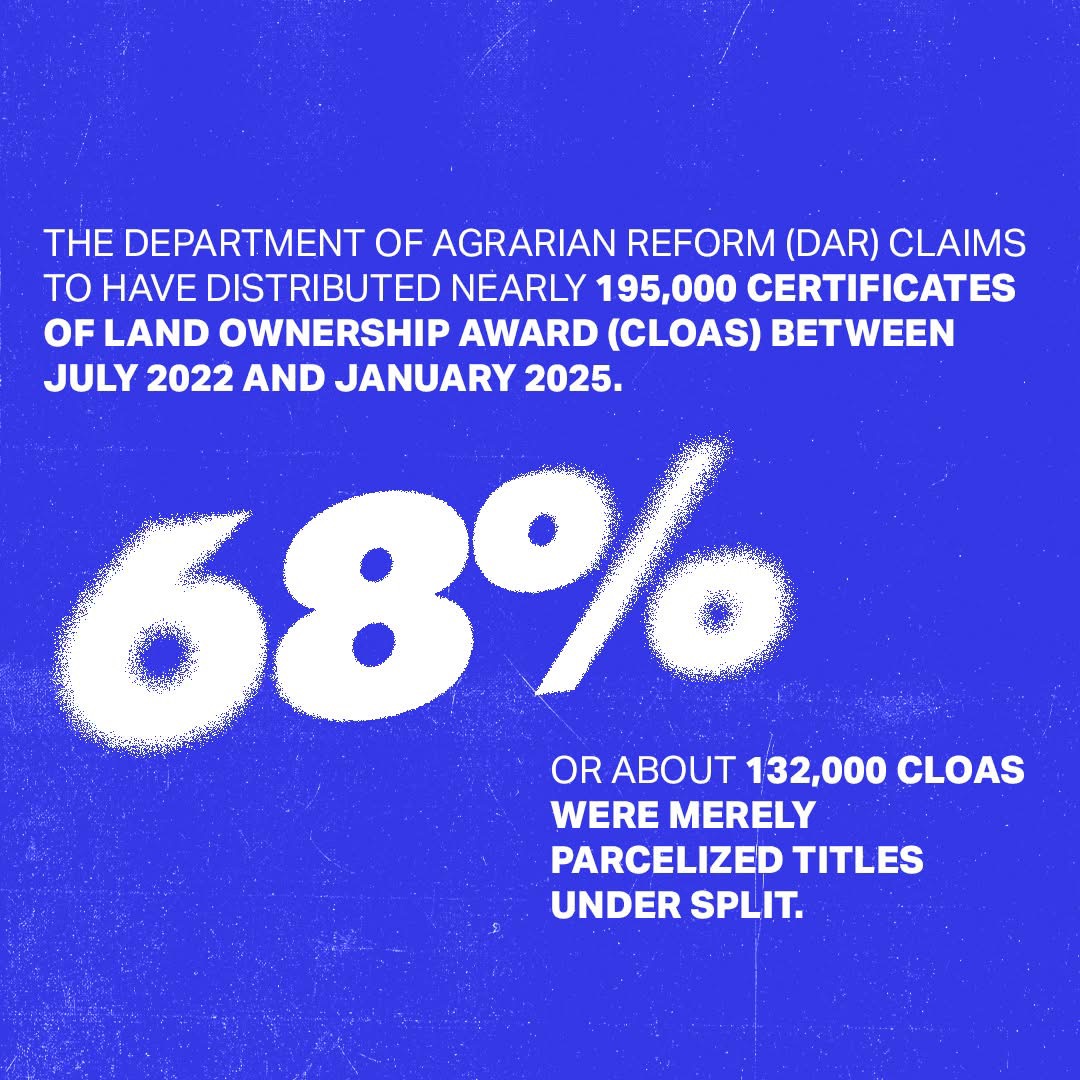
The Department of Agrarian Reform (DAR) claims to have distributed nearly 195,000 Certificates of Land Ownership Award (CLOAs) between July 2022 and January 2025. However, 68% of these or about 132,000 CLOAs were merely parcelized titles under the Support to Parcelization of Lands for Individual Titling (SPLIT) project. Launched in 2020 and funded by the World Bank through 2027, SPLIT does not involve actual land redistribution. Instead, it splits up existing collective CLOAs. As of January 2025, the project has reached just 12% of its target areas and beneficiaries, exposing its limited impact and the administration’s failure to fulfill the promise of genuine agrarian reform.
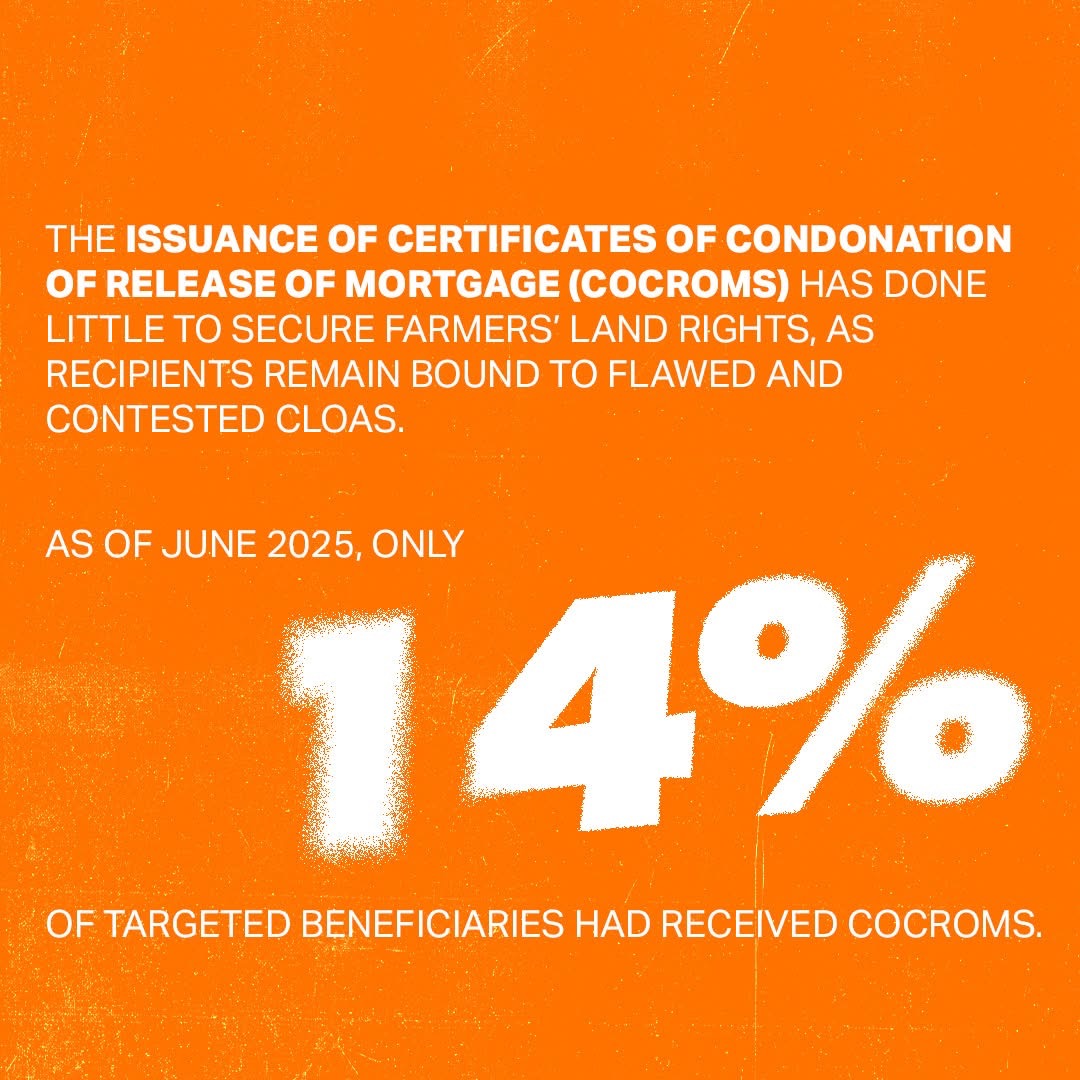
Alongside SPLIT, the government introduced the New Agrarian Emancipation Act (NAEA), which claims to provide relief by cancelling debts owed by agrarian reform beneficiaries (ARBs). Yet most of these debts were either long unpayable or unjust from the outset. The issuance of Certificates of Condonation of Release of Mortgage (COCROMs) has done little to secure farmers’ land rights, as recipients remain bound to flawed and contested CLOAs. KMP also criticized the political timing of COCROM distributions often scheduled near the President’s State of the Nation Address or during election season, undermining the sincerity of the initiative. As of June 2025, only 14% of targeted beneficiaries had received COCROMs.
Meanwhile, unresolved agrarian cases, widespread land-use conversions, and the revocation of previously awarded land continue to erode the rights of farmers. A recent decision by the Court of Appeals ordering the government to pay Php28 billion to Hacienda Luisita Inc. is seen as a stark example of how the state continues to favor landlord interests over the rights of landless farmers.
KMP warns that both SPLIT and NAEA ultimately pave the way for the commercialization of agrarian lands under the Comprehensive Agrarian Reform Program (CARP). These programs open up land for consolidation by landlords, agribusinesses, real estate developers, and foreign investors and further displacing small farmers and agrarian reform beneficiaries.
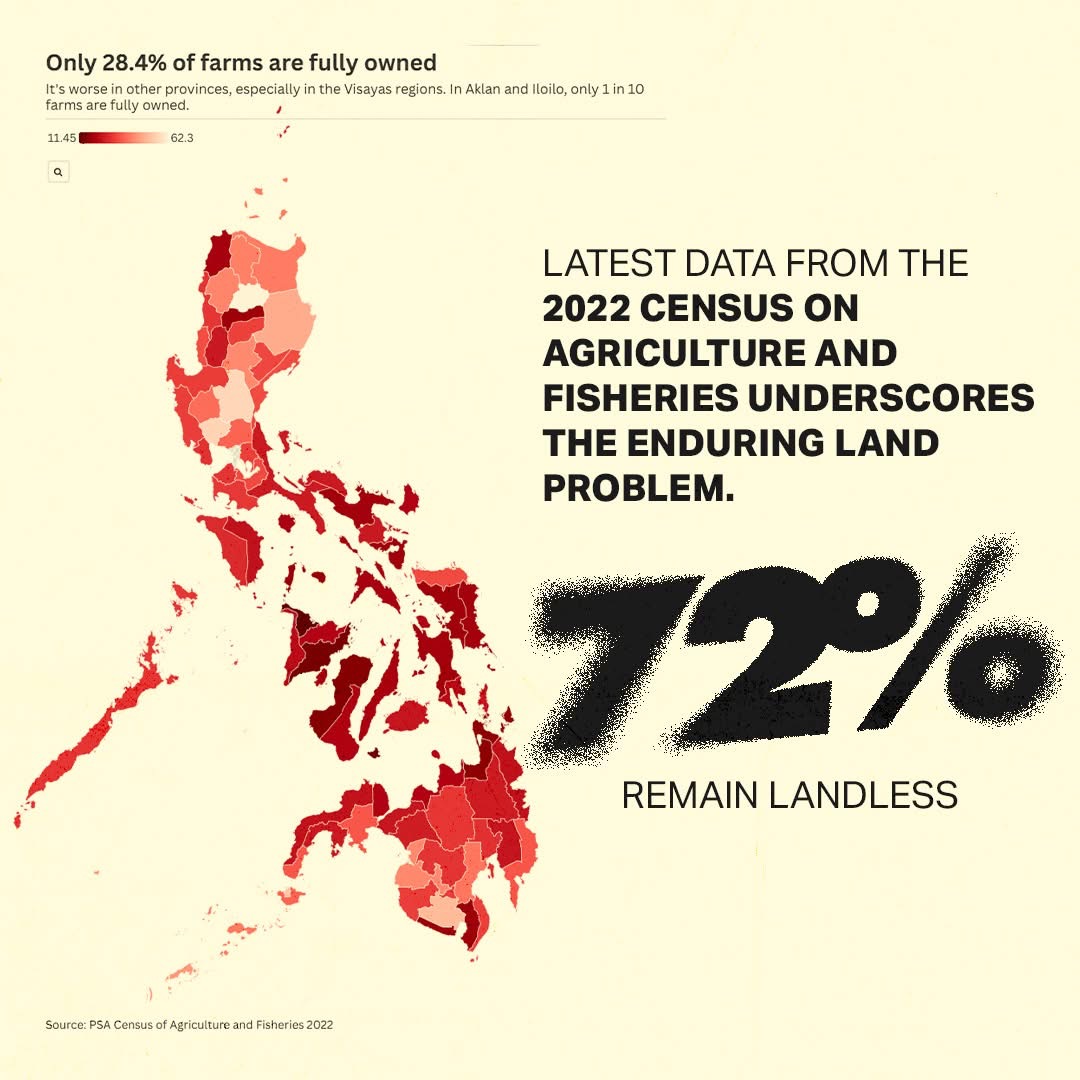
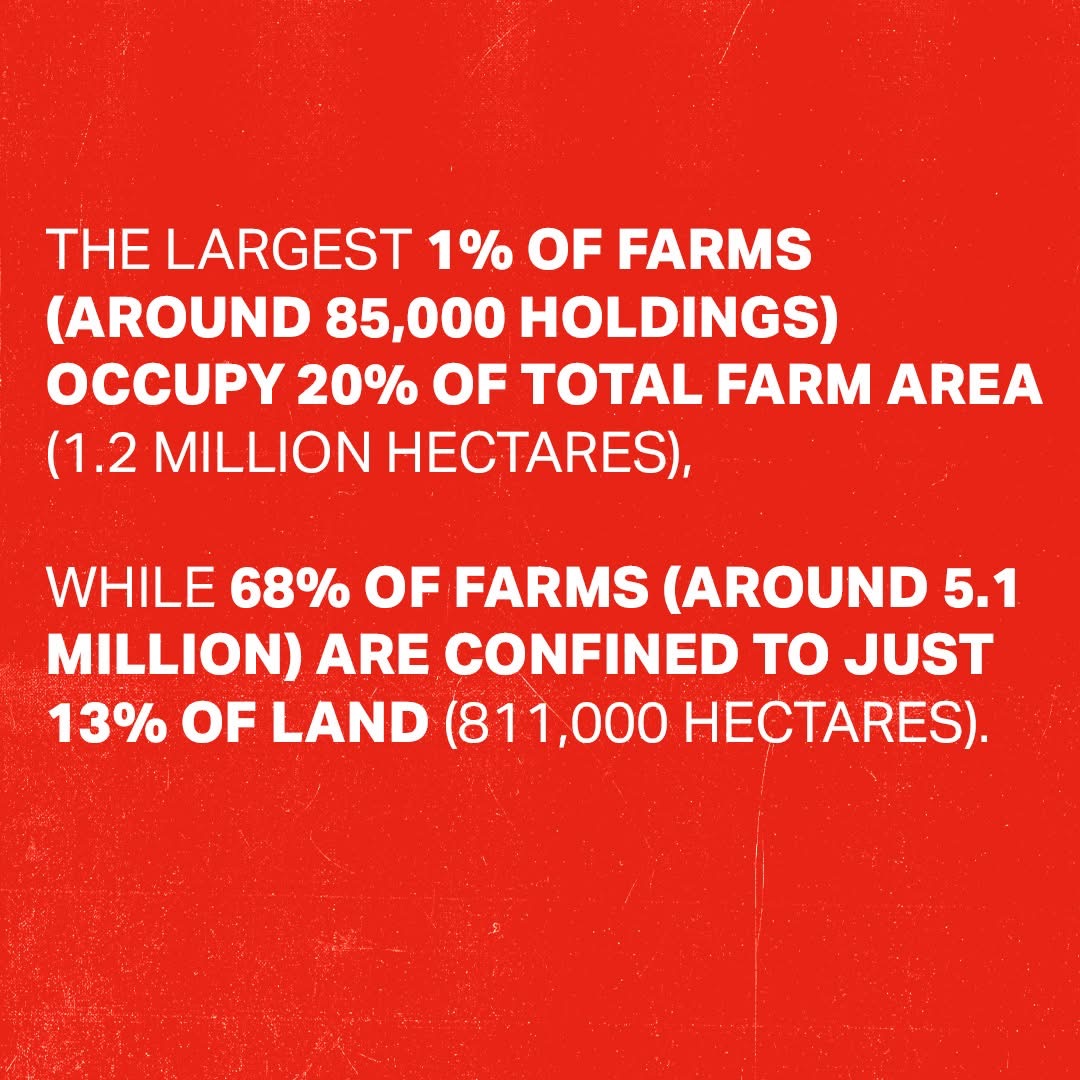
Latest data from the 2022 Census on Agriculture and Fisheries underscores the enduring land problem. Only 28% of farm parcels were fully owned by tillers, meaning 72% or more than seven in ten farmers remain landless. Landholdings also remain deeply skewed: the largest 1% of farms (around 85,000 holdings) occupy 20% of total farm area (1.2 million hectares), while 68% of farms (around 5.1 million) are confined to just 13% of land (811,000 hectares).
Regional disparities further highlight the crisis. In Negros, full ownership stands at only 18%, while less than one percent of entities control over 30% of farmland. These figures exclude vast tracts of non-agricultural lands used for commercial development, real estate, and land banking, which, if included, would reveal even more alarming levels of land concentration.
KMP concludes that instead of delivering justice for farmers, the Marcos Jr. administration has entrenched landlordism and perpetuated social injustices. ###

