
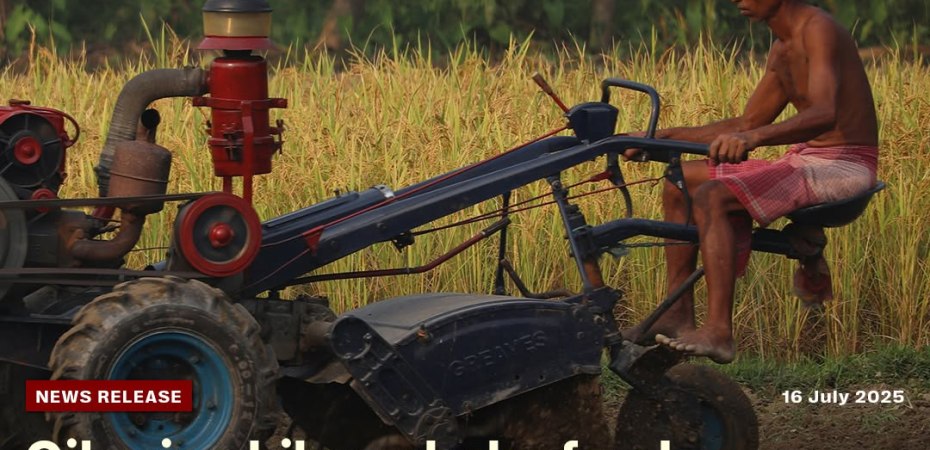
The Kilusang Magbubukid ng Pilipinas (KMP) denounces the Marcos Jr. administration’s continued inaction over the latest big-time oil price hike, which is pushing Filipino farmers further into poverty. This week, major oil firms raised diesel prices by Php1.40 per liter, gasoline by Php0.70, and kerosene by Php0.80, effectively erasing two weeks of minor rollbacks and pushing diesel back to Php58 to Php60 per liter in many provinces.
For farmers who depend on diesel to irrigate rice fields, operate tractors, and haul produce to market, this surge in fuel costs is catastrophic. “Ang diesel na ginagamit ng mga magsasaka sa water pump, sa hand tractor, at sa pagbiyahe ng gulay at palay — kada taas-presyo ay kabawasan sa kakarampot na kita ng mga magsasaka,” said Ronnie Manalo, KMP Secretary-General. “Pero habang lugi kami, patuloy ang kita ng mga dambuhalang kumpanya ng langis.”
Indeed, while fuel costs skyrocket for ordinary Filipinos, oil companies are posting billions in profits. Petron Philippines earned Php8.5 billion in the first quarter of 2025, while Shell Pilipinas took in Php1.3 billion, according to public financial statements. The government, meanwhile, justifies weekly hikes as “staggered increases,” even though these are often based on previously imported oil bought at lower prices. “Ang nakikinabang sa OPH ay ang mga kumpanya ng langis at gobyerno lang,” said Danilo Ramos, KMP Chairperson.
Fuel prices also directly drive up the cost of food. Inflation already rose to 1.4% in June, largely due to higher utility and fuel expenses. Transport and logistics costs are spiking, and food prices, particularly for vegetables, fish, and other non-rice staples are expected to follow. But the Marcos Jr. administration has offered no real support for rural producers. A supposed Php500-million fuel subsidy for farmers remains largely undelivered, but even this is grossly inadequate and has yet to reach many beneficiaries. “Walang direktang tulong at ayuda. Puro pangako lang,” Ramos added.
KMP supports the call of consumer advocates like the SUKI Network to impose a windfall tax on oil profits, remove VAT and excise taxes on petroleum products, and scrap the Oil Deregulation Law, which has long enabled cartel-like pricing and profiteering. The group also calls for stronger public control over fuel pricing, transparency in oil procurement and pricing mechanisms, and the revival of a nationalized oil industry that serves people, not oil moguls. The group urges urgent fuel and other subsidies, support for food producers to help cushion the impact of another round of price shocks.###
 updates from the peasant movement of the Philippines