
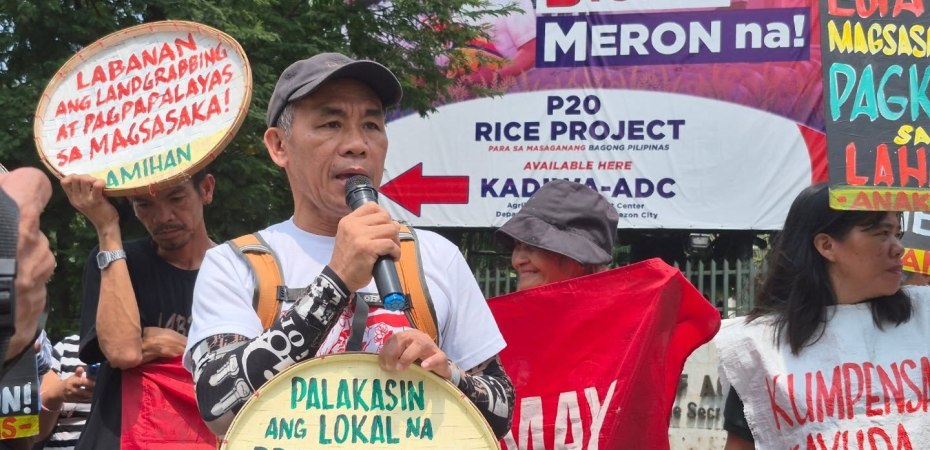
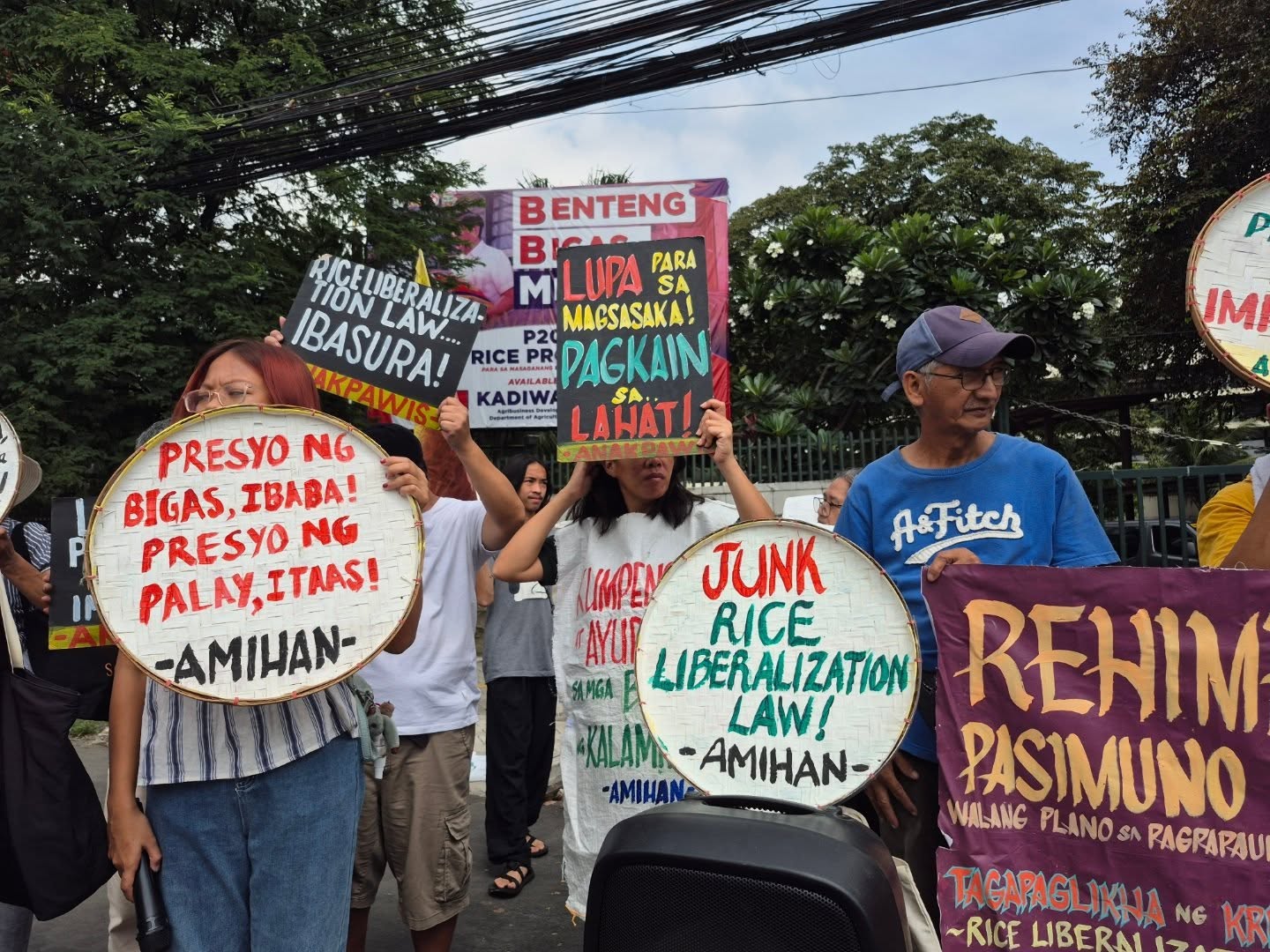
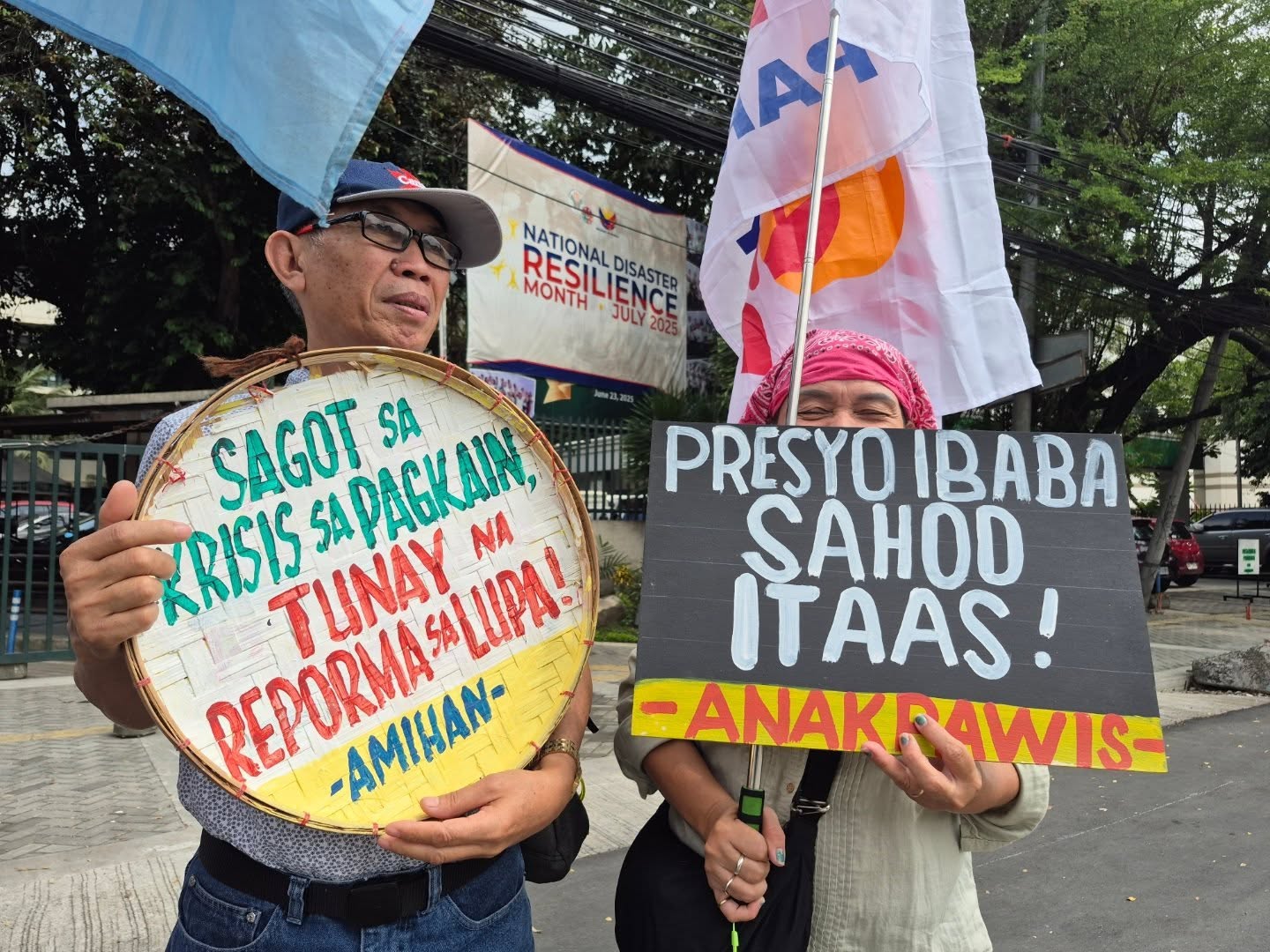
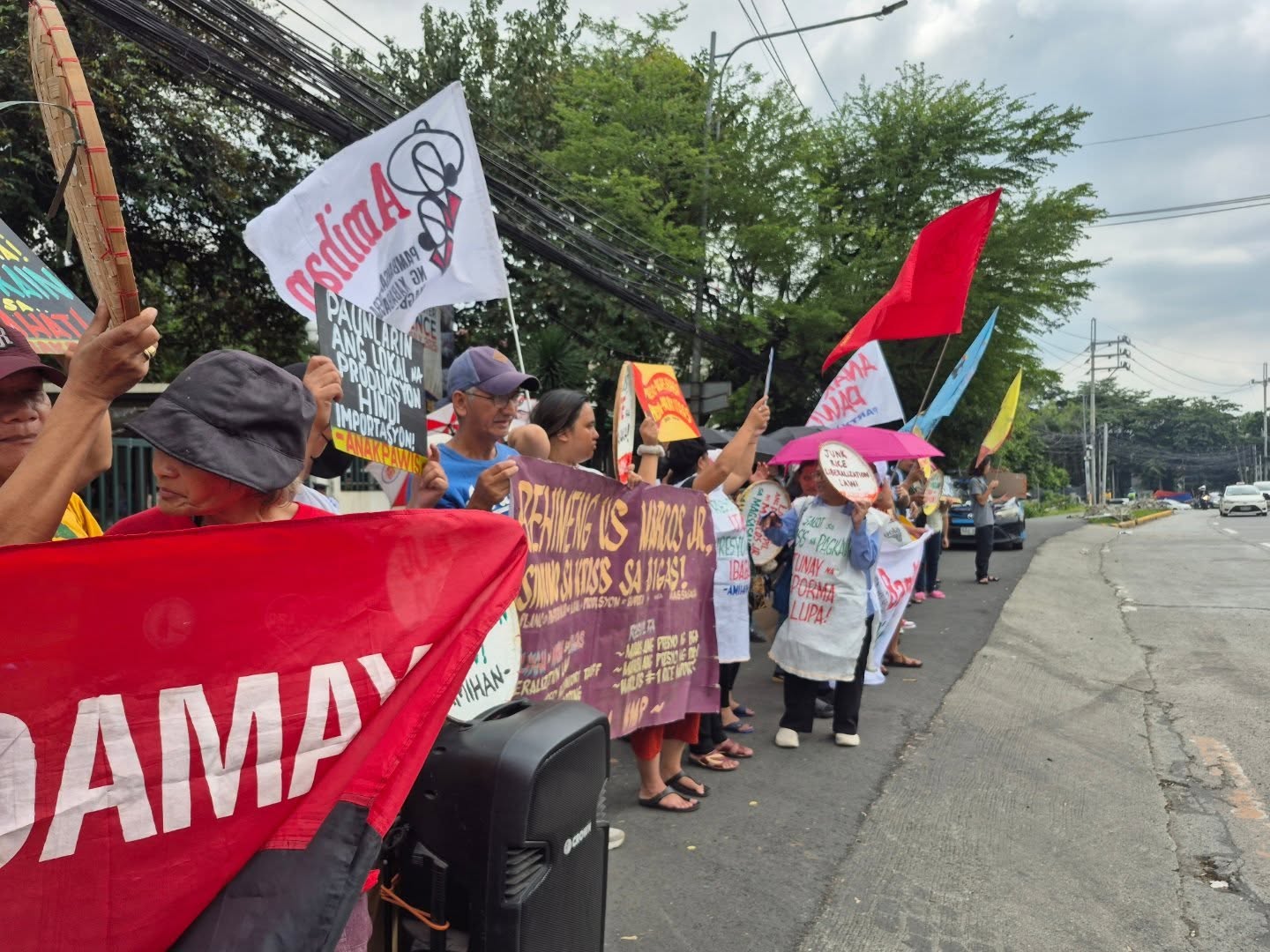
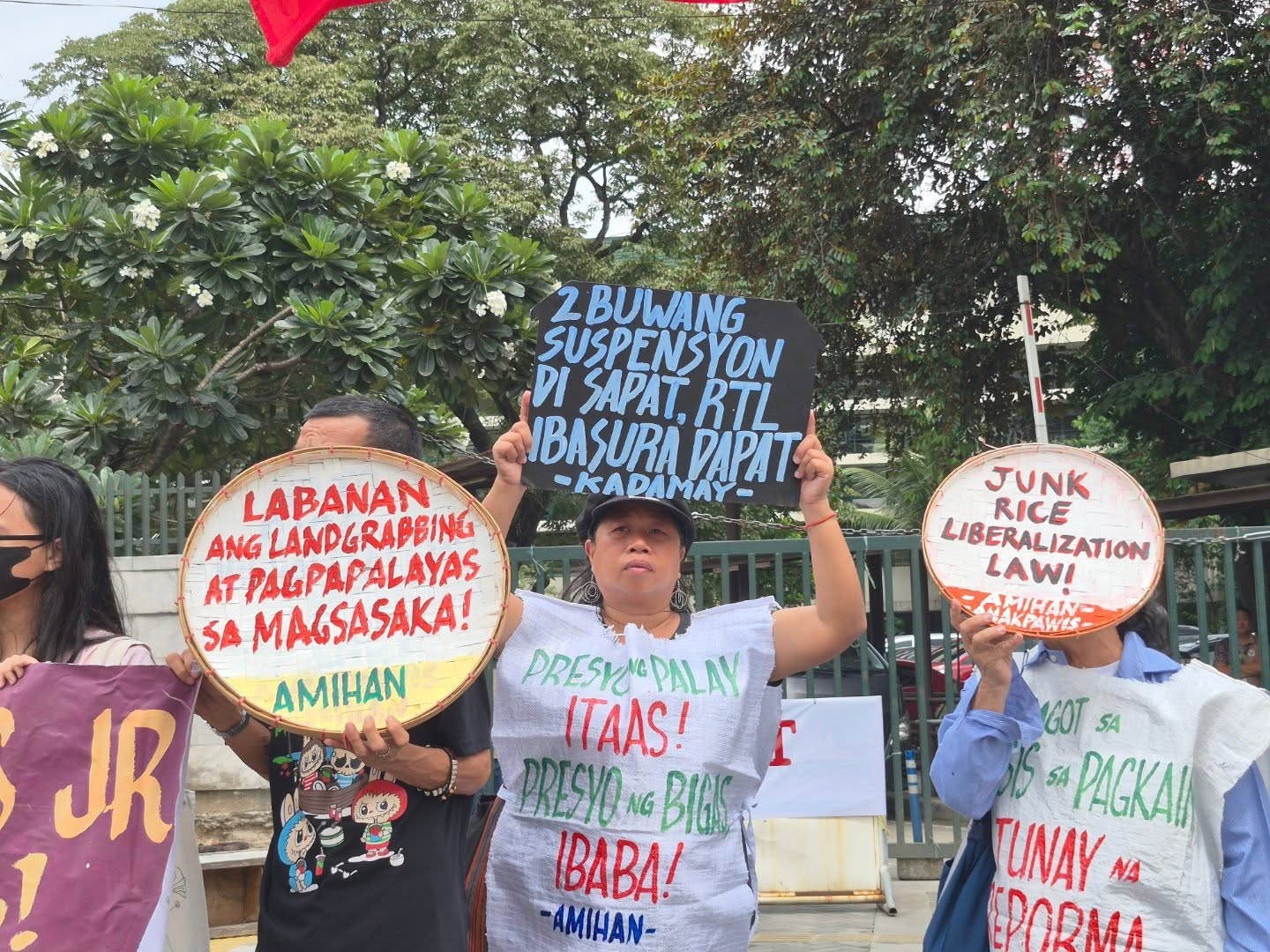
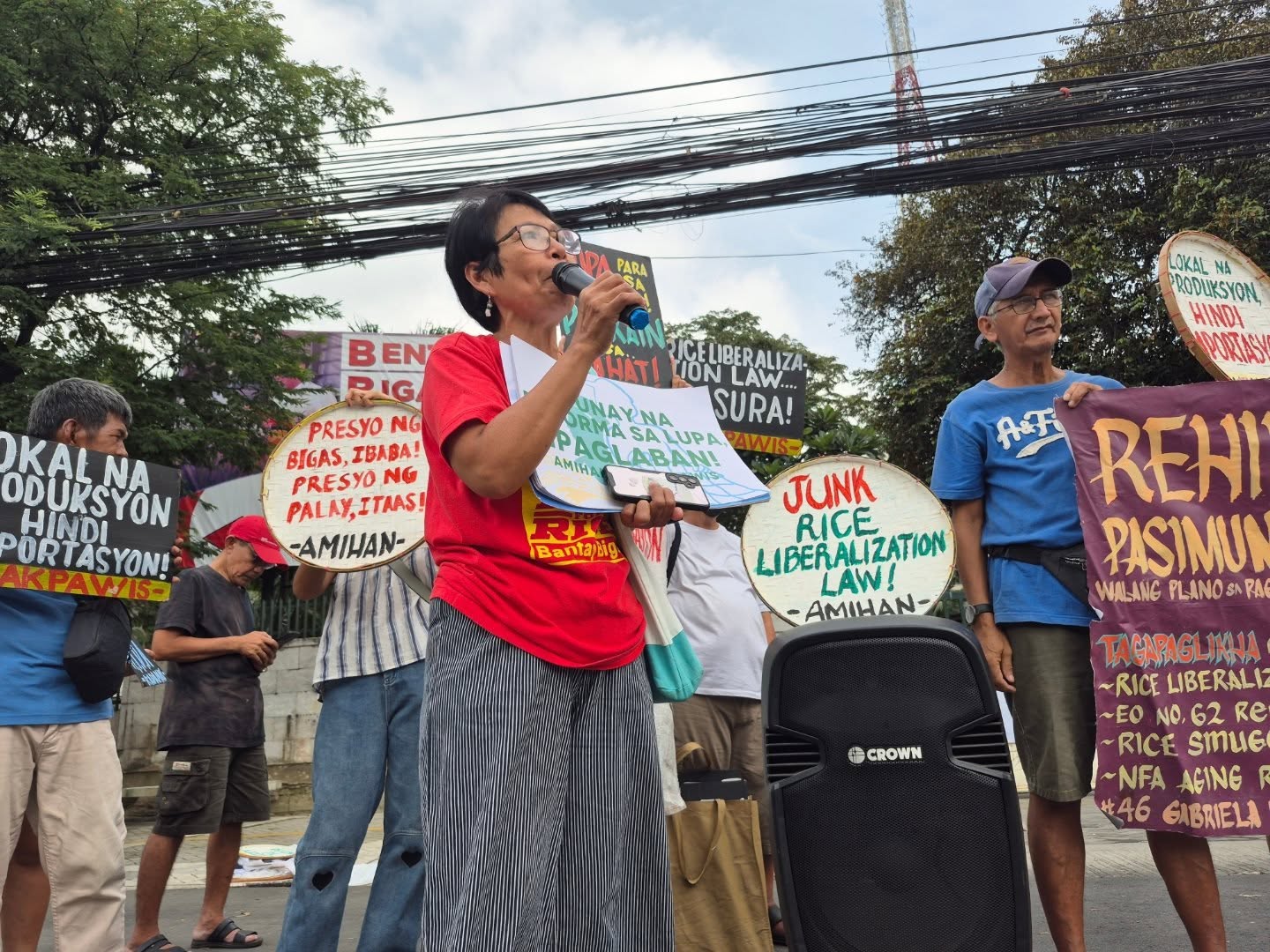
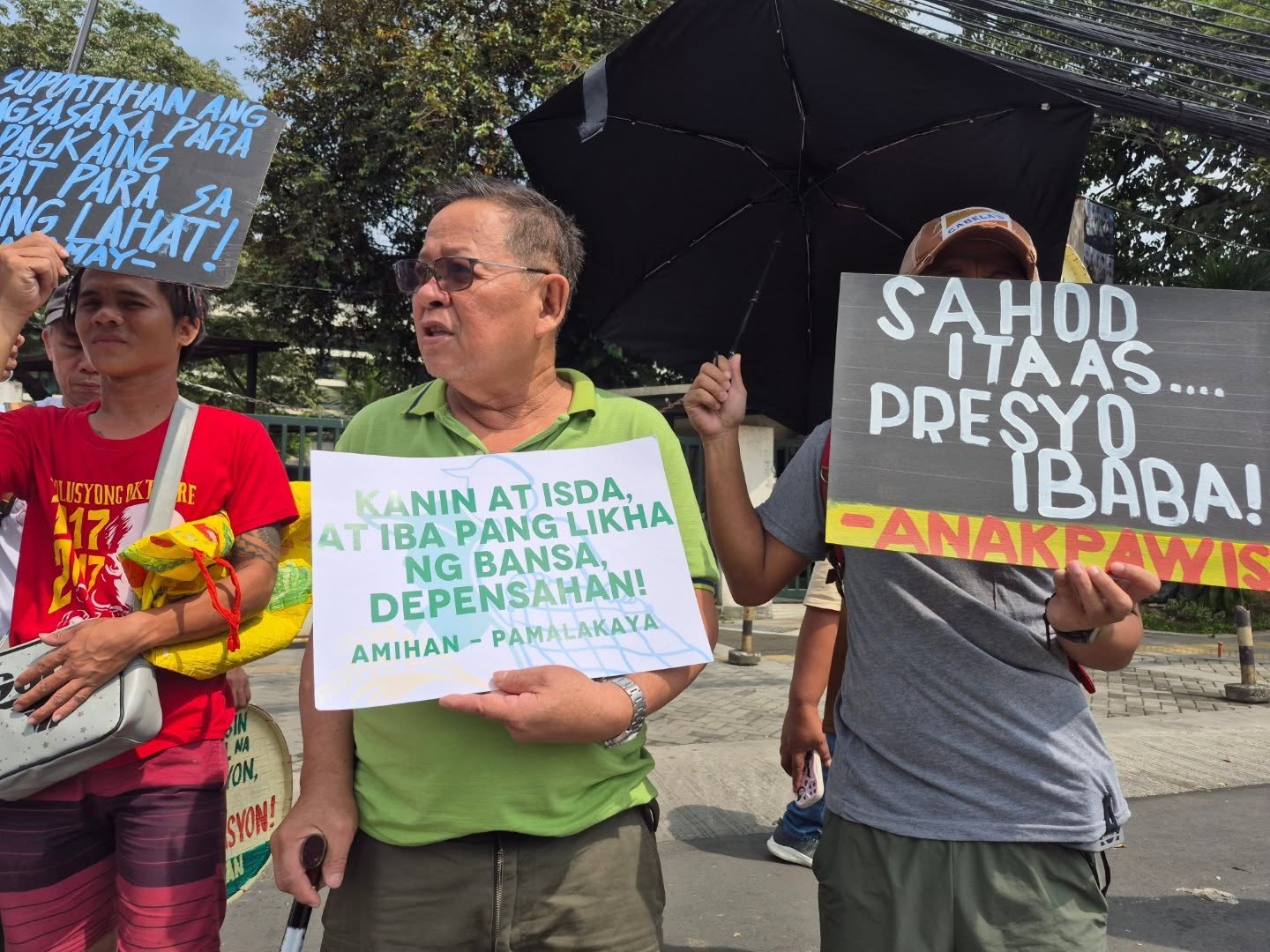
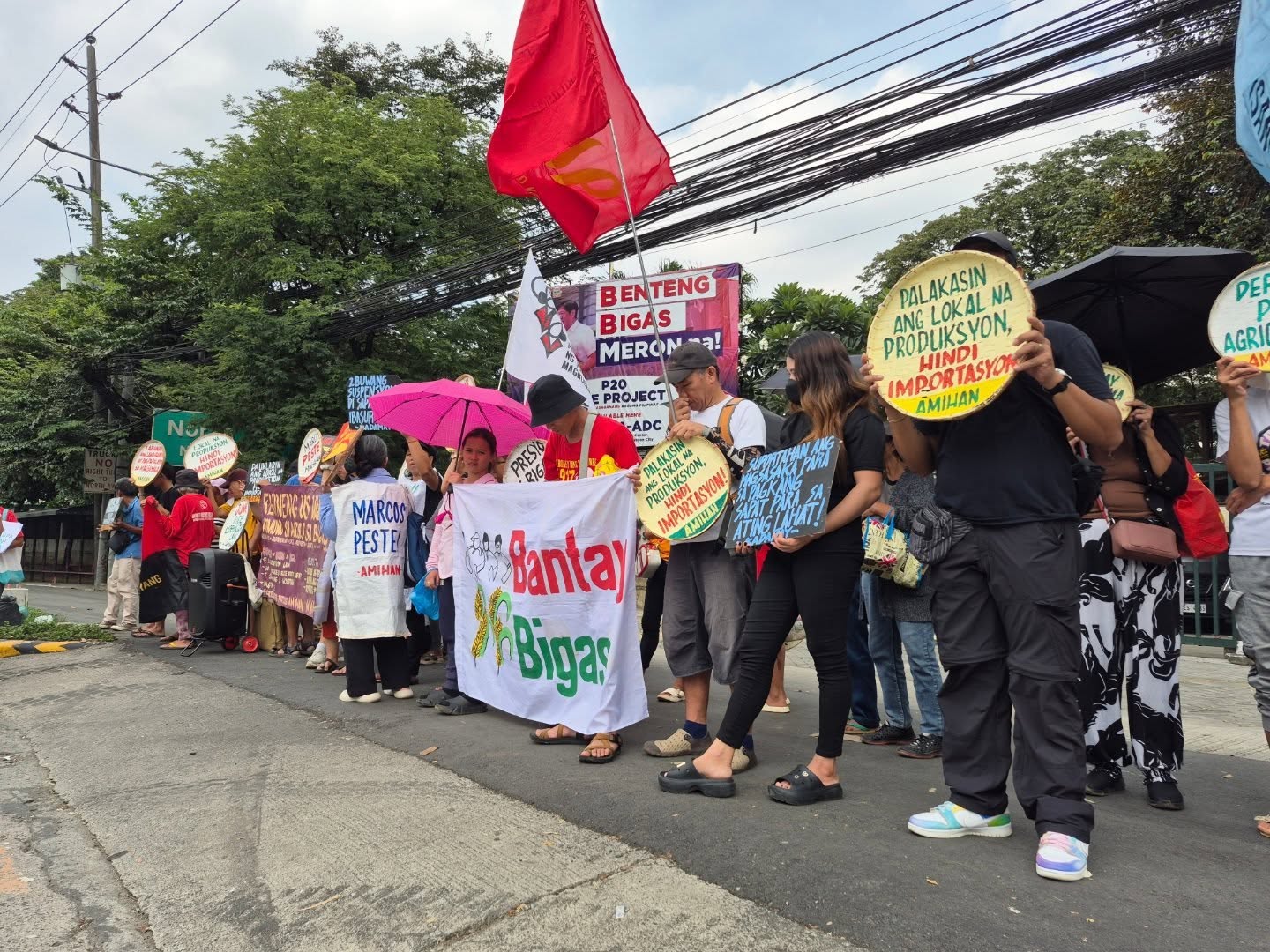
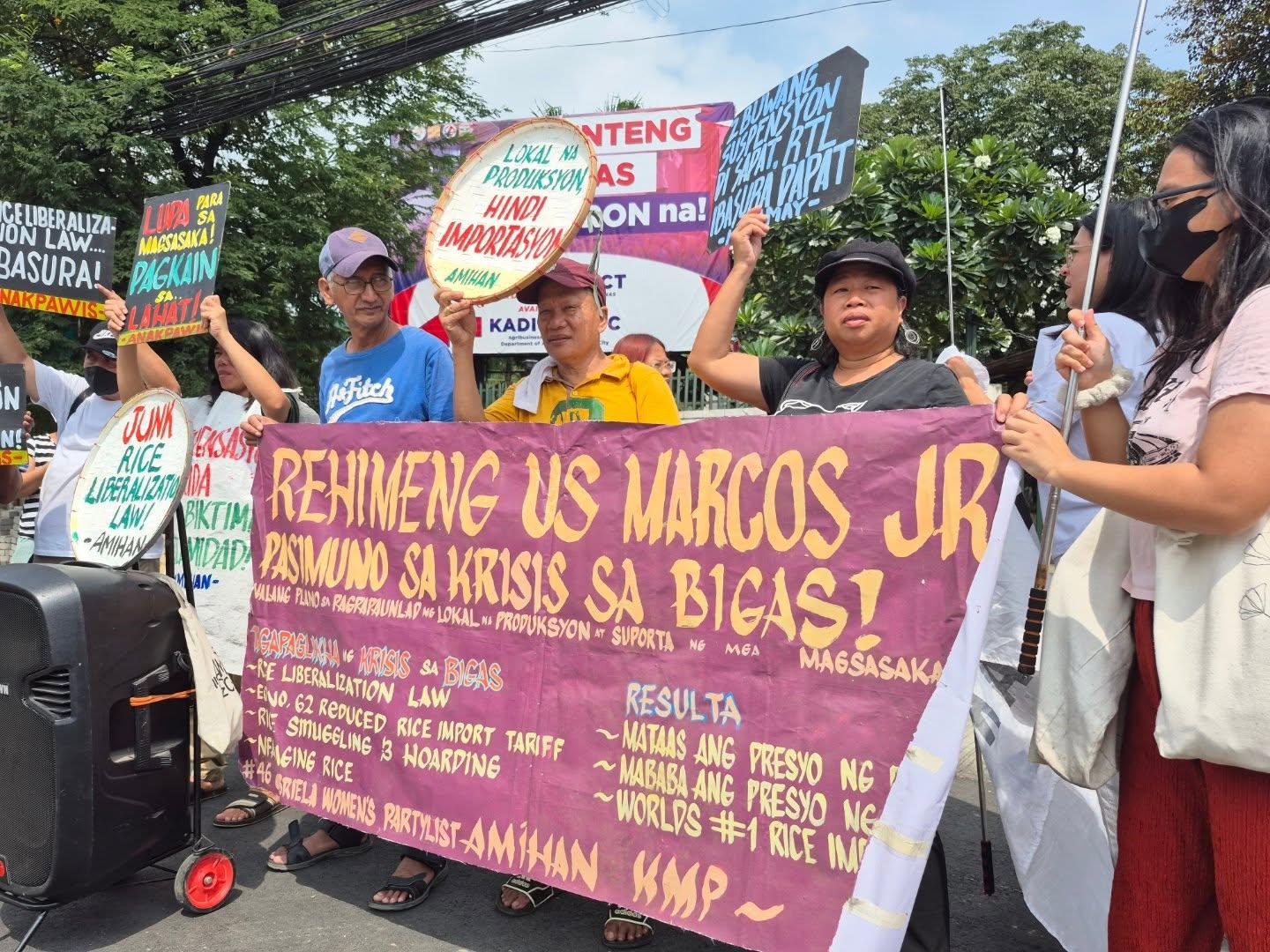
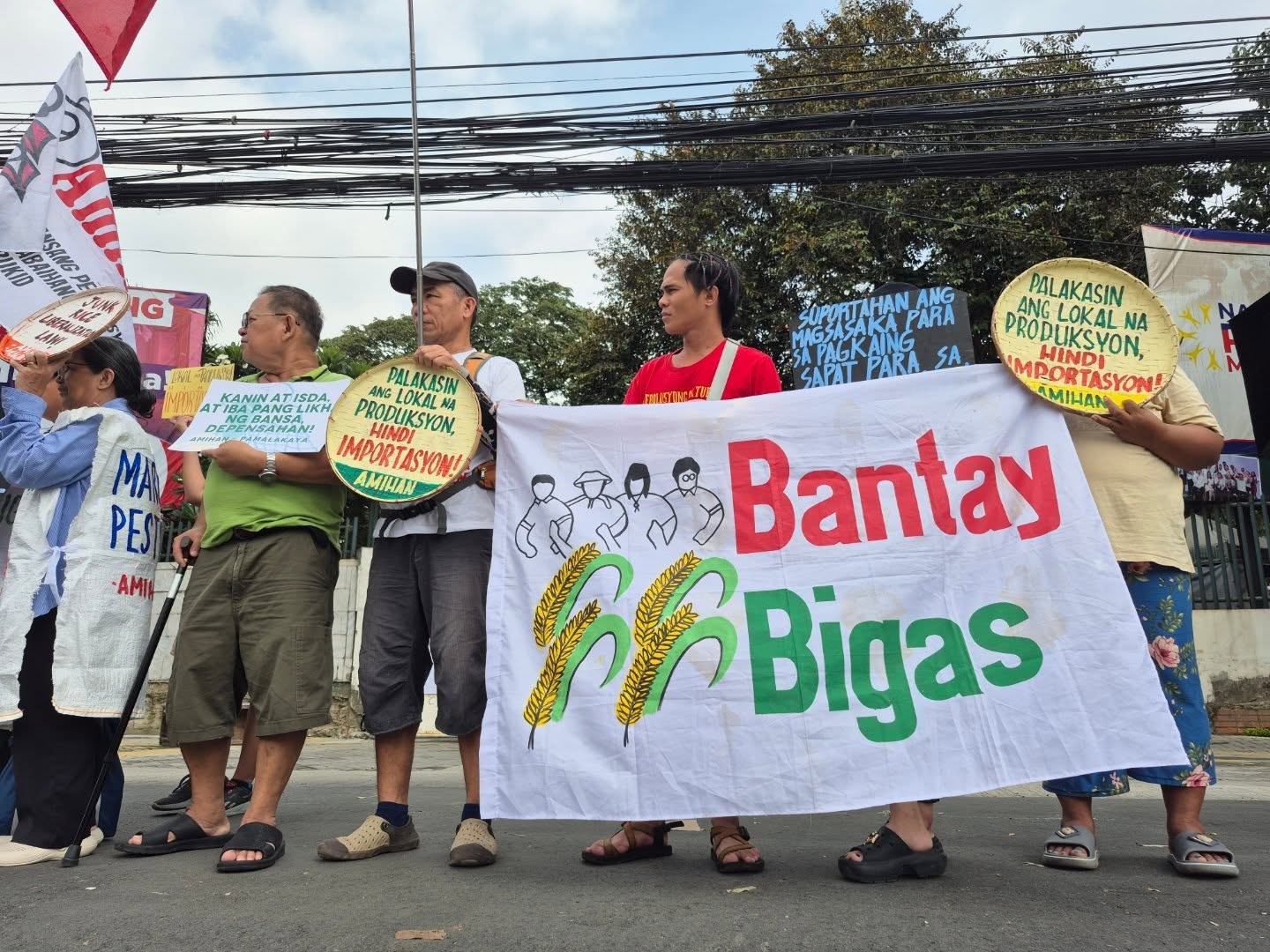
The Kilusang Magbubukid ng Pilipinas (KMP) along with Amihan National Federation of Peasant Women, Bantay Bigas, and other allied farmer organizations stormed the Department of Agriculture on Wednesday, strongly criticizing Ferdinand Marcos Jr’s announcement of a two-month suspension of rice importation starting September 1 as nothing but a calculated political gimmick meant to feign concern for farmers in the midst of a deep and worsening rice crisis. Far from being a genuine pro-farmer measure, this token pause in imports is a desperate attempt to pacify public outrage while leaving untouched the root causes of the chronic problems in Philippine rice production and pricing.
“Sa nakalipas na anim na taon sa ilalim ng Rice Liberalization Law (RLL), lalo lamang nalugmok ang Pilipinas sa import dependency at pagkalugmok ng lokal na produksyon. Ang suspensyon na ito ni Marcos Jr ay palabas lamang. Parang paglagay ng band-aid sa isang sugat na siya lang din ang sanhi ng impeksyon,” said KMP Chairperson Danilo Ramos.
From 2022 to the present, Marcos Jr’s policies have aggressively favored rice imports over local production. His administration issued Executive Orders 10 and 50 to extend lower rice tariffs, and in June 2024, EO 62 slashed tariffs further from 35% to 15% until 2028. The result: a deluge of imported rice flooding our markets. Monthly rice import arrivals jumped from an average of 260,000 metric tons (MT) since 2019 to nearly 390,000 MT after EO 62. In October 2024 alone, a harvest month for local farmers, imports reached a record 572,000 MT, surpassing the entire annual imports of 2013. In total, 2024 saw 4.8 million MT of imported rice, with 2025 poised to break a new record of 5.4 million MT, cementing the Philippines’ status as the world’s top rice importer.
This import glut has devastated palay prices. Farmgate prices have plummeted to as low as P8-10 per kilo, way below break-even. Between 2018 and 2023, the average annual net returns of rice farmers fell by ₱6,268 per hectare.
“Ito ang kalagayan sa kanayunan: ang mga magsasaka na nagpapakain sa bansa ay kumikita ng mas mababa pa sa P5000 kada taniman, habang ang mga malalaking trader at importer ng bigas ay kumikita ng bilyon-bilyon. Hindi mababago ng 60 na araw na import pause na ito ang sitwasyon. Panabing lamang ito para pagtakpan ang kabiguang tuparin ang ipinangakong P20 na kilo na bigas,” Ramos added.
KMP asserts that this political charade cannot hide the truth: Marcos Jr is the single biggest saboteur of the Philippine rice industry. He has entrenched an import-dependent, trader-dominated system that squeezes farmers dry and keeps consumers hostage to volatile global markets.
“Si Marcos Jr ay nagbabalatkayo upang makakuha ng simpatya, pero malinaw sa mga magsasaka na hindi ito para iligtas ang lokal na agrikultura kundi para iligtas ang kanyang imahe lalo matapos ang SONA. Hangga’t umiiral ang RLL at patuloy na umaasa sa importasyon imbes na mag-invest sa sariling magsasaka, mananatili ang krisis sa bigas,” Ramos concluded. ###

