
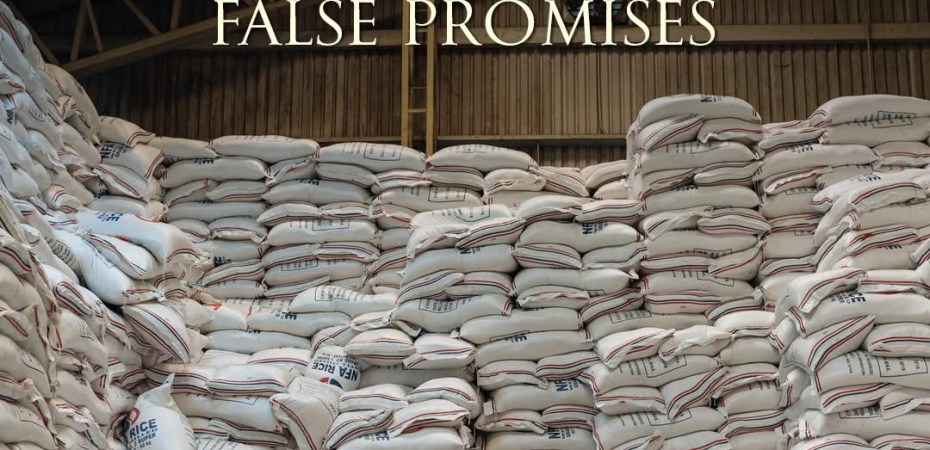
The Kilusang Magbubukid ng Pilipinas (KMP), together with Amihan National Federation of Peasant Women, strongly condemned the Department of Agriculture’s formation of a Technical Working Group (TWG) on rice importation, asserting that it represents a continuation of failed policy and broken promises in the domestic rice industry that undermine Filipino farmers and food security.
The DA announced that it has created the Rice Importation TWG to establish a more structured, data-driven system for planning rice imports, stabilizing supply and prices, and providing strict guidance for local producers. According to the DA, the TWG is intended to replace ad hoc import authorizations with a transparent process that can “help address regional supply gaps and better align import timing and volume with actual needs.”
KMP, however, said the creation of the TWG highlights how the regime of President Ferdinand Marcos Jr. continues to lean on unabated liberalized rice importation as the central response to the ongoing rice crisis, instead of pursuing policies that genuinely protect farmers and promote domestic production.
“Ang pagbubo ng ganitong TWG ay hindi tunay na solusyon sa suliranin ng bigas,” said Danilo Ramos, chairperson of KMP. “Ito ay patunay muli na ang pangakong P20 kada kilo ay pampabango lang ng administrasyon. Walang tunay na proteksyon sa magsasaka at rice producers. Numero uno pa rin sa DA at Malakanyang ang importasyon sa halip na pagpapalakas sa lokal na produksyon.”
“Pitong taon matapos ang RA 11203, puros remedyo at pantapal pa rin ang ginagawa ng gobyerno sa napakalalang danyos ng liberalisasyon sa mga magsasaka at buong industriya ng bigas,” Ramos added.
The DA’s announcement also mentions the possibility of future mechanisms that could link participation in import activities to purchasing obligations for palay, and the use of real time stock reporting to inform decisions on rice import volume and timing. While framed as “data-driven” and “strategic,” KMP and allied groups assert that this approach will further expose the local industry to foreign competition and depress already low farmgate prices, with no to very limited benefit to Filipino producers or consumers.
“Hindi po ito tunay na proteksyon para sa mga magsasaka,” said Cathy Estavillo of Amihan and Bantay Bigas. “Kung tunay na layunin ay pababain ang presyo at patatagin ang suplay, dapat bigyan ng sapat na suporta ang lokal na produksyon. Hinding-hindi solusyon ang importasyon sa kahirapan ng mga magsasaka at konsyumer.”
KMP also pointed to the broader context of rice policy under the Marcos administration, including the continuation of the Rice Liberalization Law (Republic Act 11203 amended through RA 12078) and token reductions in rice tariff levels, as evidence that government priorities remain aligned with liberal import regimes rather than genuine protective measures for local farmers.
The DA has projected rice imports this year to be in the range of about 3.6 million to 3.8 million metric tons (MT). While imports last year was lower than the 2024 record-high importation of 4.8 million MT, palay farmgate prices remained low while rice retail prices continue to fluctuate.
The group reiterated calls for a fundamental shift in national rice policy toward real support for Filipino farmers: including genuine production subsidies and assistance, and protection of domestic rice markets instead of deeper reliance on imported rice.
KMP emphasized that without such a shift, initiatives like the rice importation TWG will serve primarily as political cover for policy failures, while leaving farmers and consumers forever vulnerable to low farmgate prices and higher prices at the retail. ###
 updates from the peasant movement of the Philippines