
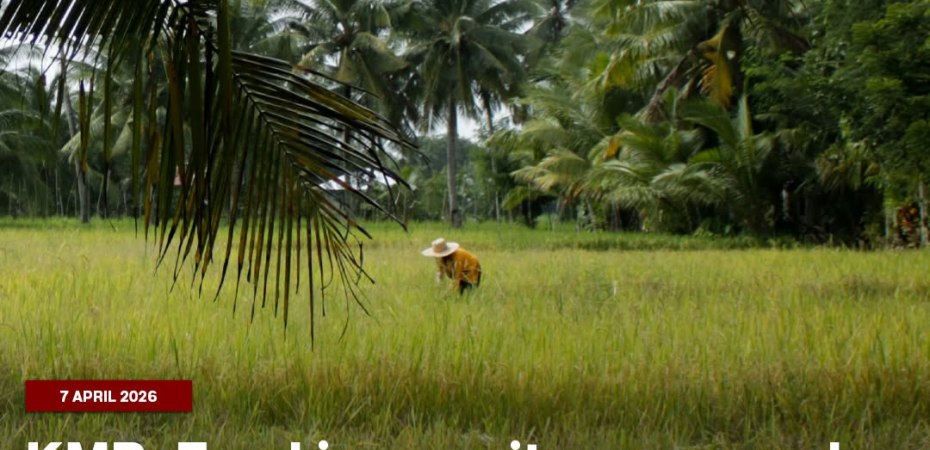
The Kilusang Magbubukid ng Pilipinas (KMP) warned that the ongoing fuel crisis will further deepen the long-standing weaknesses of the PH agriculture, underscoring the urgent need to strengthen domestic production and reduce reliance on agri and food imports.
The peasant group said the country has long faced chronic food insecurity marked by declining local production, widespread landlessness, inadequate State support, and heavy dependence on imported food and farm inputs. “These conditions have left the local agriculture vulnerable to global price shocks, with fertilizer and other key inputs largely controlled by foreign corporations. Basic support systems such as irrigation, storage, and processing facilities also remain insufficient, keeping productivity low and costs high,” said KMP Secretary General Ronnie Manalo.
Continued reliance on rice importation estimated at 3.8 to 5.1 million metric tons (MTT), has further undermined local producers and exposed the country to volatile global markets. Earlier projections suggested a record high of 5.5 MMT. According to the Department of Agriculture, despite the slight increase in output, rice imports are projected to climb to 5.1 MMT, up 15.9% from 4.40 MMT in the previous year.
“Importation is not the solution to the rising fuel and fertilizer costs. The worsening situation brought about the US-Israel war in the Middle East is now forcing farmers and fisherfolk to scale down or halt operations altogether. Agricultural traders are cutting down procurement and transport, tightening supply and pushing food prices further beyond consumers’ reach.”
“Import dependence has weakened our agriculture for decades. It has displaced local producers and made our food system more vulnerable to global crises. Tiyak na epekto ng fuel crisis ang mas malubhang krisis sa pagkain at kagutuman ng mamamayan.”
“What we are seeing now is the result of decades of neglect and wrong policies. Strengthening local production is the only way to achieve real food security amid this prolonged crisis,” Manalo said. KMP stressed that the food crisis stems from decades of neoliberal policies that liberalized imports and weakened state support, leading to declining domestic output, loss of farmer livelihoods, and an unstable food supply.”
The group called for urgent and long-term measures, including substantial production subsidies of up to Php50,000 per cropping for rice farmers, monthly subsidies for fisherfolk, price controls on fuel, fertilizer, pesticides, rice, and other basic goods, and the removal of taxes on oil.
It also urged the expansion of public procurement and distribution through the National Food Authority (NFA), the release of buffer stocks to stabilize rice prices, increased public investment in irrigation, storage, drying, and processing facilities, and tighter regulation of large traders and importers to prevent price manipulation.
Beyond immediate measures, KMP called for reversing import liberalization policies, strengthening the NFA’s role in procurement and price stabilization, developing a national fertilizer industry, implementing genuine agrarian reform, and advancing national industrialization.
“Food security cannot be achieved through importation. It must be built on a strong domestic agriculture sector fully supported by the state,” Manalo added. ###

