
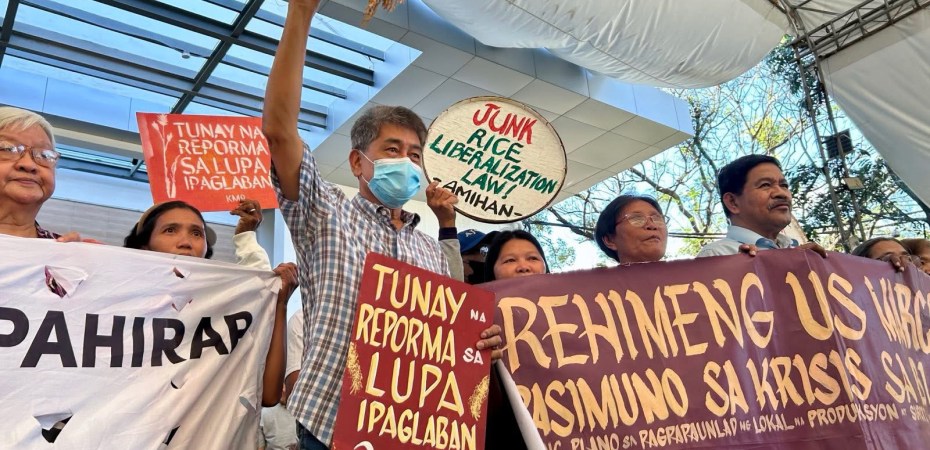
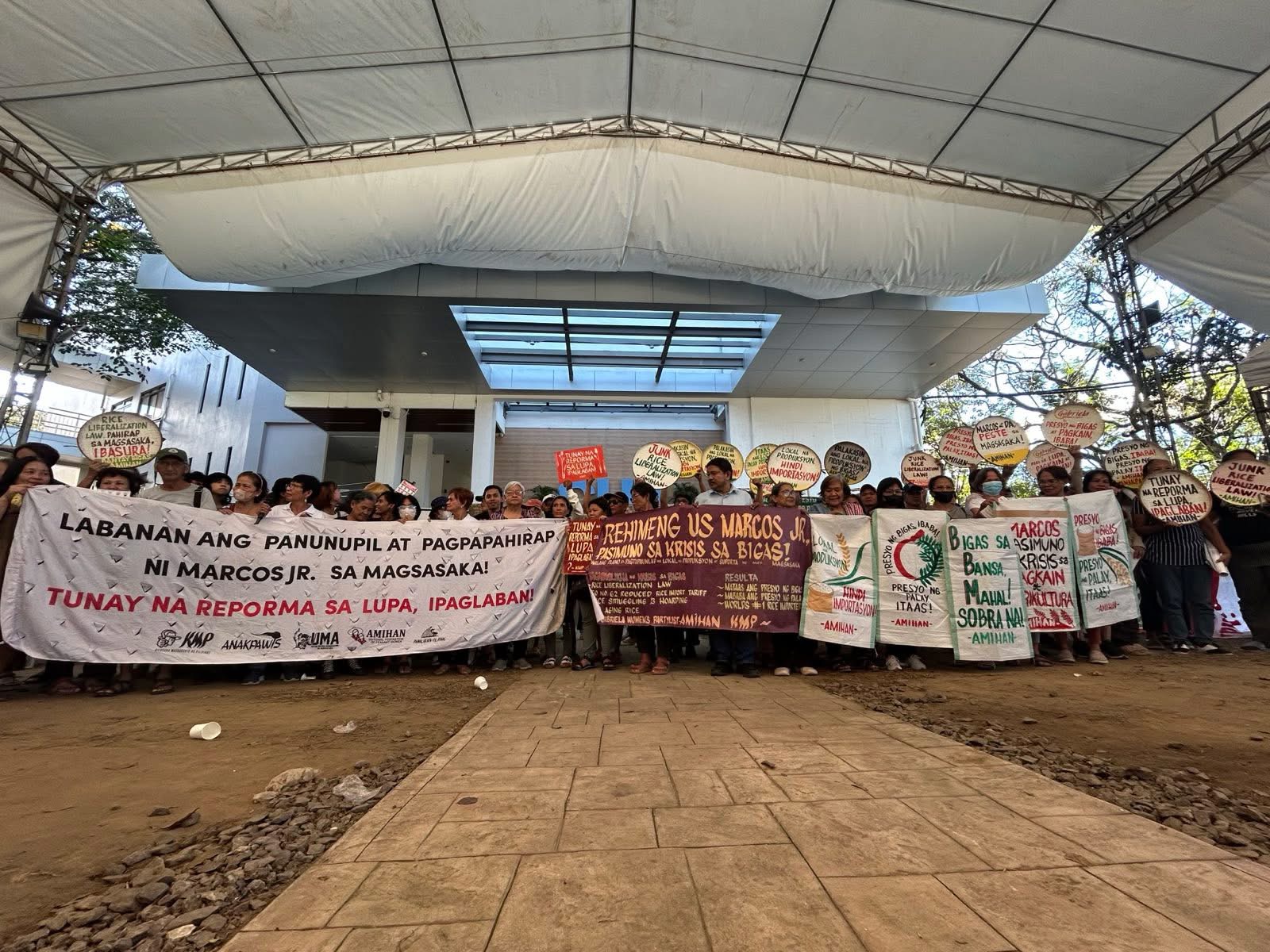
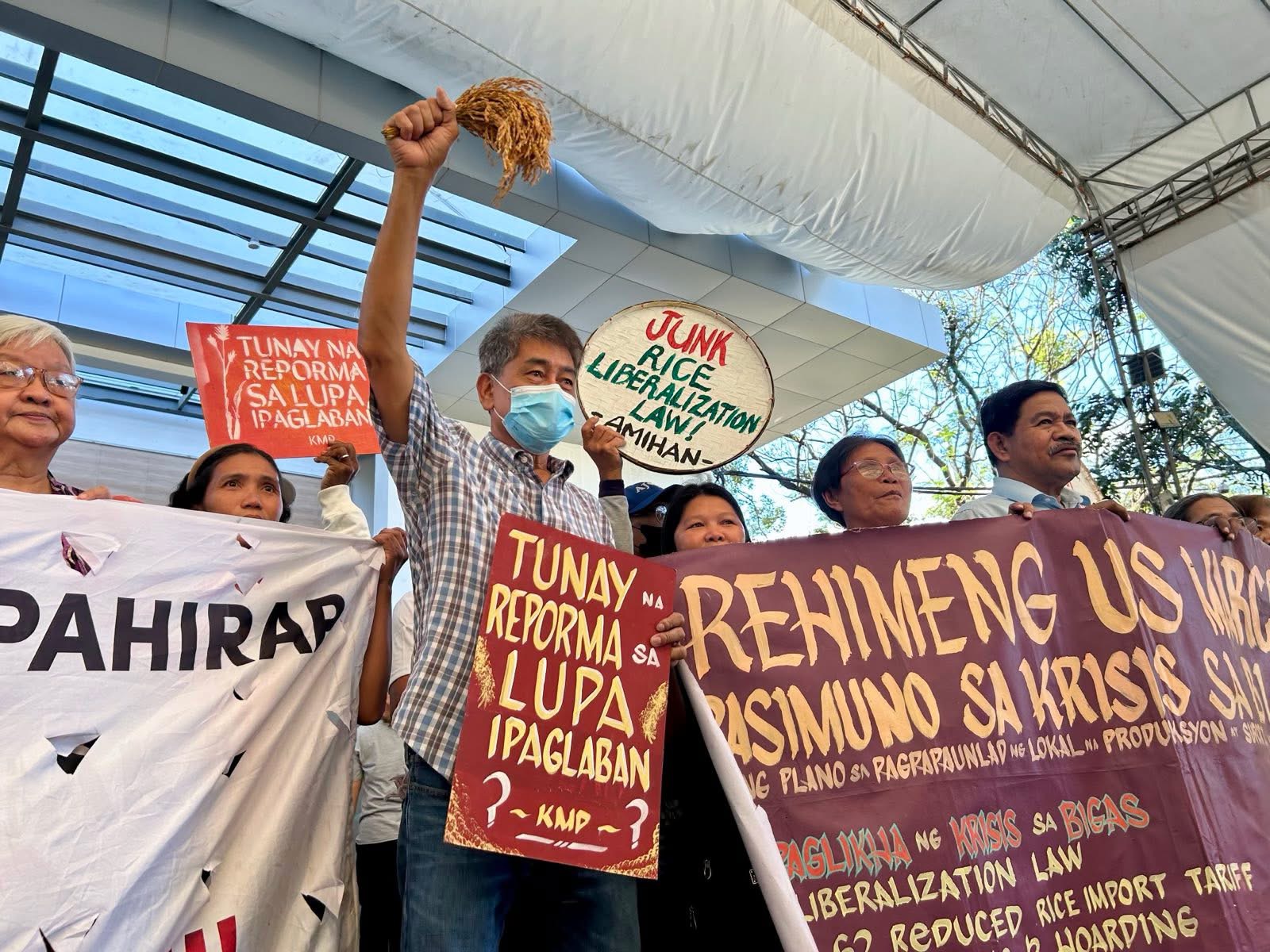
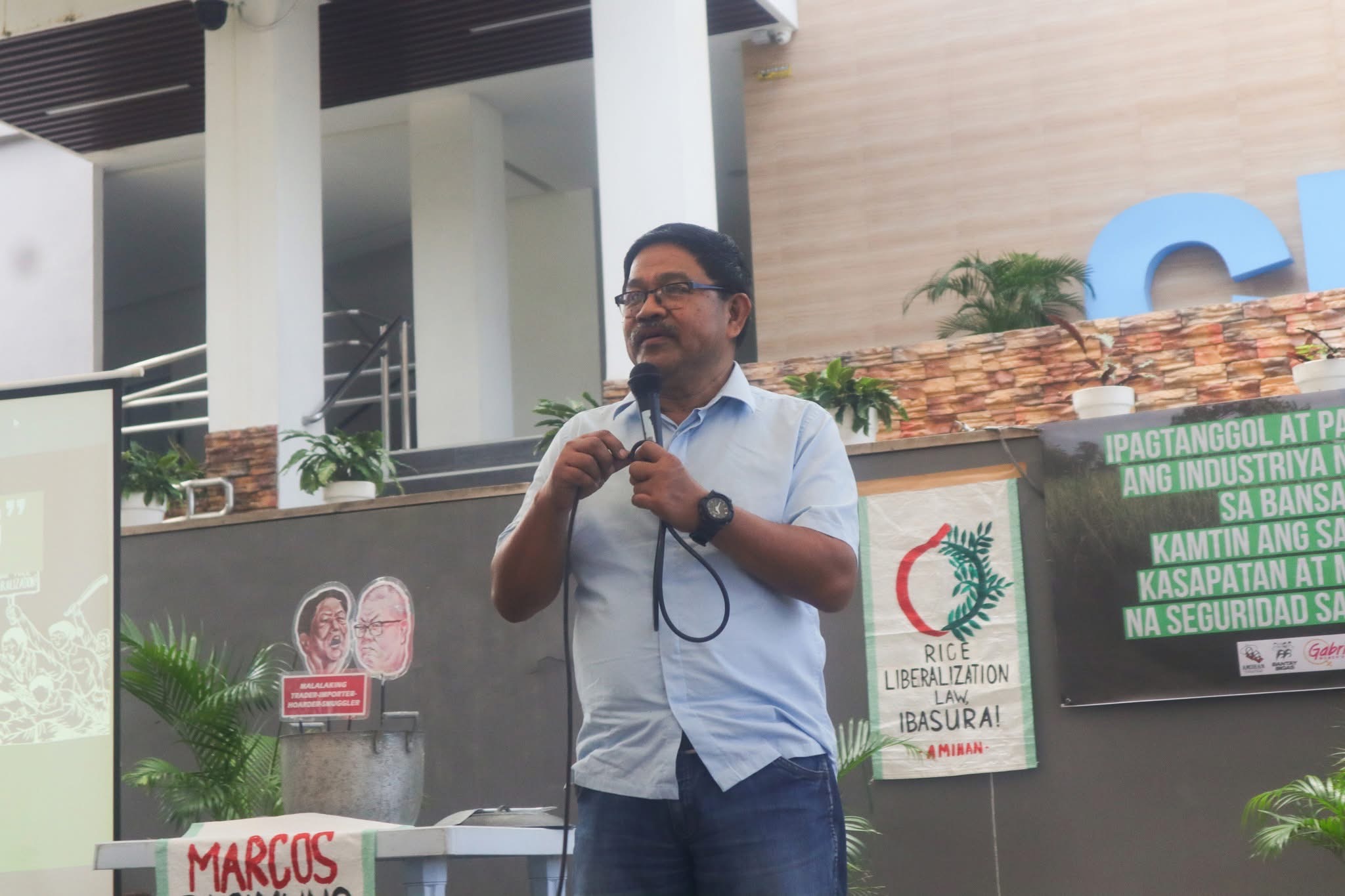
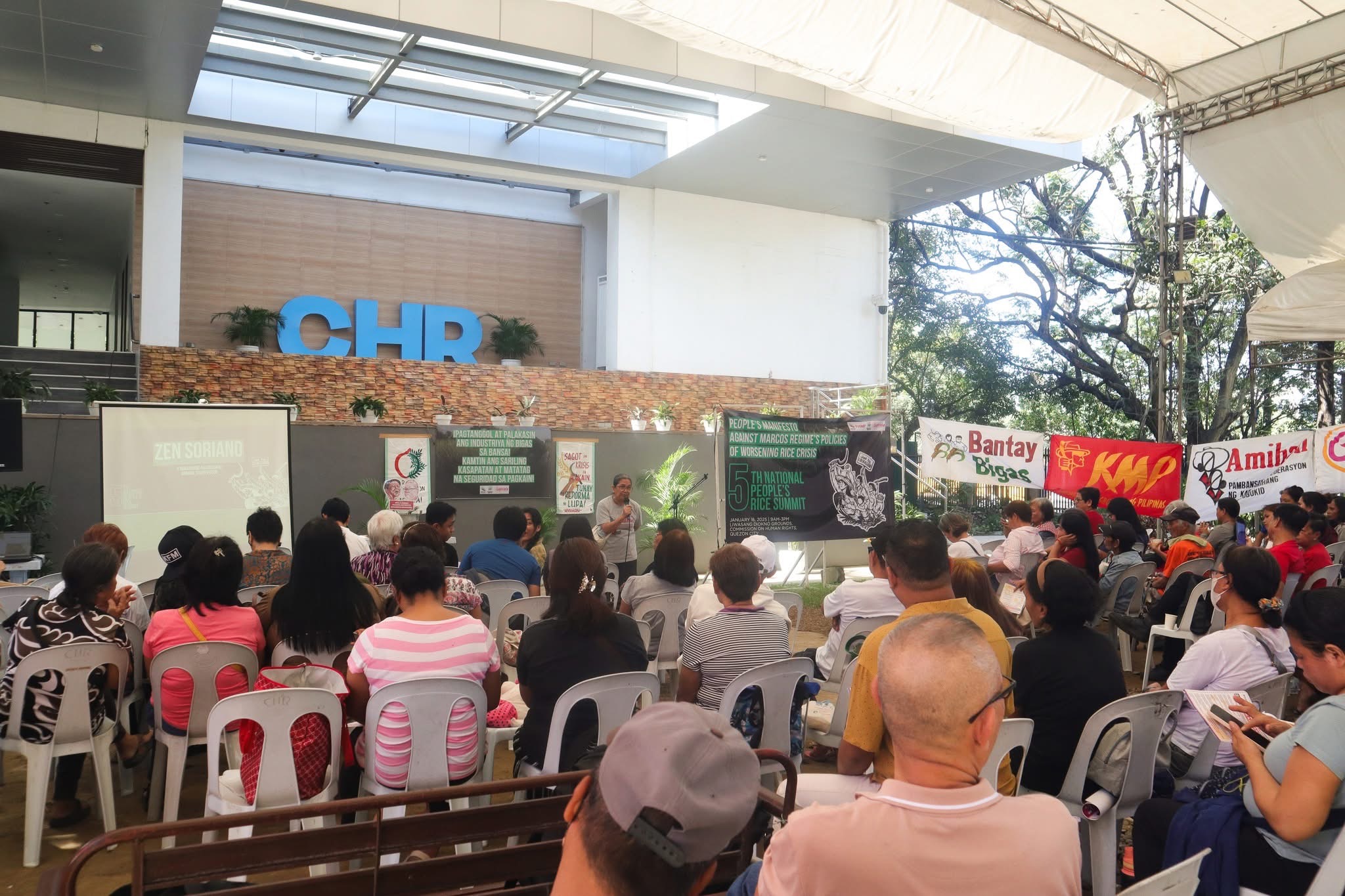
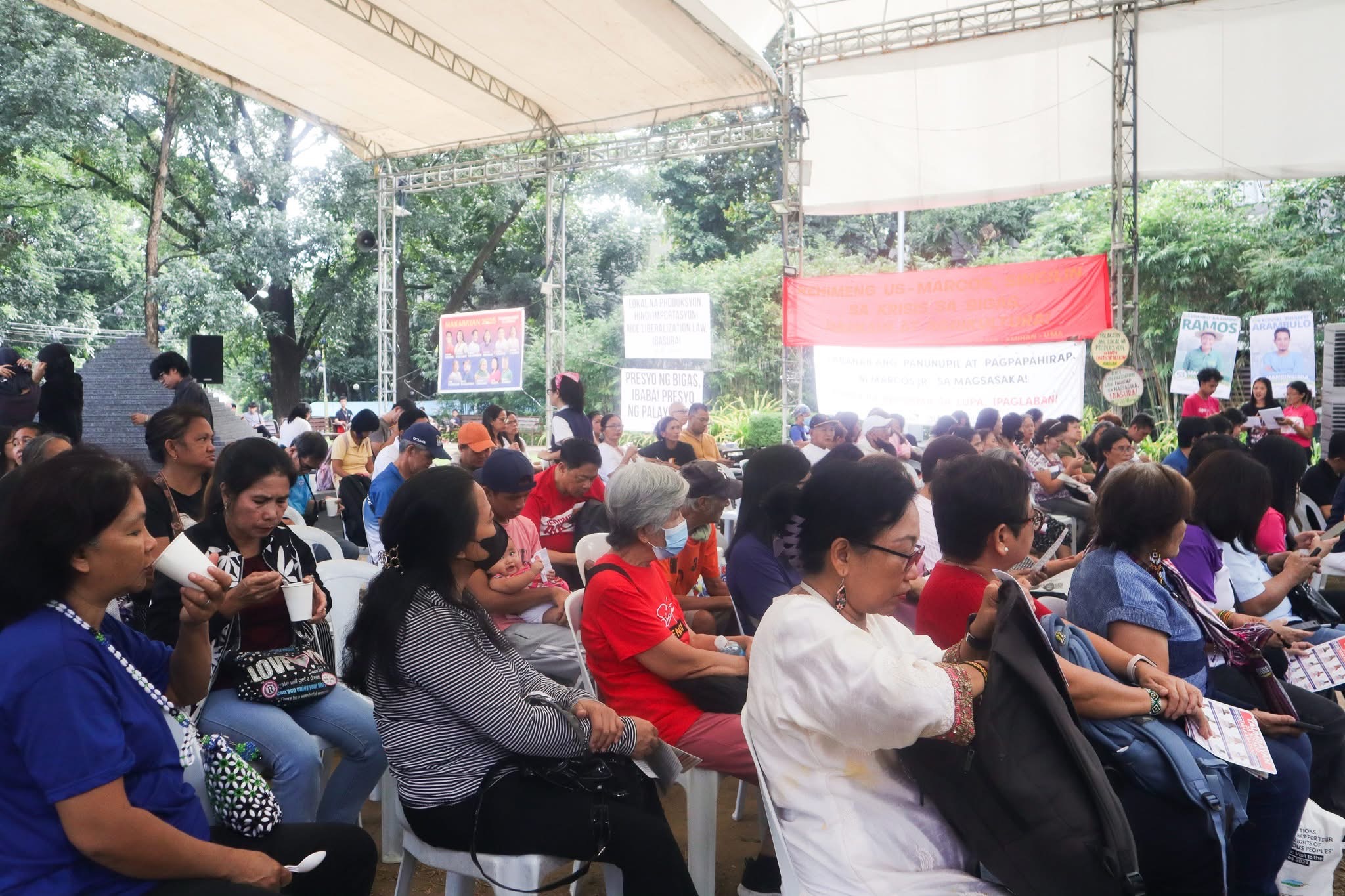
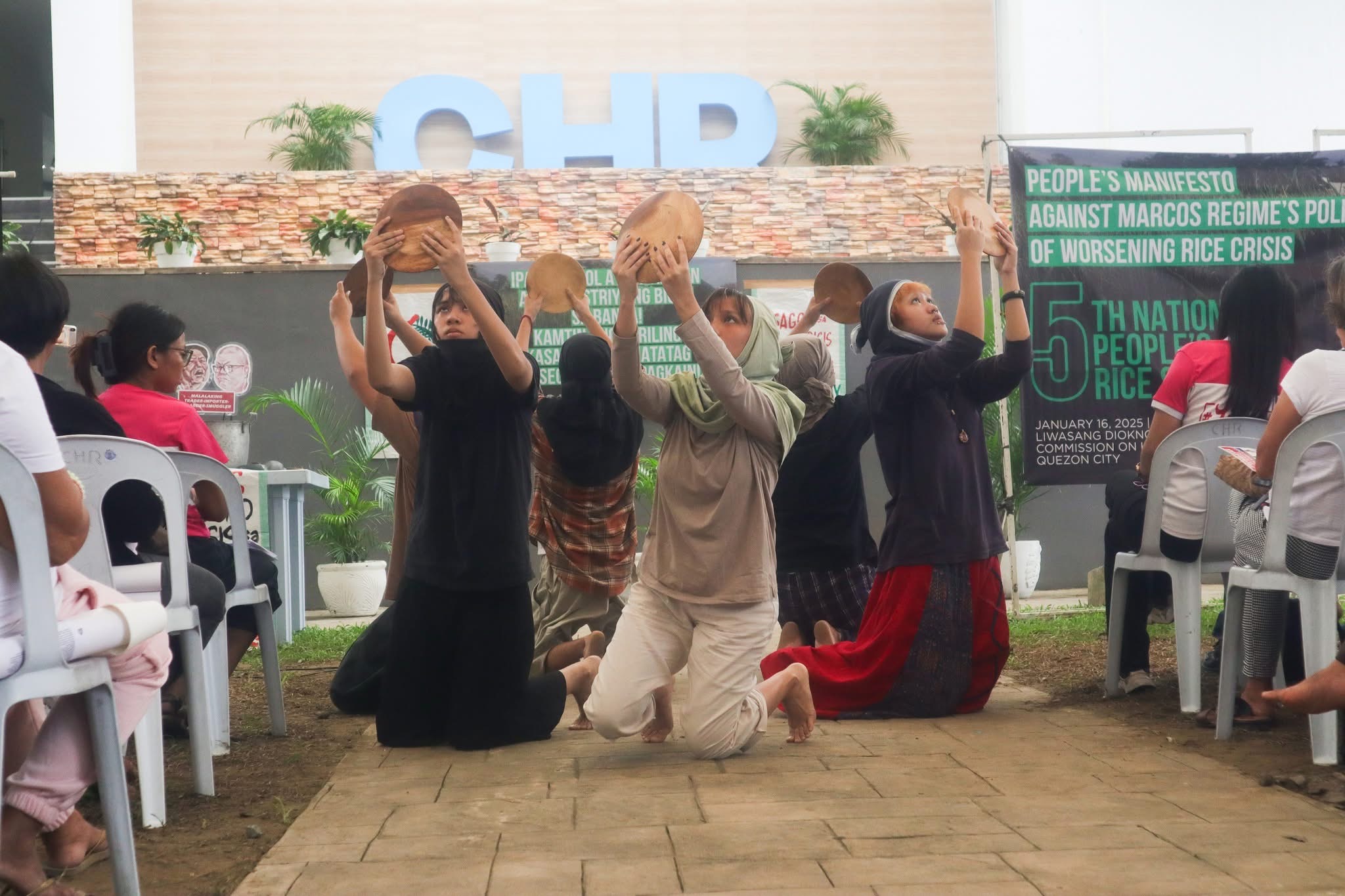
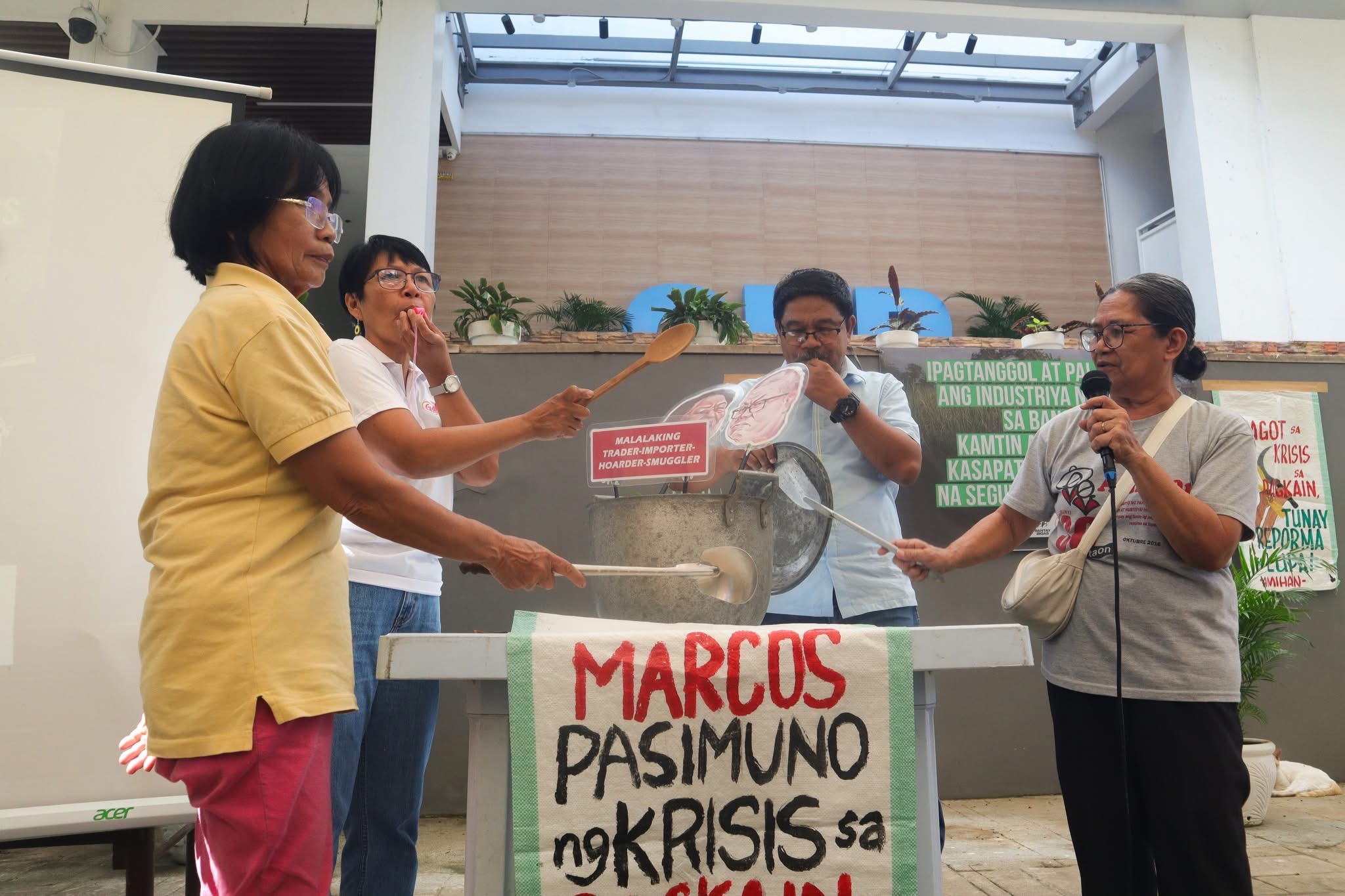
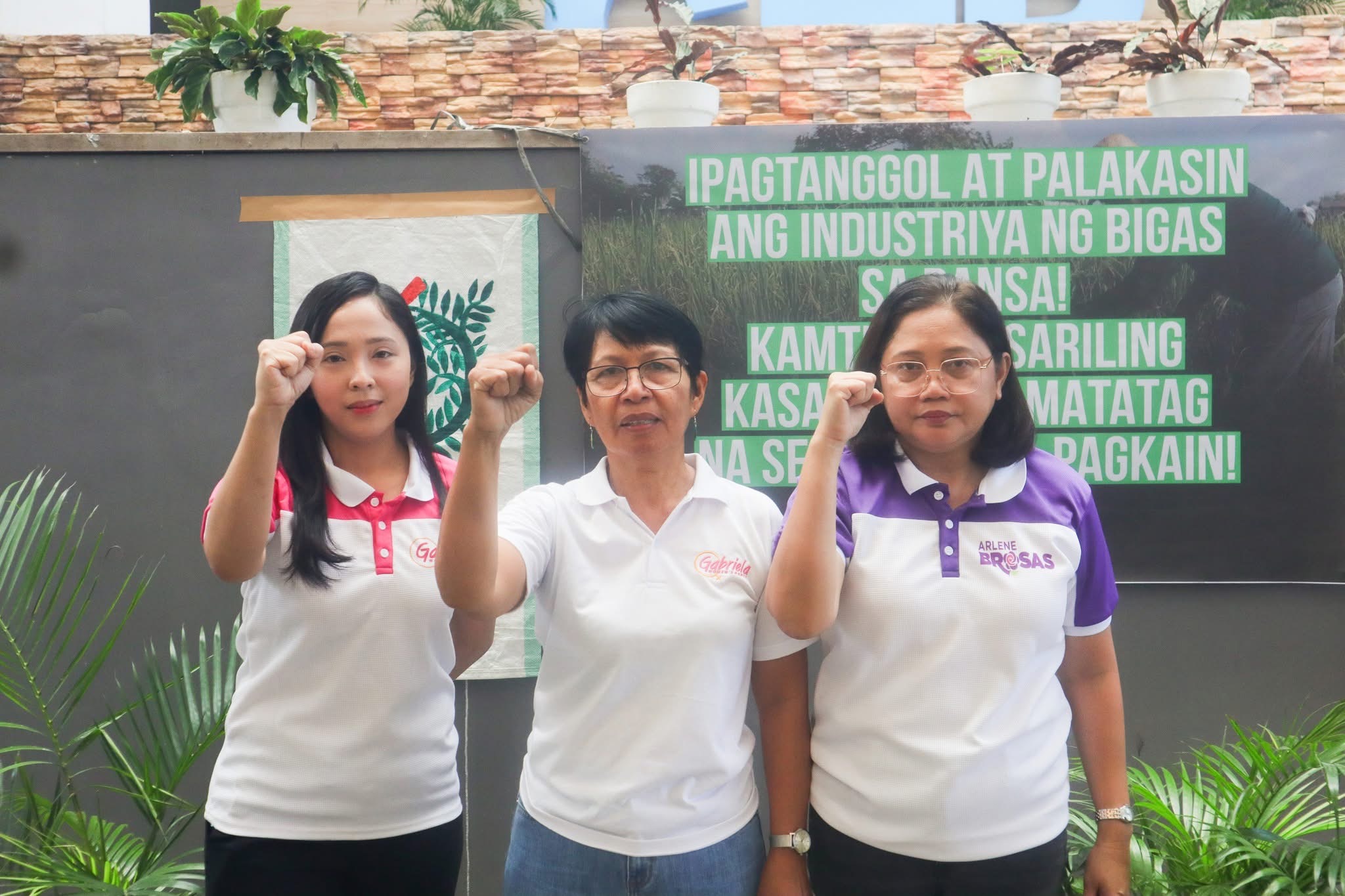
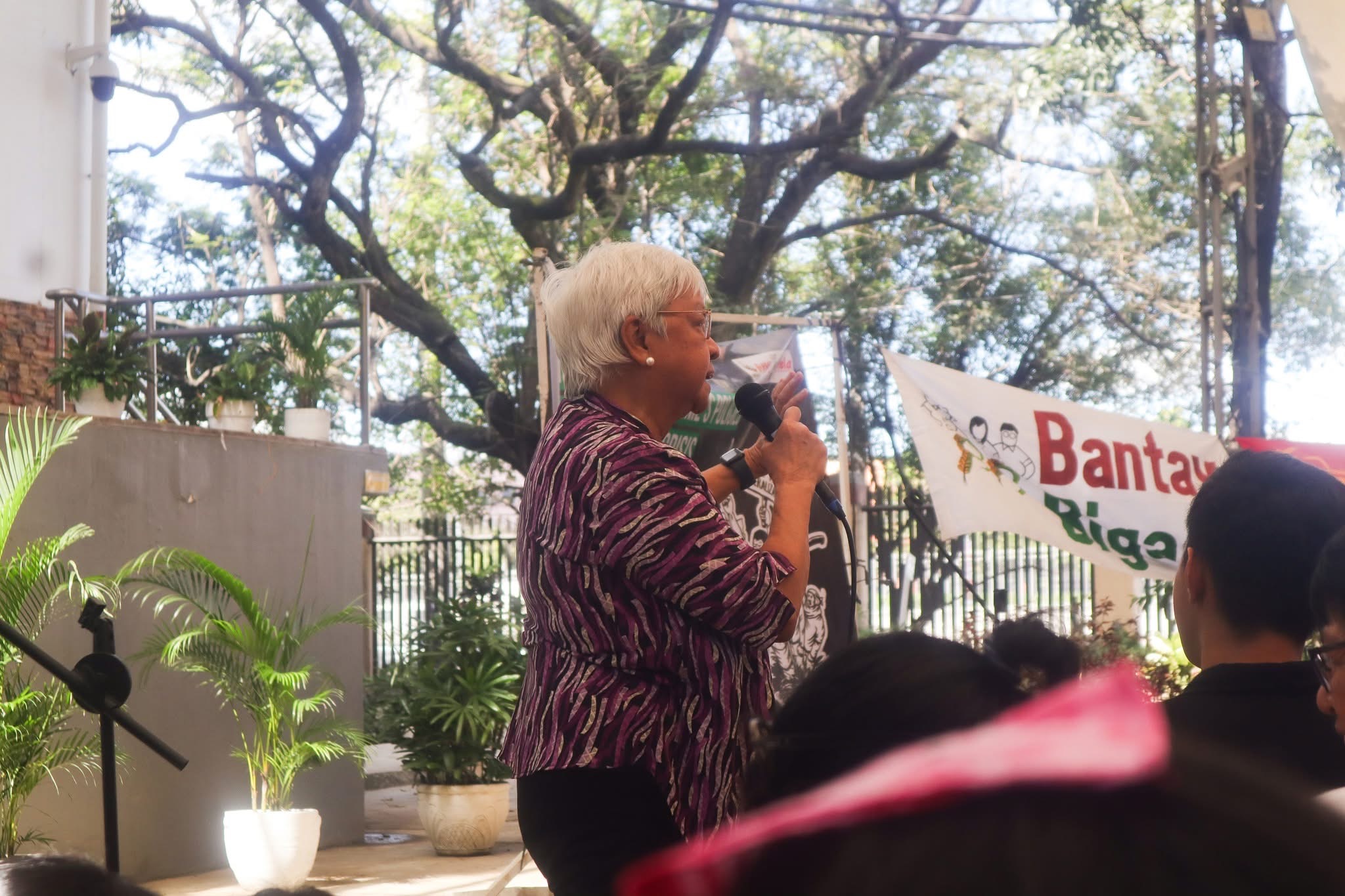
Farmers’ groups Kilusang Magbubukid ng Pilipinas (KMP) and Amihan Women spearheaded the 5th National People’s Rice Summit today, bringing together peasant leaders, consumer advocates, and representatives from various sectors to confront the ongoing rice crisis and the policies exacerbating it.
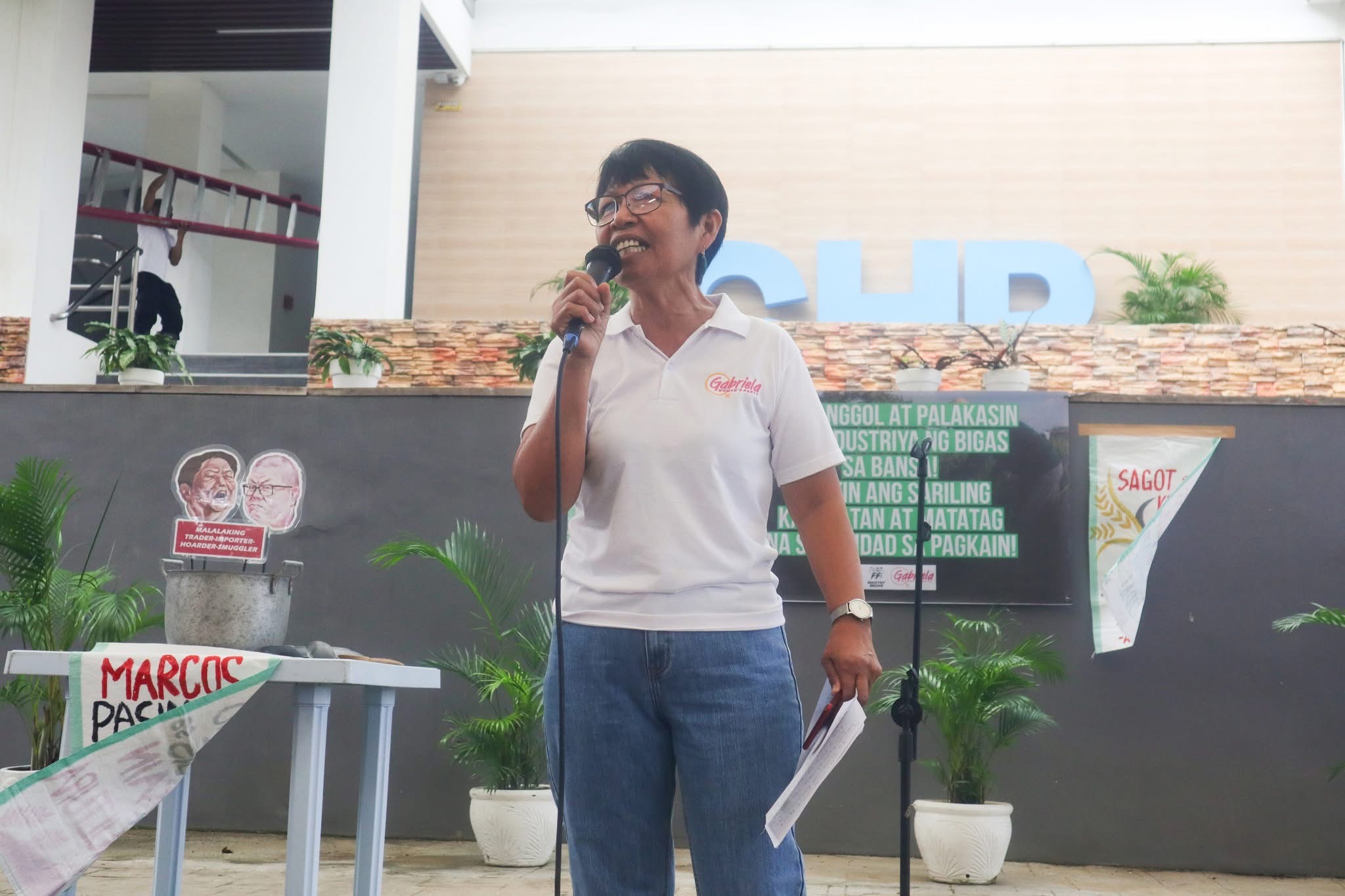
Cathy Estavillo, secretary-general of Amihan, lambasted anew the Marcos administration for its unfulfilled promise to lower rice prices to Php20 per kilo. “The Filipino people will never forget the blatant deception of Ferdinand ‘Bongbong’ Marcos Jr., who rode on this populist promise to secure power in 2022. Almost three years later, rice prices remain exorbitantly high at Php50 to Php65 per kilo, while farmers are burdened by the historic influx of imported rice, reaching a record 4.68 million metric tons in 2024,” she stated.
Estavillo, the second nominee of Gabriela Women’s Party emphasized that the Rice Liberalization Law, a remnant of the Duterte regime, has proven to be disastrous for the local rice industry and Filipino farmers. “The promises of its architects—Gloria Macapagal-Arroyo’s faction in Congress, Cynthia Villar in the Senate, and neoliberal policymakers in NEDA—that rice prices would drop to Php25 per kilo and farming would prosper, were nothing but lies. Instead, this policy has devastated the livelihoods of millions of Filipino rice farmers,” she added.
Danilo “Ka Daning” Ramos for Senator, chairperson of KMP and Makabayan senatorial candidate, called out the Marcos administration’s persistence in promoting importation and other neoliberal policies at the expense of local production. “This government has prioritized rice importation over strengthening local agriculture, leaving Filipino farmers abandoned during calamities and the looming threat of El Niño. The Executive Order No. 62, which slashed tariffs on imported rice, and gimmicks like ‘Rice-for-All’ programs are mere band-aid solutions that fail to address the root causes of the rice crisis,” Ramos asserted.
The summit highlighted the chronic issues plaguing the rice industry under the Marcos regime, including the worsening dominance of trader-importer-hoarder-smuggler cartels, land-use conversions, and the lack of significant climate-resilient agricultural programs.
“This chronic rice crisis is an insult to the Filipino people. As an agricultural nation, it is unacceptable that the basic staple of rice has become a symbol of food insecurity and exploitation,” Ramos added. “The culprits are clear: the Rice Liberalization Law, land-use conversion policies, and the administration’s prioritization of importation over local production,” according to KMP.
Participants of the summit are calling for the immediate repeal of the Rice Liberalization Law, preservation of land devoted to food production, stronger tenurial rights for farmers, adequate compensation and assistance for calamity-stricken agricultural communities, and the implementation of genuine agrarian reform to ensure food sovereignty and security.
Estavillo stressed the urgency of uniting farmers and consumers in resisting the current administration’s anti-farmer and anti-consumer policies. “The 5th National People’s Rice Summit serves as a platform to educate, organize, and mobilize the majority of Filipinos affected by the rice crisis. We demand accountability from the Marcos regime.”
“We must expose the Marcos regime’s betrayal of the Filipino people and its role in deepening the rice and food crisis. KMP and Amihan are urging farmers, consumers, and various sectors to unite and demand accountability from the Marcos administration while pushing for national democratic solutions to the country’s agrarian and food crises. ###

