
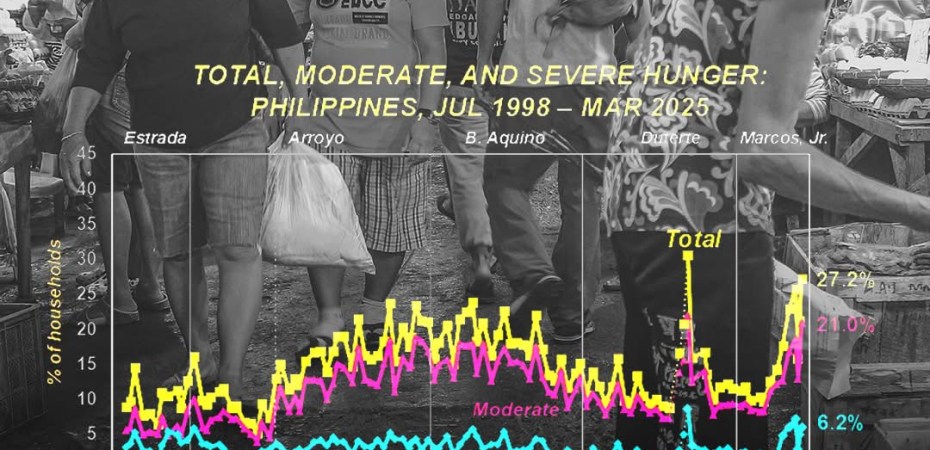
The Kilusang Magbubukid ng Pilipinas (KMP) denounced anew the Marcos Jr. administration for the worsening hunger crisis, exposing the total failure of the so-called Food Security Emergency Declaration to bring down food prices and ensure affordable meals for Filipinos. The latest Social Weather Stations (SWS) survey revealed that 27.2% of Filipino families or an estimate of 7.5 million households—experienced involuntary hunger in the past three months, the highest recorded hunger incidence since the COVID-19 pandemic in 2020. Despite government claims of intervention, food prices remain at record highs, and millions of Filipinos continue to struggle to afford basic meals.
“The so-called emergency declaration was nothing but a publicity stunt while hunger and food prices soared,” said KMP chairperson Danilo Ramos, also a Makabayan senatorial candidate. “Habang lugmok sa utang ang mga magsasaka, patuloy na pinapaboran ng gobyerno ang kartel sa bigas at mga importer. Ang sagot sa krisis na ito ay hindi pag-aangkat kundi ang pagtitiyak ng tunay na suporta sa lokal na produksyon.”
KMP linked the worsening hunger crisis to the continued erosion of real wages and the unabated surge in food prices. According to IBON Foundation, the real value of the minimum daily wage in the National Capital Region (NCR) has dropped to only Php516, while the cost of basic food items has skyrocketed. The price of rice has increased from Php39 per kilo in 2022 to Php45 per kilo in 2025, while staple vegetables like carrots, eggplant, and potatoes have seen drastic price hikes. Meat and fish prices have also soared, with pork now at Php350 to 400 per kilo despite the Maximum Suggested Retail Price. Prices of chicken, galunggong and eggs also remain high. The prices of basic necessities and prime commodities also increased last February, including canned sardines, salt and other condiments, condensed, evaporated, and powdered milk, coffee refill and 3-in-1, bread, instant noodles, luncheon meat, meatloaf, corned beef, beef loaf, bottled water, and even toilet soap, detergent and laundry soap, candles, and batteries.
These price surges have made it impossible for ordinary families to afford even the most basic meals. “Nagtitiis na ang mga Pilipino sa pinakamurang pagkain, pero pati ito hindi na abot-kaya ng bulsa. Hindi na lang ito simpleng usapin ng taas-presyo, kundi ng patuloy na pag-abandona ng gobyerno sa lokal na agrikultura at sa mga nangangailangan,” Ramos said.
Instead of strengthening local food production, the Marcos Jr. administration continues to push for food importation—an anti-farmer and anti-consumer policy that only worsens the crisis. KMP stressed that food importation only benefits rice cartels, traders, and importers, while local farmers are buried in debt and forced to sell their produce at rock-bottom prices. The government’s refusal to implement meaningful agrarian and economic reforms is pushing millions of Filipinos deeper into hunger.
The 27.2% hunger rate represents a 6-point increase from February’s 21.2% and is 7 points higher than the 2024 annual average of 20.2%. Hunger incidents have increased across all regions except Metro Manila, with the Visayas seeing the biggest spike from 20.0% to 33.7 percent. Severe hunger, where families experience hunger often or always, was recorded at 6.2%, while moderate hunger, where families experience hunger once or a few times in the past three months, reached 21.0 percent. Balance Luzon’s hunger rate rose from 19.1% to 24.0%, while Mindanao’s increased from 23.3% to 27.3%. These figures expose the failure of the Marcos Jr. government to address the worsening food crisis and hunger.
KMP is calling for urgent wage increases, agrarian reform, and direct government support for food producers to address the root causes of hunger. “Habang patuloy ang kontrol ng mga korporasyon sa ating pagkain at nananatiling halos wala o mahina ang suporta sa lokal na produksyon, patuloy pa rin na magugutom ang mamamayan. Ang tunay na solusyon sa krisis na ito ay hindi importasyon kundi pagsuporta sa mga lumilikha ng pagkain sa bansa,” Ramos asserted. The peasant movement vowed to intensify campaigns for food sovereignty, genuine land reform, and policies that prioritize Filipino farmers and consumers over corporate profits. The worsening hunger crisis, KMP said, is a direct consequence of the Marcos Jr. administration’s neoliberal, anti-farmer policies.
“Habang nagpapasasa sa yaman ang mga nasa kapangyarihan, milyon-milyong Pilipino ang ginugutom. Hindi importasyon ang solusyon ndi tunay na repormang agraryo at suporta sa lokal na produksyon. Dapat managot ang rehimeng Marcos Jr. sa lumalalang krisis ng gutom sa bansa,” Ramos concluded. ###

