
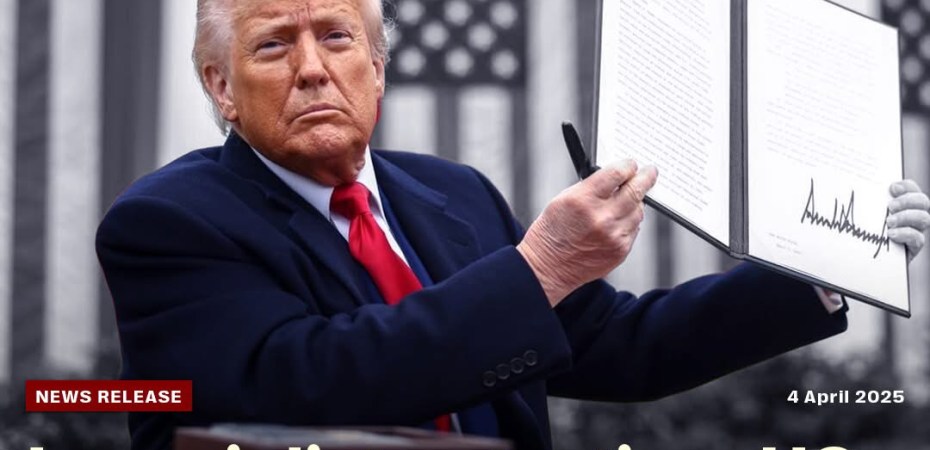
The Kilusang Magbubukid ng Pilipinas (KMP) strongly condemns U.S. President Donald Trump’s imposition of a 17% tariff on Philippine exports, set to take effect on April 9, 2025. This aggressive move—part of the so-called “Liberation Day” tariff policy—exposes the myth of “free trade” and the so-called “special relations” between the U.S. and the Philippines. It is a stark reminder that imperialist countries like the U.S. wield economic and military leverage to dictate policies that serve their interests while underdeveloped countries like the Philippines bear the brunt of these unjust trade practices.
According to Danilo Ramos, KMP Chairperson, “This tariff is an act of economic sabotage that will push millions of Filipino workers and farmers further into poverty. The Trump administration is using its economic power to strangle the Philippine economy and further reinforce our export oriented, import dependent economy.”
The U.S. remains one of the Philippines’ largest export destinations, accounting for a significant share of our US$11 billion annual exports. The new tariff will hit critical sectors, including electrical and electronic equipment (US$6.57 billion), machinery (US$1.09 billion), and agricultural products like coconuts, bananas, and pineapples. It will also severely impact apparel, furniture, and medical equipment exports, which employ thousands of Filipino workers.
Beyond its immediate economic toll, these tariffs serve as an arm-twisting tactic to extract further concessions from the Philippines. Trump’s economic offensive may be aimed at forcing the Philippine government to open up the economy to greater foreign control—potentially through policies like economic Charter Change (Cha-Cha), which would further erode national sovereignty. We must remain vigilant over what compromises the Marcos Jr. administration will make to the US in an effort to secure tariff reductions.
The Marcos Jr. administration’s silence on this issue is unacceptable. The government must insulate our industries from the devastating effects of these tariffs.
The so-called “tariff wars” underscore the urgency of breaking free from the Philippines’ import-dependent, export-oriented economic framework. As long as we remain bound to an economy reliant on foreign markets, we will always be vulnerable to the whims of imperialist powers. The only real protection from volatile international policies and economic blackmail is to develop strong domestic industries and self-sufficient agricultural production to meet the needs of our people.
We call on farmers, workers, and all affected sectors to unite against this imperialist onslaught. The U.S. has long exploited Philippine agriculture and manufacturing, using tariffs, import quotas, and unfair trade agreements to maintain its dominance. This latest move is yet another reminder that as long as we remain tied to U.S.-dictated trade policies, our economy will never be truly independent.
KMP stands firm in its commitment to defending the rights and welfare of Filipino farmers and workers. We will not stand idly by as the U.S. continues to dictate the fate of our economy. We call for immediate resistance against these unjust tariffs and demand a complete overhaul of our country’s trade policies to prioritize national interest over foreign exploitation.
The Philippines’ exports to the United States encompass a diverse array of products. The primary exports include:
Electrical and Electronic Equipment: This category is the largest, with exports valued at approximately $6.57 billion in 2023. It includes items such as integrated circuits and office machine parts.
Machinery and Mechanical Appliances: Exports in this sector amounted to about $1.09 billion in 2023, covering products like nuclear reactors and boilers.
Optical, Photographic, and Medical Apparatus: This category includes instruments and appliances used in medical, surgical, and precision applications, contributing significantly to export revenues.
Edible Fruit and Nuts: The U.S. imports a variety of fruits and nuts from the Philippines, including coconuts, bananas, and pineapples.
Animal or Vegetable Fats and Oils: This includes products like coconut oil, which is a notable export to the U.S.
Articles of Apparel and Clothing Accessories: Both knit and crocheted, as well as non-knit articles, are exported, with knit or crocheted apparel valued at $256.54 million and non-knit at $169.31 million in 2023.
Furniture and Bedding: This includes prefabricated buildings and various types of furniture, contributing $226.34 million to exports in 2023. #
 updates from the peasant movement of the Philippines