
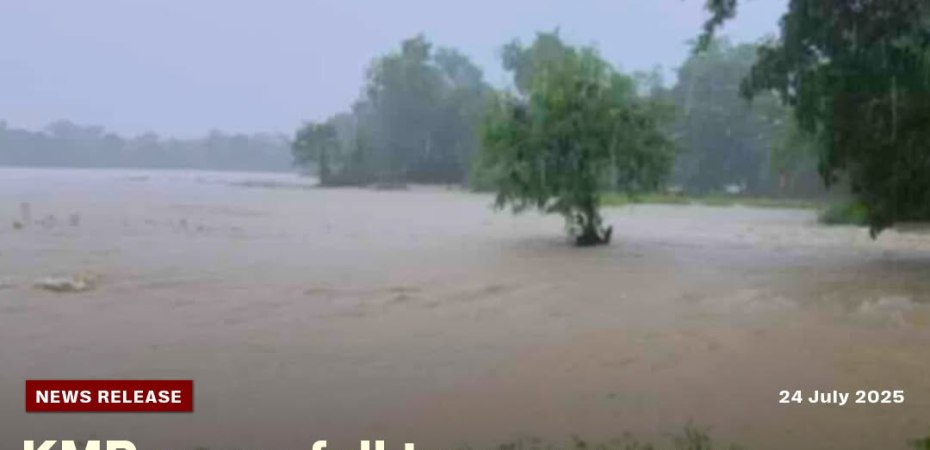
The Kilusang Magbubukid ng Pilipinas (KMP) is calling on the national government to fully disclose and account for the use of calamity funds, following the devastating floods caused by enhanced southwest monsoon rains or Habagat across Luzon and the Visayas.
States of calamity have been declared in Metro Manila, Cavite, Pangasinan, Pampanga, parts of Bulacan, and other provinces. In Pangasinan alone, more than 1,700 homes were submerged, with widespread disruption to transport, livelihoods, and essential services.
KMP criticized the delayed and transparent disbursement of the National Disaster Risk Reduction and Management Fund (NDRRMF), commonly known as the Calamity Fund. “These funds are intended for rapid relief and rehabilitation but have often been marred by bureaucratic corruption, underutilization, and lack of public tracking,” according to KMP leader Danilo Ramos.
KMP emphasizes that the people, especially the rural poor, farmers and fishers who are hit hardest by floods and typhoons, deserve to know where public money goes and how it is used in times of need. “These funds exist for emergencies like this. The government’s failure to release them quickly and transparently is costing lives and livelihoods,” KMP’s Ramos said.
Between 2019 and 2024, annual allocations to the calamity fund ranged from Php16 billion to Php22.7 billion. Yet, billions remained unused each year even amid escalating climate-related disasters. In 2022, only Php13.1 billion of the Php20 billion fund had been released by November. In 2024, nearly half of the Php22.736 billion allocation remained unspent midyear. By year-end, the Department of Budget and Management (DBM) claimed Php22.48 billion was disbursed, but no detailed breakdowns were made public.
For 2025, the calamity fund was approved at Php21.0 billion, slightly lower than the previous year. As of midyear, there have been no official updates on how much of the fund has been released or utilized for ongoing disasters, including the latest widespread flooding caused by the enhanced Habagat.
“Despite billions allocated annually, the same issues persist: late disbursement, lack of transparency, and questionable prioritization,” said KMP. “These are public funds meant for immediate relief. The failure to release them promptly and transparently is costing lives and livelihoods.”
The farmers’ group emphasized that both rural and urban poor communities continue to bear the brunt of disasters while receiving minimal and delayed government support.
The group is demanding the Department of Budget and Management (DBM), Department of Social Welfare and Development (DSWD), and the Commission on Audit (COA), publicly release full details of calamity and quick response fund usage for fiscal years 2024 and 2025. KMP also calls for real-time tracking of fund disbursements, third-party audits, and congressional oversight.
Separate from the central calamity fund, various government agencies have been provided with Quick Response Funds (QRFs) to enable immediate action when disasters strike. For instance, the Department of Education (DepEd) received Php3 billion, while the Department of Social Welfare and Development (DSWD) was allotted Php1.25 billion. Other agencies such as the Department of Agriculture (DA), Department of Public Works and Highways (DPWH), Department of Health (DOH), and the Office of Civil Defense (OCD) also received individual QRF allocations ranging from Php0.5 to one billion pesos. The group insists that the QRF be used without delay and free from political discretion.
As storms intensify and disasters become more frequent, the critical question is not how much is allocated, but how quickly and transparently those funds are used — and whether they truly serve the people most affected,” KMP concluded. ###

