
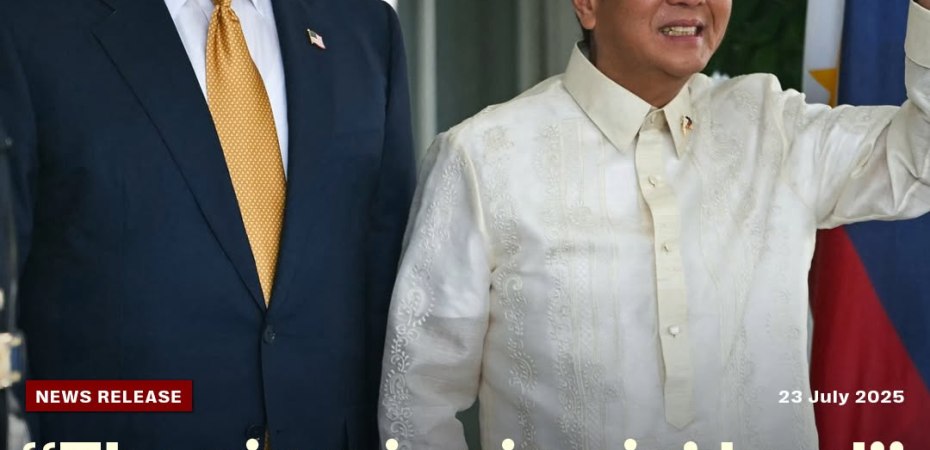
The Kilusang Magbubukid ng Pilipinas (KMP) strongly condemns the latest trade overtures between the United States and the Philippines—a scandalously unequal arrangement reportedly brokered by President Ferdinand Marcos Jr. during his recent trip to the U.S., where he met with President Donald Trump.
While details of any formal agreement remain unclear—Trump himself only hinted at the deal via a social media post, the imbalance is already glaring. U.S. goods are allegedly set to enter the Philippine market at zero-percent tariffs, while Filipino exports will continue to face as much as 19% duties in the U.S. market.
At the heart of this blatant betrayal is none other than President Ferdinand Marcos Jr. acting as the “pimp-in-chief,” shamelessly pushing US economic interests at the direct expense of Filipinos. In his trip to the U.S. and talks with President Donald Trump, Marcos Jr. lobbied not for fair trade, mutual benefit, or protection for local producers, but for deeper liberalization and market surrender.
“The pimp is pimpin’ hard, and what he is selling is our national patrimony,” said KMP Chairperson Danilo Ramos.
Ramos emphasized the complete lack of justification for the agreement. “Walang matinong gobyerno ang papayag sa ganitong kasunduan.” The farmer-leader noted that the blind push for tariff liberalization has already decimated Philippine agriculture. Since the 1980s, the country’s average tariff rate has been slashed from 41% to just 6%, yet rural poverty continues to deepen. Meanwhile, countries like the US, Japan, and South Korea built strong economies by shielding their farmers and key economic industries.
While Trump touts this as part of his “reciprocity” agenda, the reality is economic coercion as tariffs are used as weapons to pressure smaller economies into compliance. Marcos Jr., rather than resisting, plays the part of a compliant doormat.
The implications on the ground, however, remain murky. Philippine electronics—technically the country’s largest export to the U.S. are mostly foreign-owned re-exports from economic zones and may be unaffected. But agricultural exports like pineapples, bananas, sugar, and coconut products could take a hit if Filipino exporters are forced to raise prices or find new markets. This could lead to job losses in export plantations and downstream industries.
“We must remember, most of our exports are embedded in global value chains dominated by foreign interests. The real solution lies in building the domestic economy—self-reliance in food production, industry, and essential services,” Ramos said.
Security concerns are also on the table, although largely kept under wraps. Given the U.S.’s increasing military footprint in the region, any deeper alignment poses serious sovereignty risks.
“All this is happening while Filipinos are reeling from typhoons and disasters. And yet, BBM is busy auctioning off our economy to foreign powers,” Ramos said.
The KMP calls on all farmers, workers, and patriotic Filipinos to reject this neocolonial subservience and defend the nation’s economic patrimony and sovereignty. ###

