
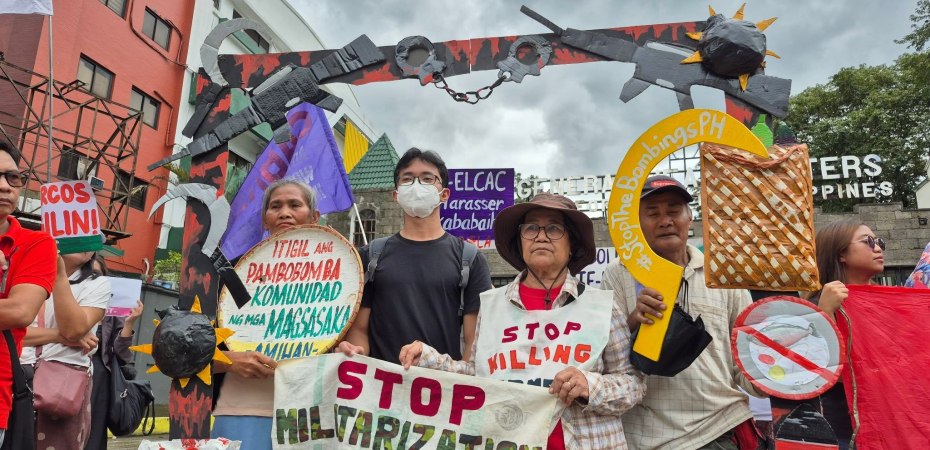
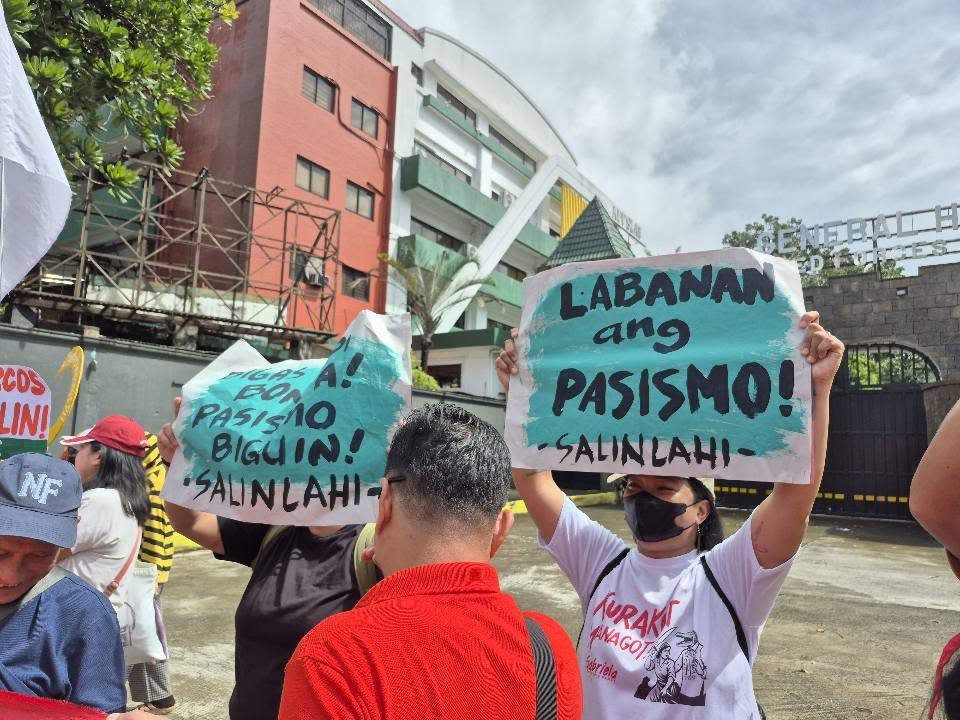
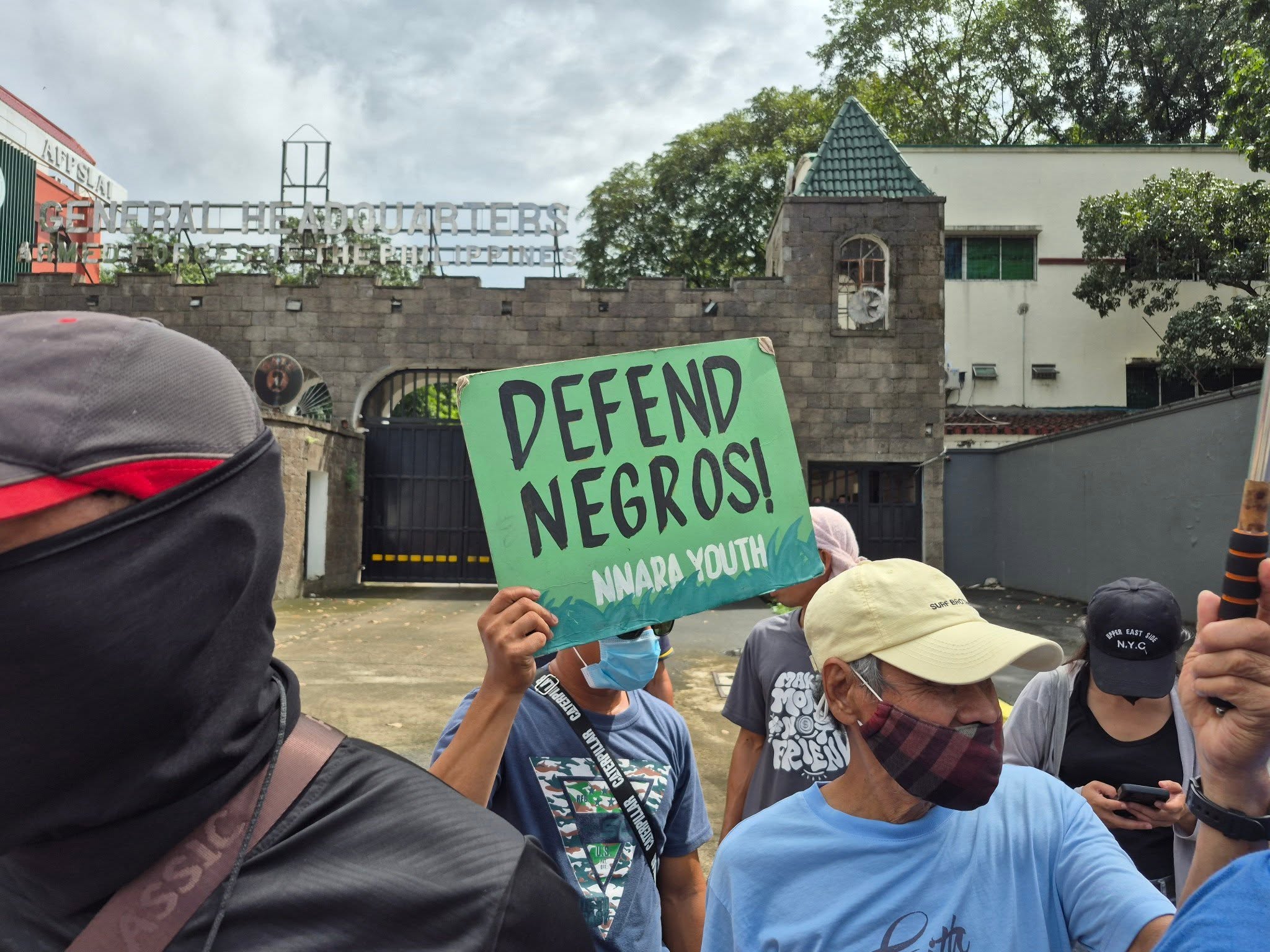
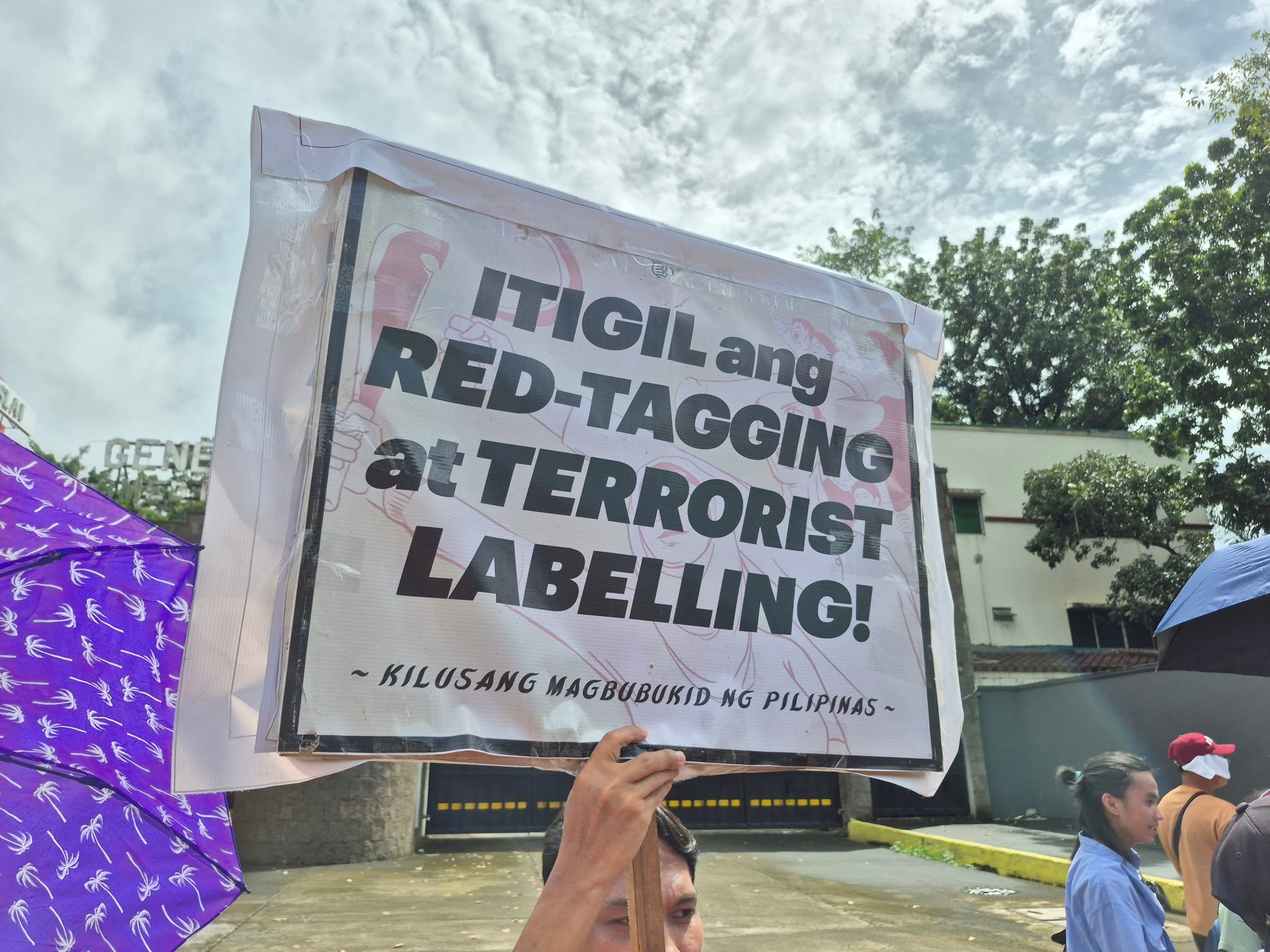
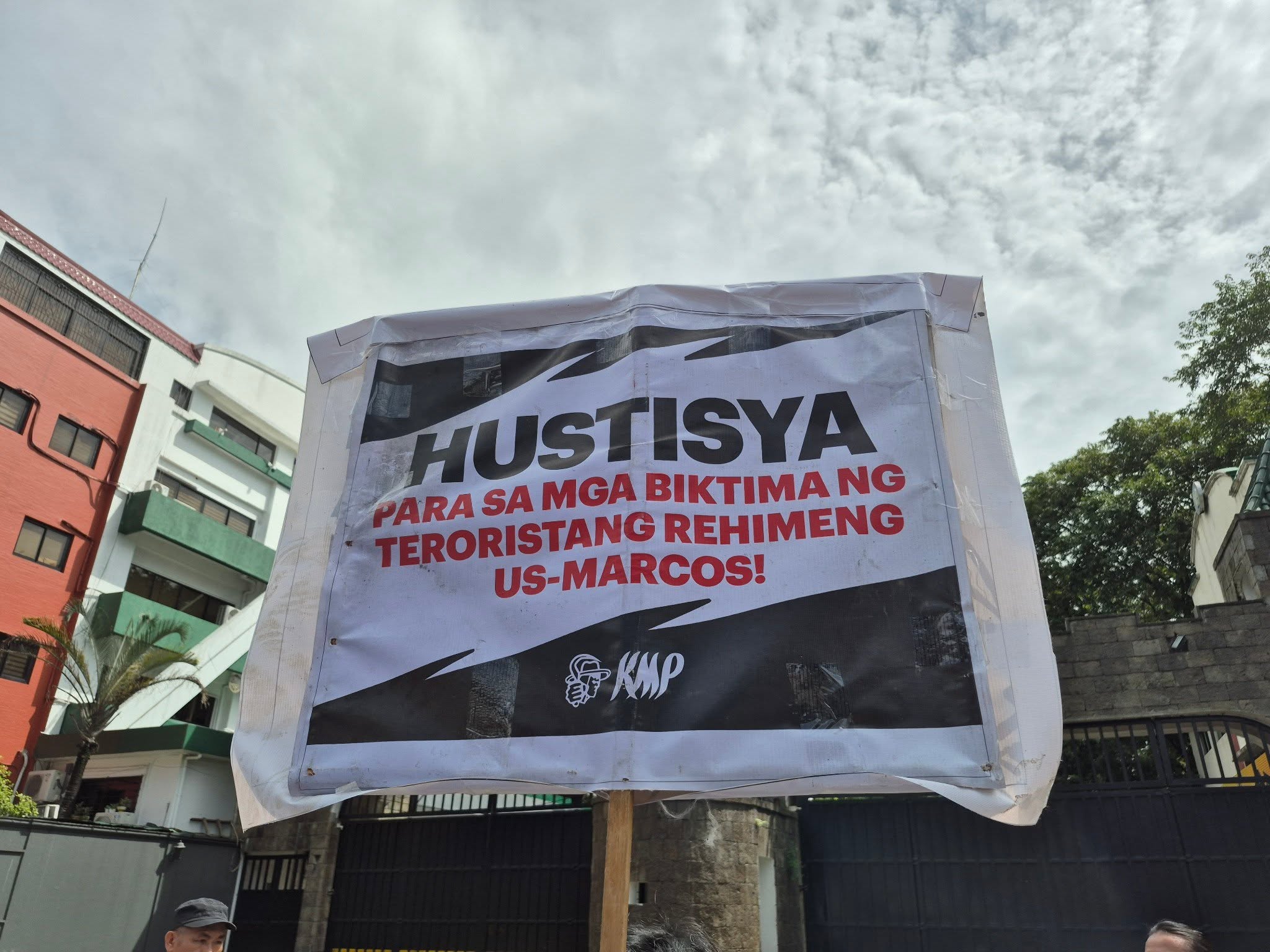
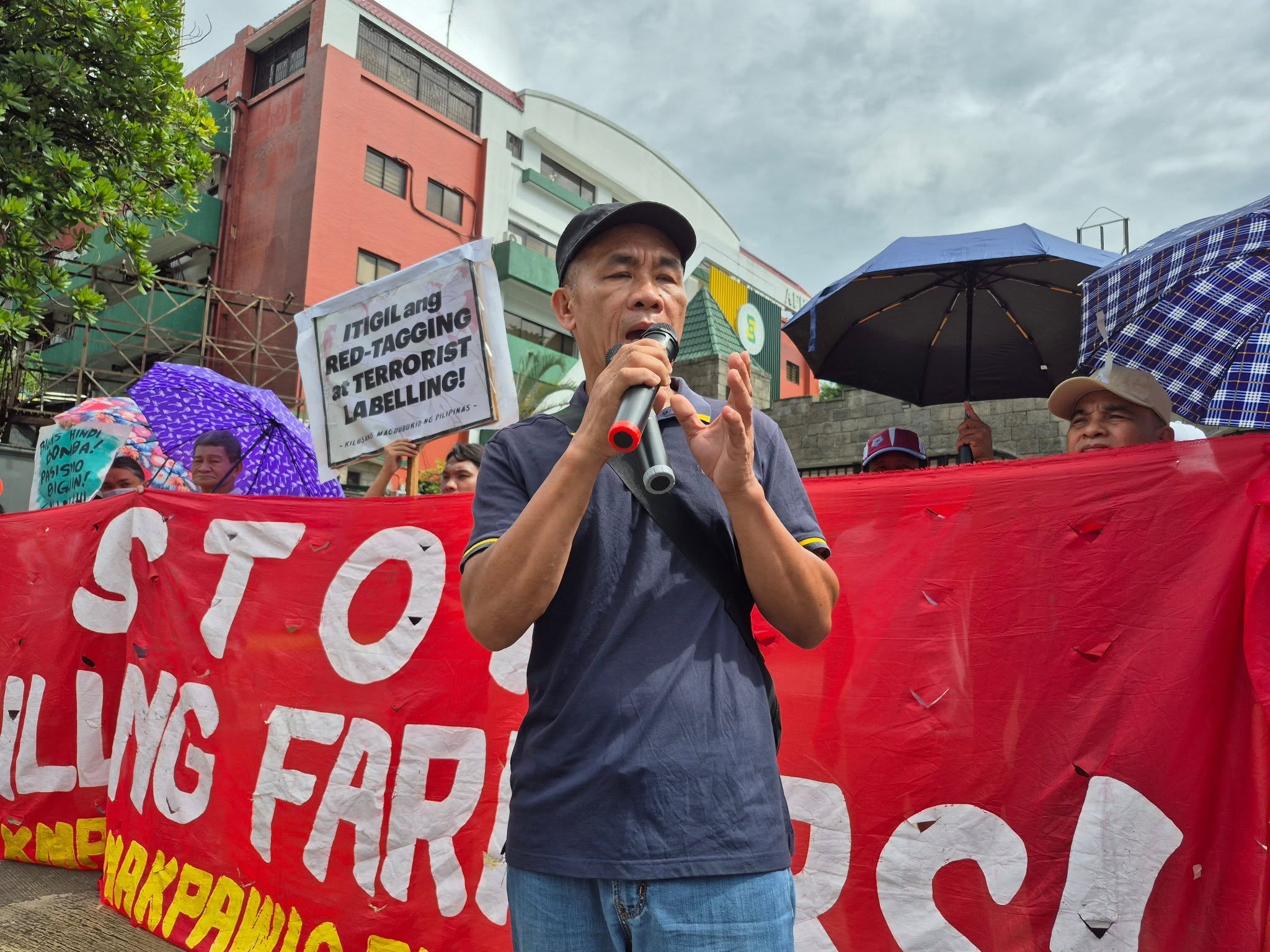
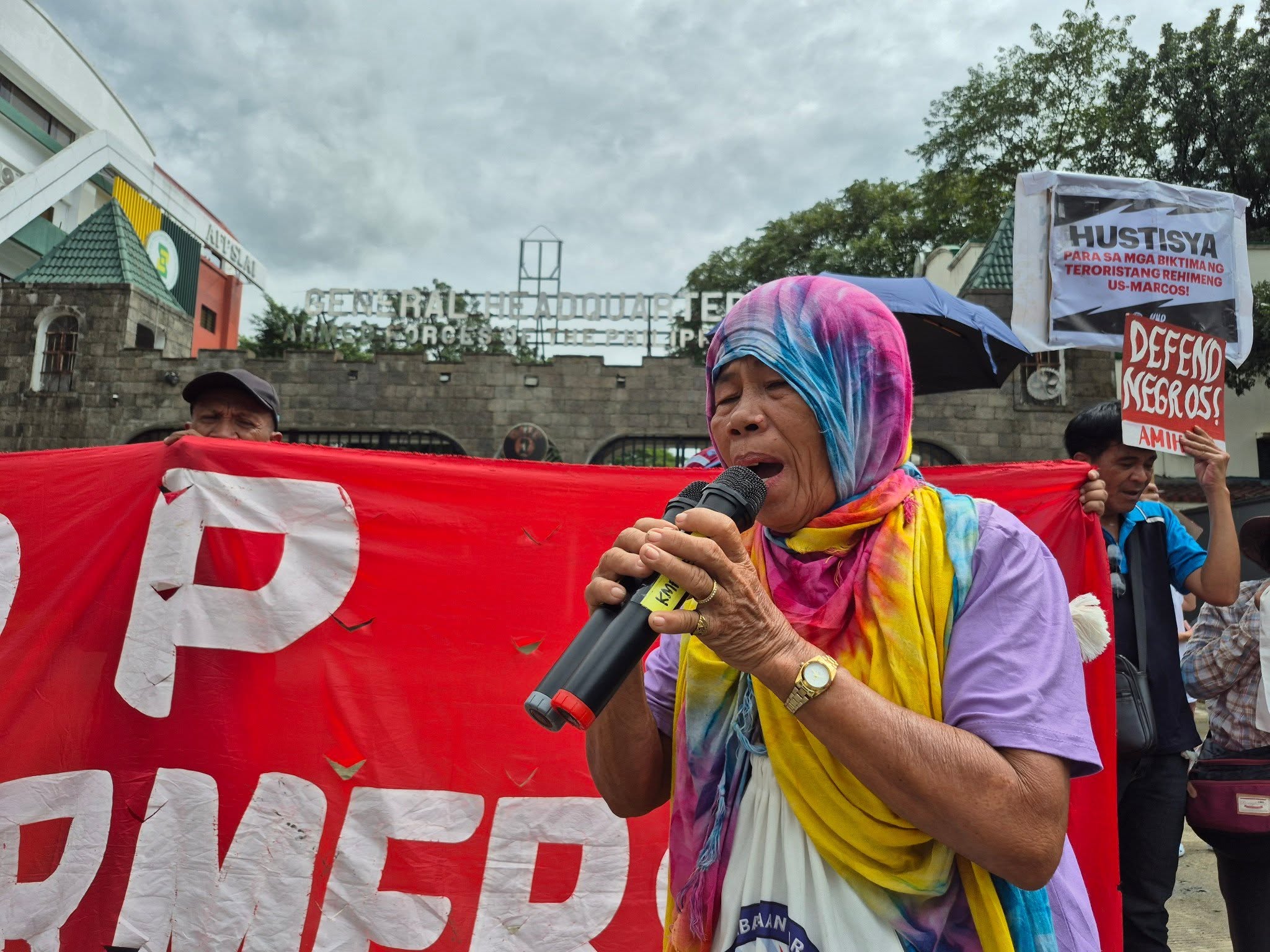
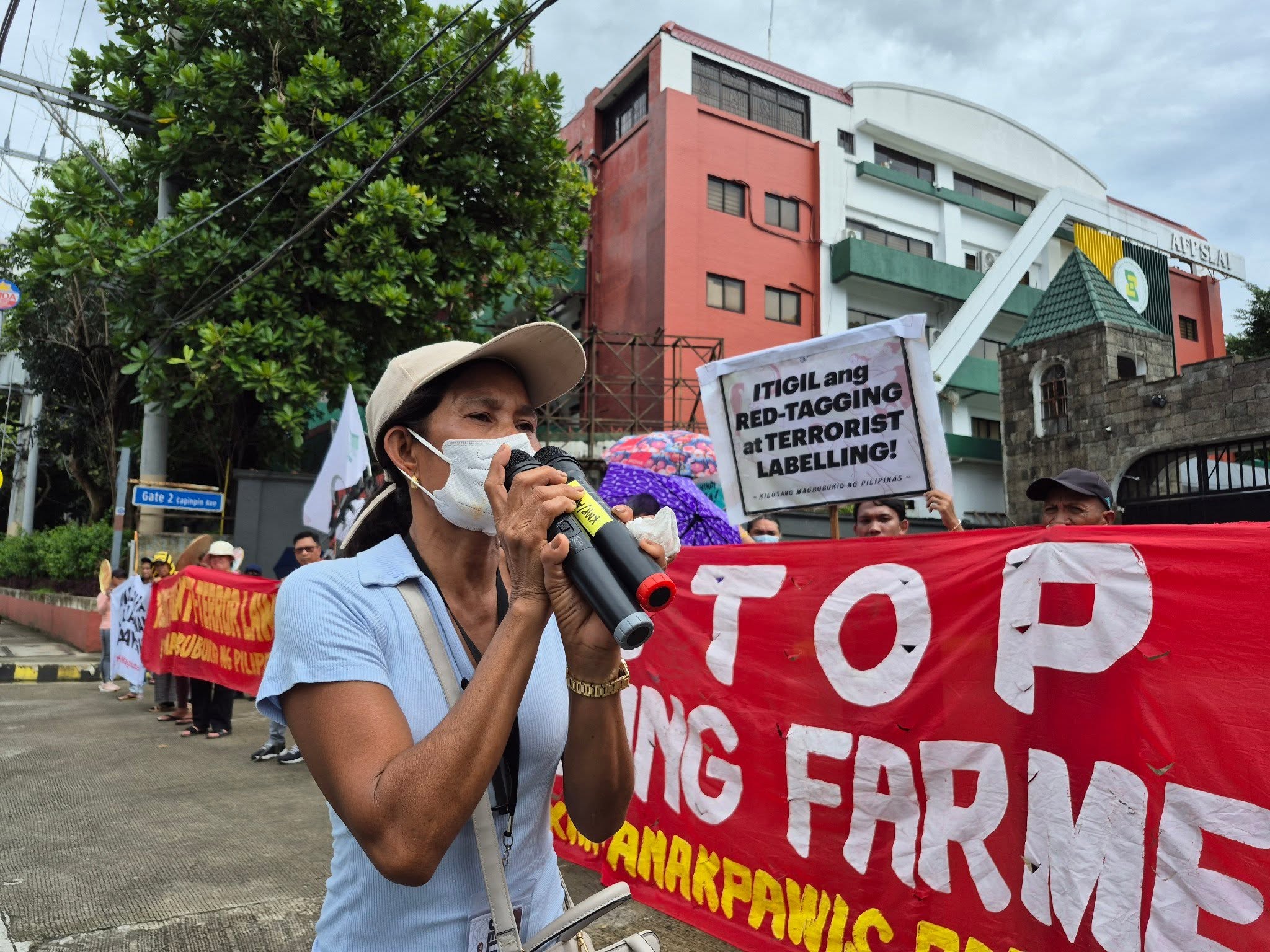
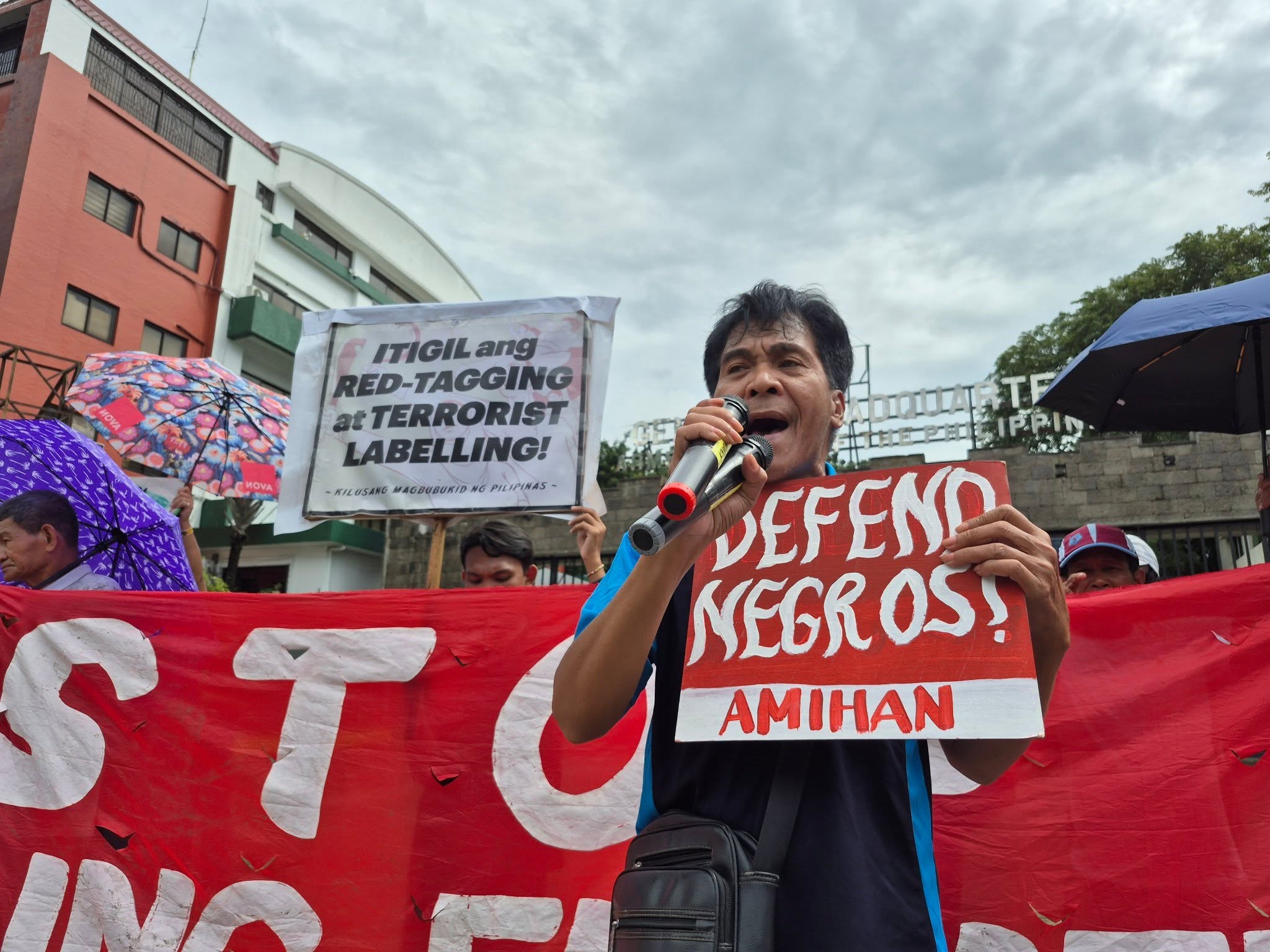
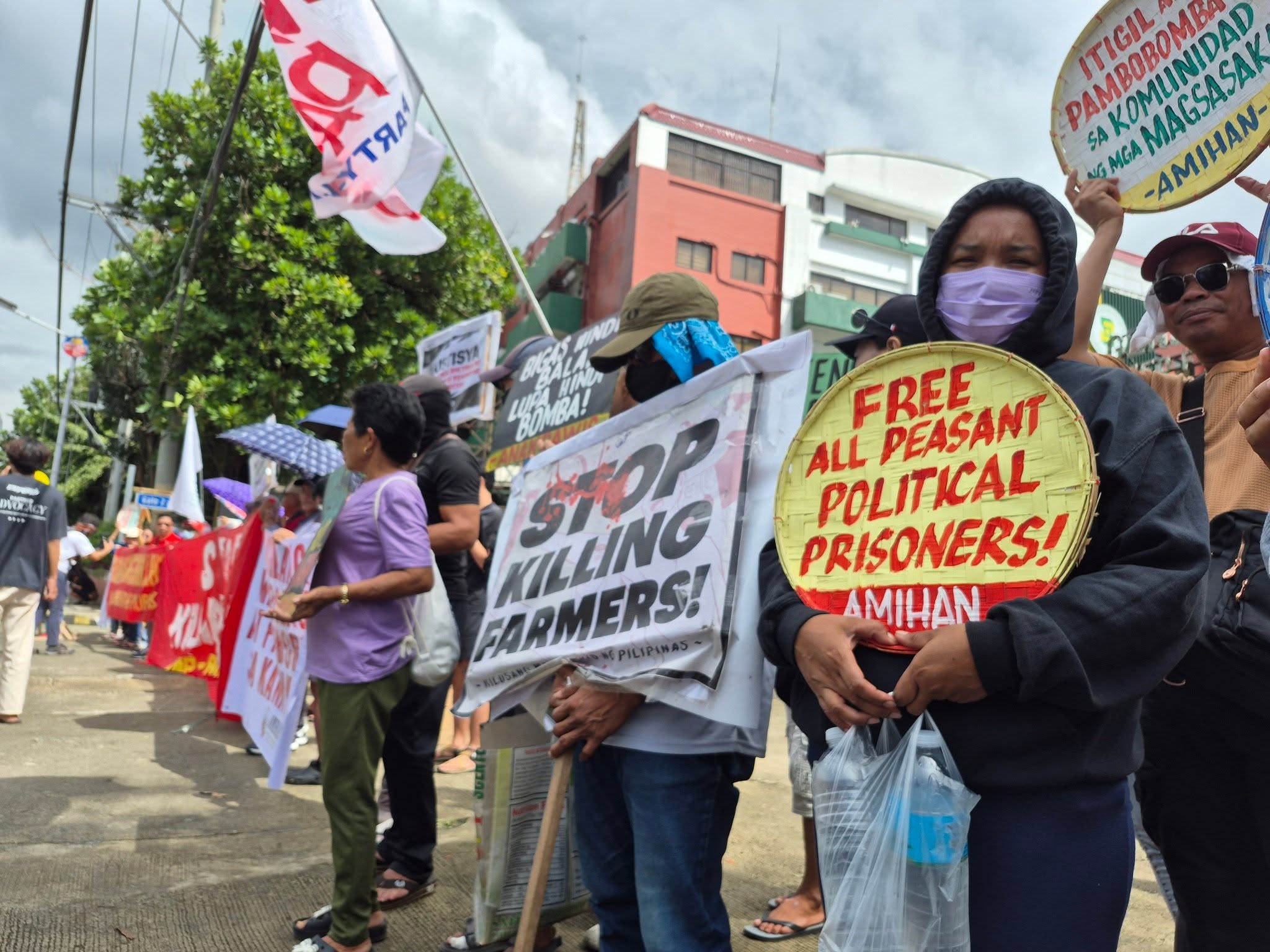
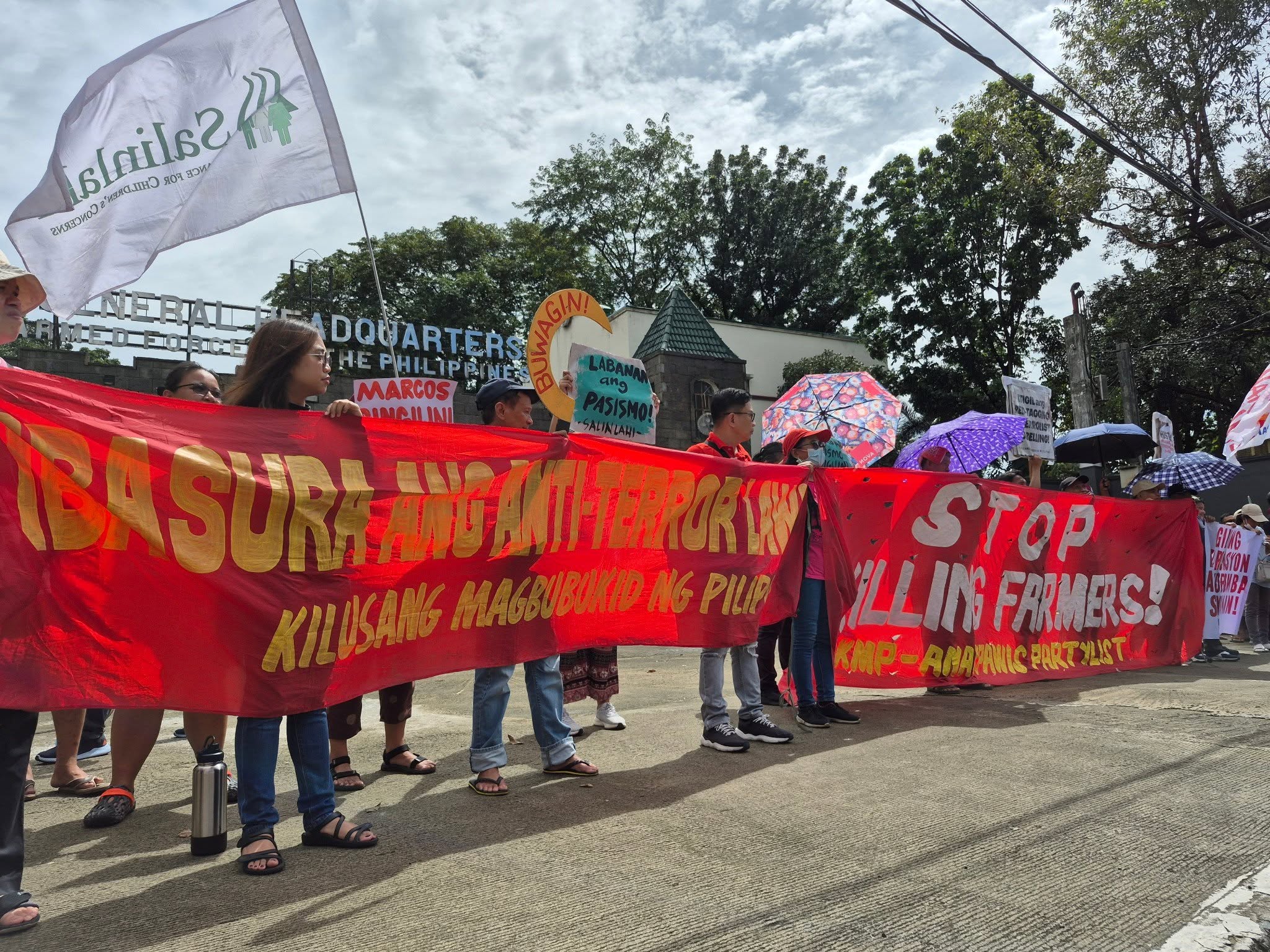
Negros farmers, farm workers, and peasant advocates staged a protest at the Department of National Defense to denounce bombings, militarization, and fascist attacks on rural communities under the US-Marcos regime. Showing the “portrait of a Filipino peasant family”, they are demanding the abolition of the National Task Force to End Local Communist Armed Conflict (NTF-ELCAC), which they accuse of red-tagging, harassment, and enabling human rights violations.
The protest also targets Marcos Jr.’s Memorandum Circular 83, which expands NTF-ELCAC’s influence over civilian agencies via the National Action Plan for Unity, Peace, and Development (NAP-UPD), a move activists see as creeping militarization and a threat to civil liberties.
In Negros, vast landholdings remain concentrated in the hands of elite families, while over 163,000 peasant households farm less than one hectare each. Farmers blame militarization for deepening landlessness and poverty, and asserts the government of using state violence to preserve feudal exploitation.
The Marcos Jr. regime has intensified state violence against farmers and rural communities, particularly in Negros. At least 48 peasants were extrajudicially killed and four disappeared in the island between July 2022 and December 2024, making it one of the deadliest regions for agrarian organizers. Farmers like Marvin Incancion and Jolina Martinez of Himamaylan City were arrested and executed by the 94th Infantry Battalion, their bodies mutilated and falsely presented as casualties in an “encounter.” Others, such as Ramon Enseniales of Cauayan and Jayjie Redobles of Calatrava, were abducted from their homes and killed under similar pretexts. These attacks are part of a broader counterinsurgency campaign marked by bombings, forced evacuations, and widespread intimidation of peasant communities.
The protest is part of the “Kampuhang Magbubukid para sa Lupa at Laban sa Korapsyon,” a week-long campout at Mendiola continuing through October 21 for the broad anti corruption protests Baha sa Liwasang Bonifacio led by farmers and the Kilusang Bayan Kontra Korapsyon.

