
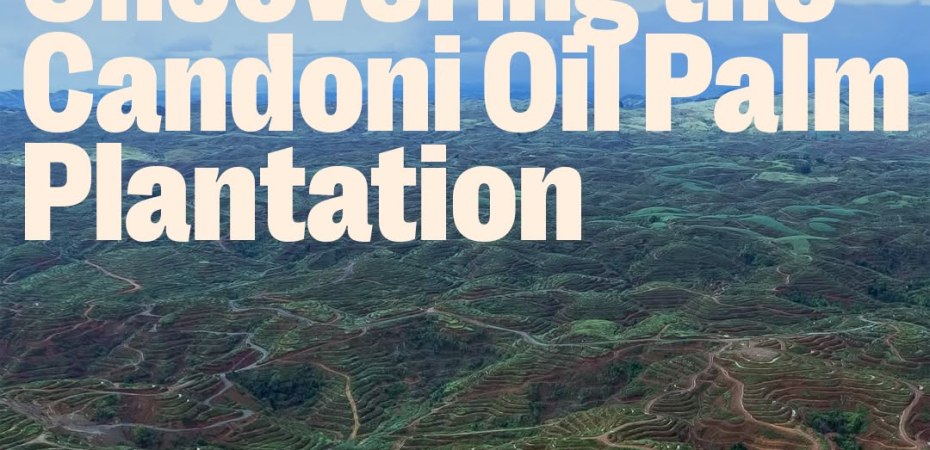
Farmers in Candoni, Negros Occidental are facing escalating threats to their land, livelihood, and safety due to the rapid expansion of a large-scale oil palm plantation operated by the Consunji-owned Hacienda Asia Plantations, Inc. (HAPI). While promoted as a development project, the plantation has resulted in widespread land grabbing, destruction of food-producing farms, environmental damage, and intensified militarization in rural communities.
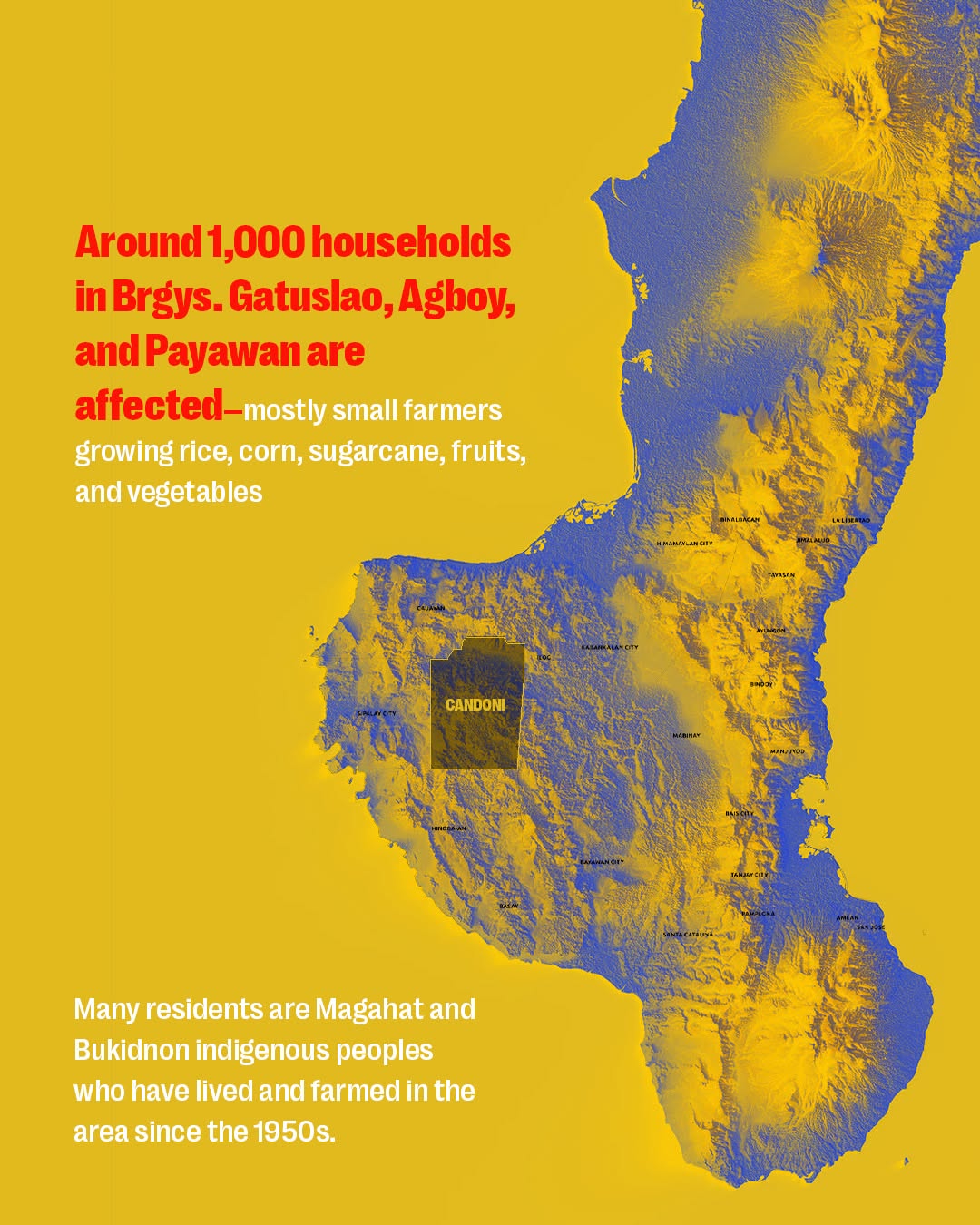
Around 1,000 households in Barangays Gatuslao, Agboy, and Payawan are affected by the oil palm expansion. The communities are composed largely of small farmers producing rice, corn, sugarcane, fruits, and vegetables. Many are indigenous peoples from the Magahat and Bukidnon groups, with families living and farming in the area since the 1950s.
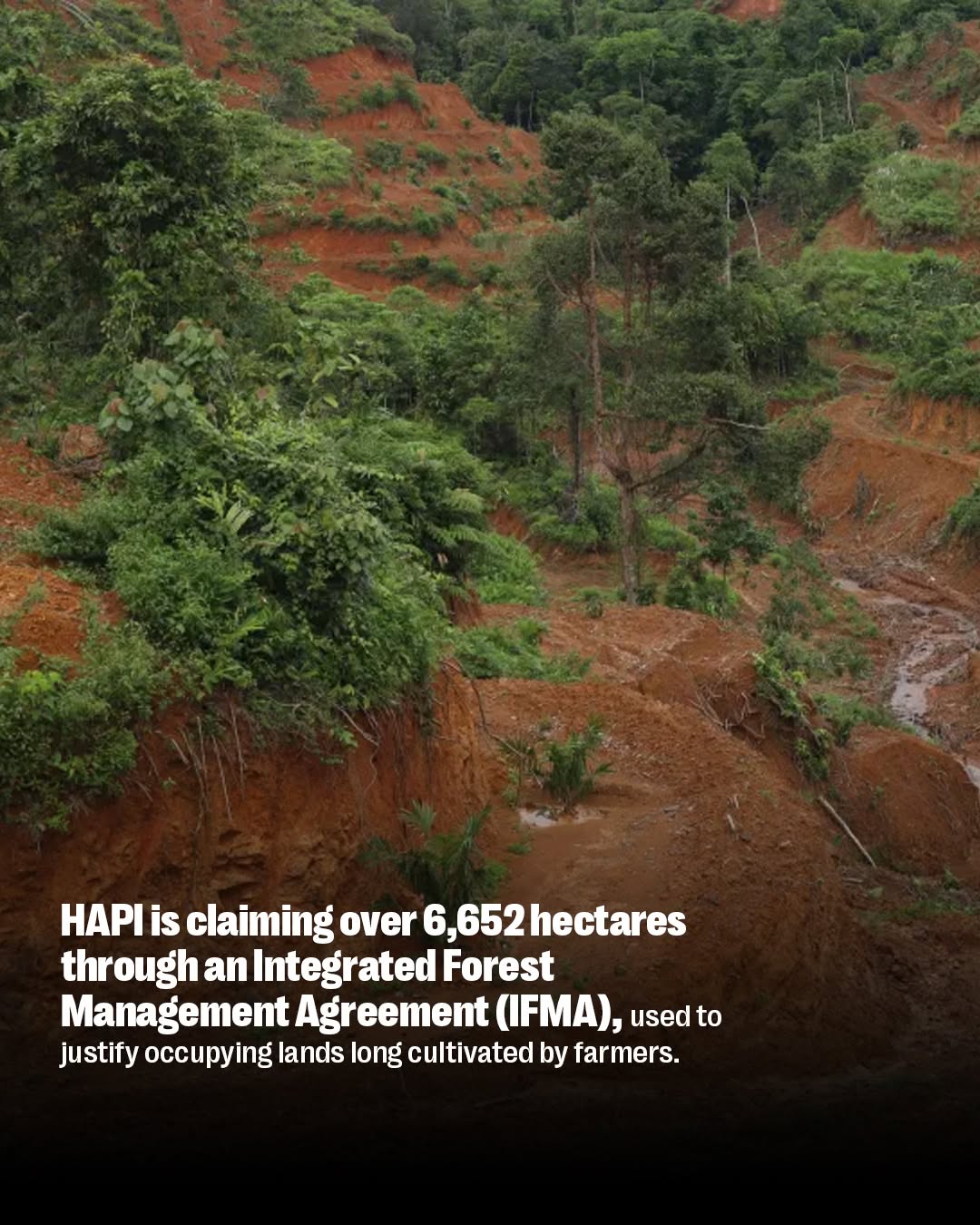
HAPI is claiming more than 6,652 hectares of productive land through an Integrated Forest Management Agreement (IFMA), a legal instrument being used to justify the company’s occupation of land that farmers have long cultivated. Since the Consunji Group acquired HAPI in 2023, farmers report that they have been prohibited from planting food crops and sugarcane.
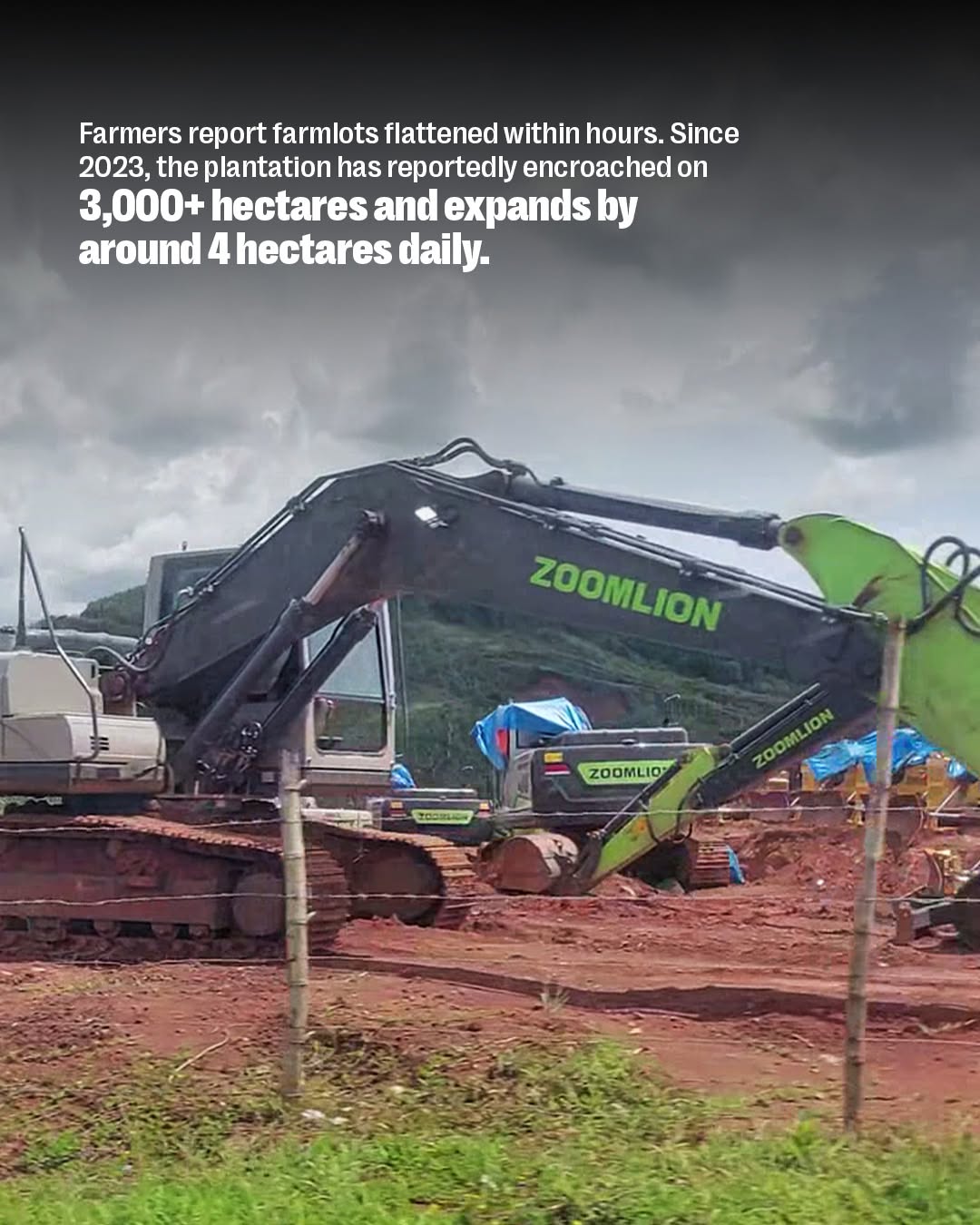
Farmers also report that bulldozers have flattened farmlots within only a few hours. Since 2023, the plantation has reportedly encroached upon more than 3,000 hectares and continues to expand at an estimated pace of four hectares per day.
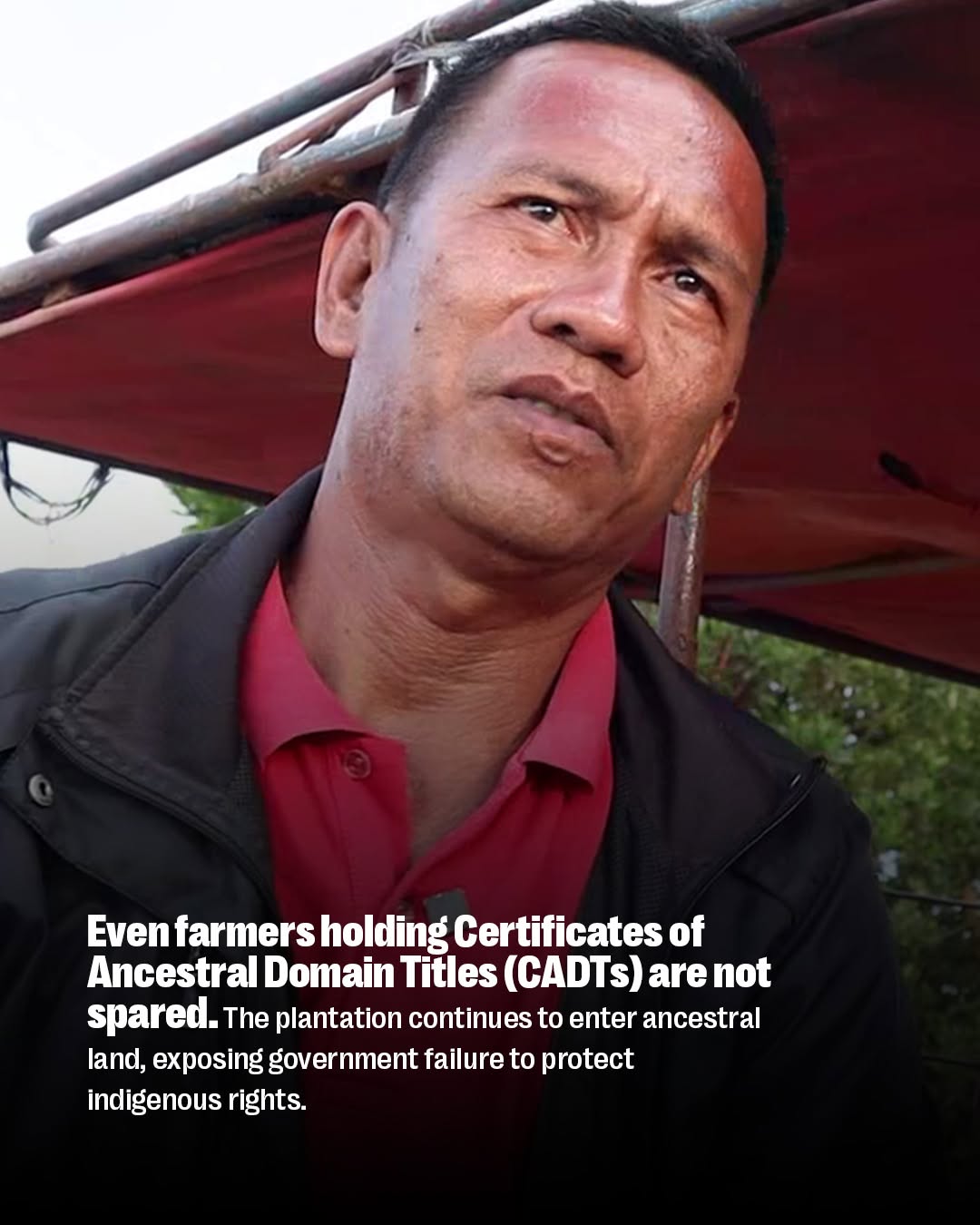
Even indigenous farmers holding Certificates of Ancestral Domain Title (CADTs) have not been spared. Despite these titles, the plantation continues to advance, exposing the inability, or refusal, of government agencies to defend indigenous land rights. Farmers also report that some pending CADT applications remain unsupported and unresolved.
The plantation has directly disrupted local food production in Candoni. Areas previously producing rice, corn, vegetables, sugarcane, and fruit crops are being converted into monocrop oil palm fields. This has reduced both household food supply and farm income.
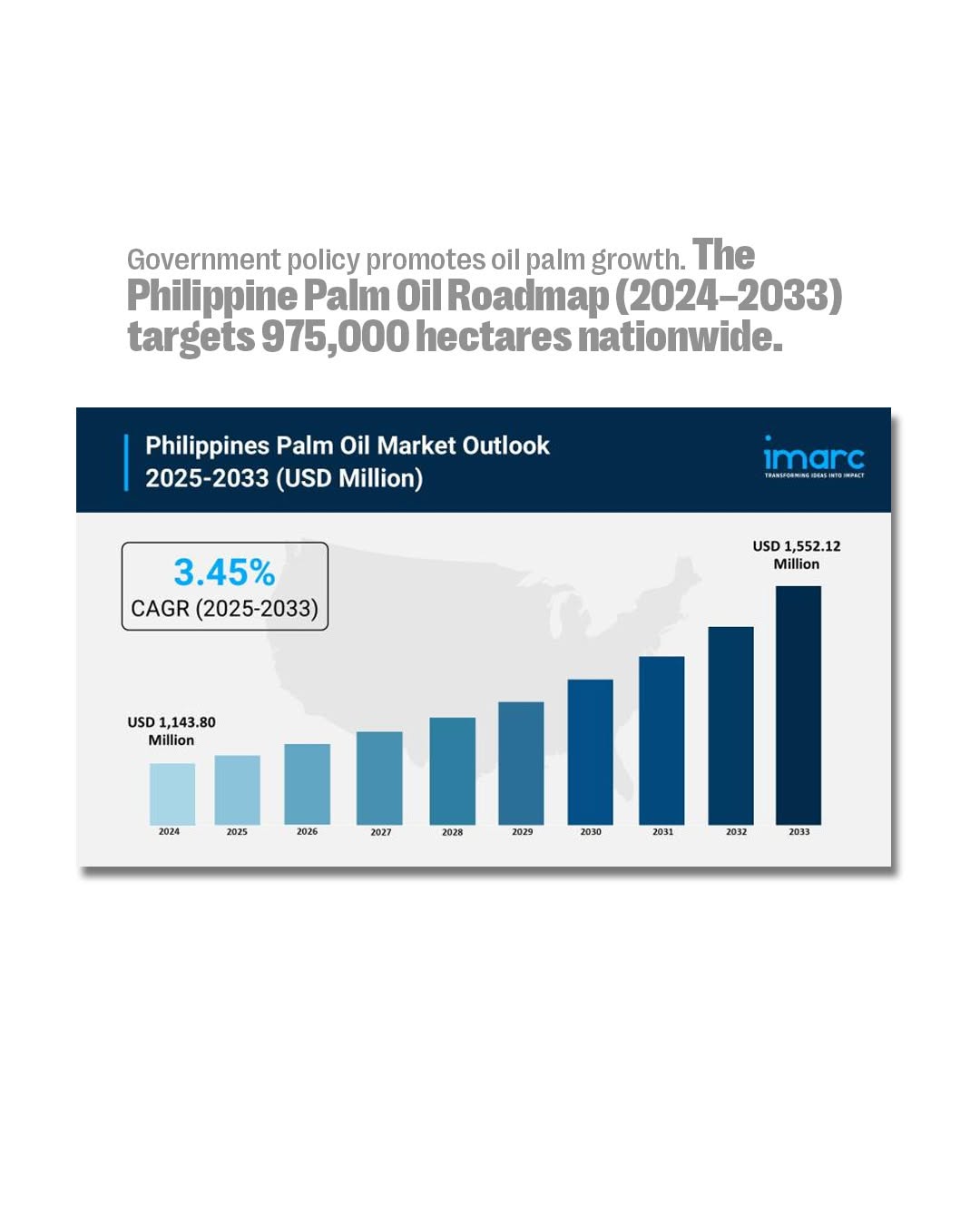
This plantation expansion is happening alongside government policy that encourages oil palm devmielopment. Under the updated Philippine Palm Oil Industry Roadmap (2024–2033), the state has targeted 975,000 hectares for oil palm nationwide, further emboldening corporate land grabbers.
The oil palm plantation has also been linked to labor exploitation. Workers report being paid only P480 per day while working up to 12 hours without overtime pay and without benefits such as SSS, PhilHealth, and Pag-IBIG.
Work inside the plantation is reportedly quota-based, with workers pressured to meet daily targets such as punching holes into 2,500 plastic pots per day for palm seedlings. Seedling planters also face strict quotas, and failure to meet targets can result in reassignment or removal.
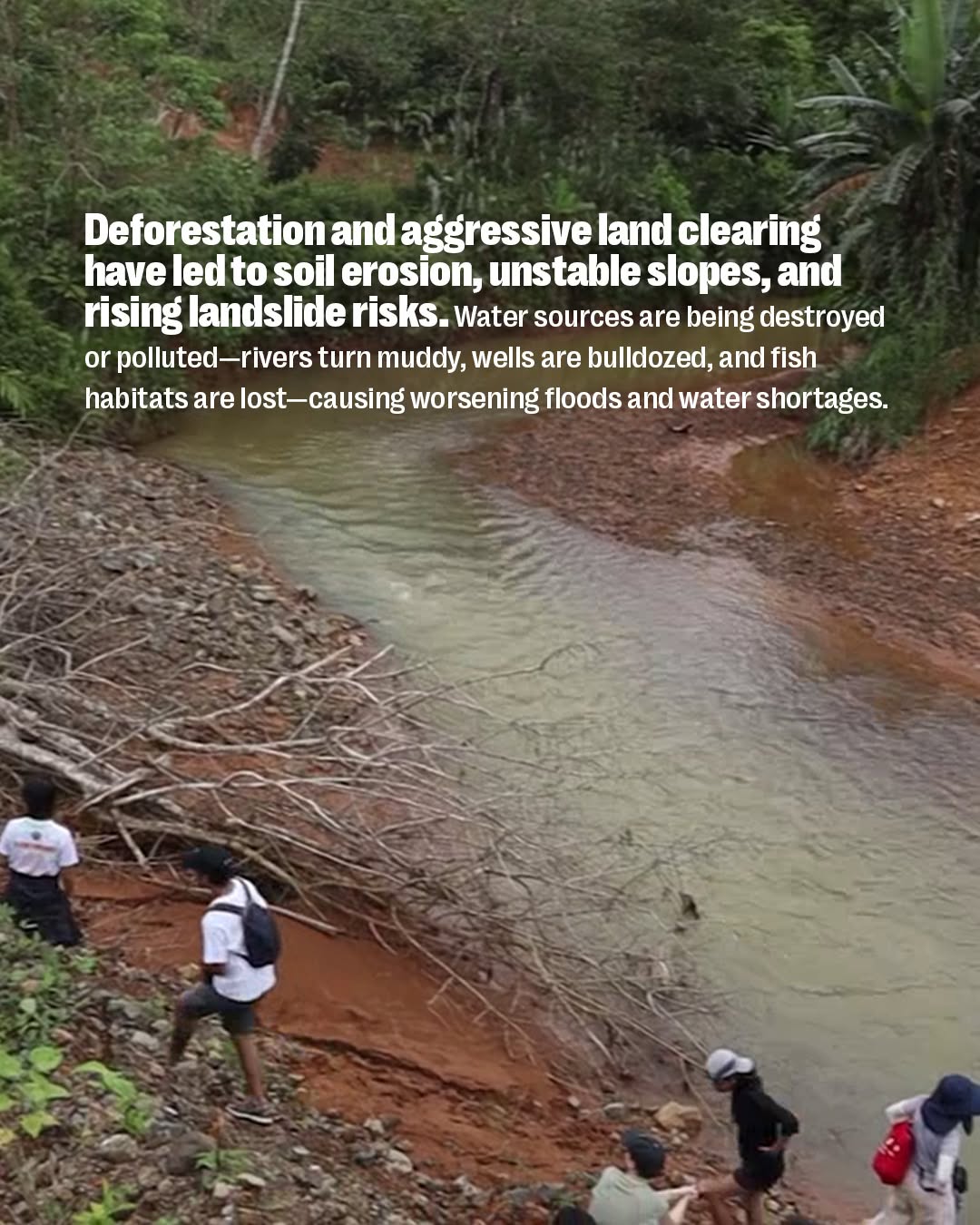
The rapid expansion of the Candoni oil palm plantation has caused severe environmental destruction, marked by large-scale tree cutting and aggressive terracing that flattened native forests, exposed roots, and destabilized mountain slopes—worsening soil erosion and increasing the risk of landslides, with residents already reporting soil collapses along roads and pathways. Water systems have also been damaged as a community well was reportedly bulldozed, forcing locals to travel farther for clean water, while rivers and creeks once used for drinking have turned muddy and polluted, with some waterways even filled with soil or dried up to clear space for plantation infrastructure. The Bagatban River, once clear and abundant with fish, is now reportedly murky and unfit for aquatic life, with farmers suspecting chemical inputs such as fertilizers and fogging pesticides as contributing factors. Residents further report worsening floods during rainy periods, a direct result of deforestation and disrupted natural drainage in the area.
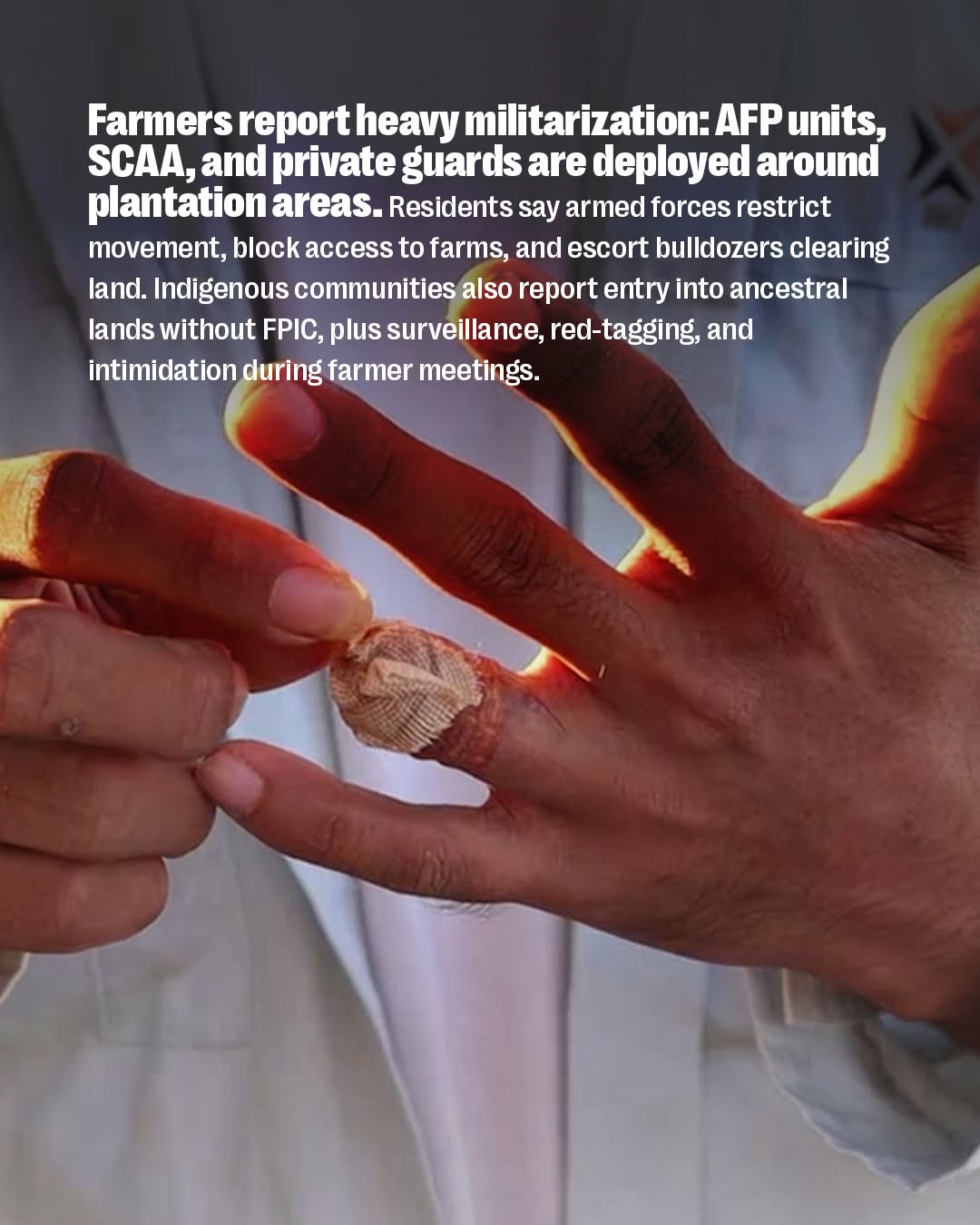
Farmers resisting the expansion of the Candoni oil palm plantation report facing coercion and harassment from armed forces, citing the presence of the 15th and 47th Infantry Battalions, Special Civilian Armed Auxiliary (SCAA), and armed private guards in affected areas. Residents say these armed elements restrict movement, block access to farmlots, and even prevent the transport of harvests, while bulldozers clearing farmland are reportedly escorted by troops—fueling claims that state forces are acting as security for the plantation. Indigenous communities also assert that the plantation entered ancestral lands without securing Free Prior and Informed Consent (FPIC), while farmer meetings have allegedly been disrupted through intimidation, red-tagging, and surveillance. Reports of CIDG threats and drone monitoring have further created a climate of fear and trauma across communities.
The Candoni oil palm plantation reflects the brutal consequences of corporate-driven land use policy. Productive farmlands and ancestral domains are being seized and converted into plantations, undermining food security and destroying communities that have lived and farmed in the area for generations.
Candoni is not simply a local issue. If large plantations continue to expand at the expense of farmers and indigenous peoples, the country’s food crisis, rural poverty, and environmental disasters will only worsen.
 updates from the peasant movement of the Philippines