
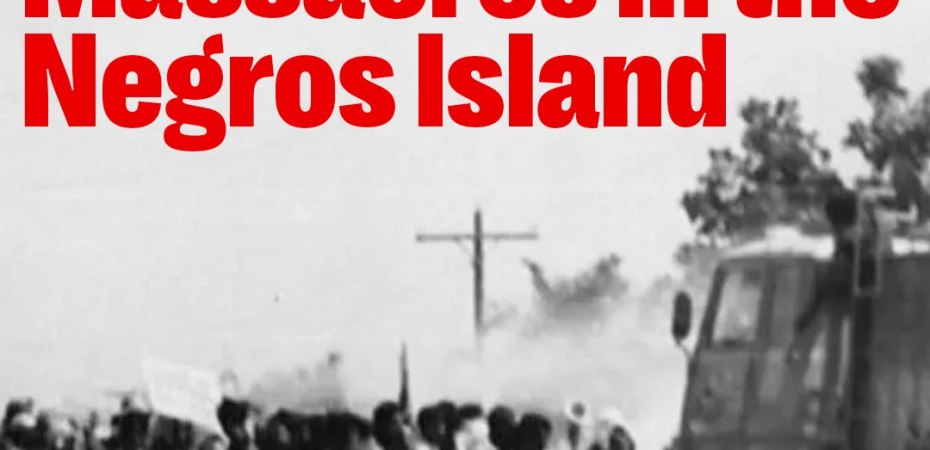
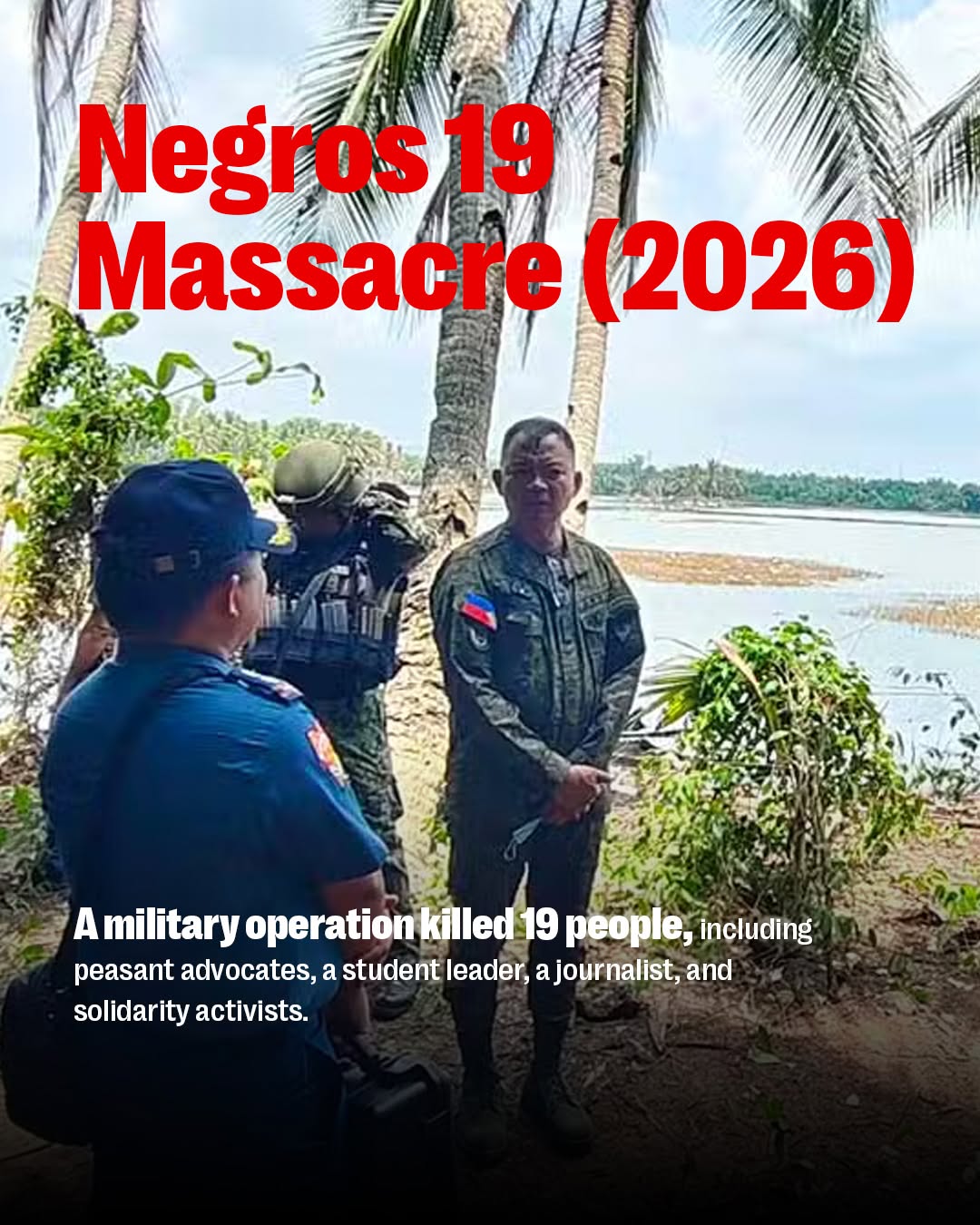
Negros Island, often called the “sugar bowl” of the Philippines, has long been marked by stark inequality in land ownership and recurring violence against farmers and rural communities. This history of agrarian contestation and state violence was starkly underscored on April 19, 2026, when military operations in Toboso, Negros Occidental resulted massacre of 19 people, in what is described as the latest massacre in a long continuum of violence against activists and peasant advocates in Negros. From the dictatorship-era killings of the 1980s to recent counterinsurgency campaigns, the island has become synonymous with agrarian unrest, militarization, and impunity.
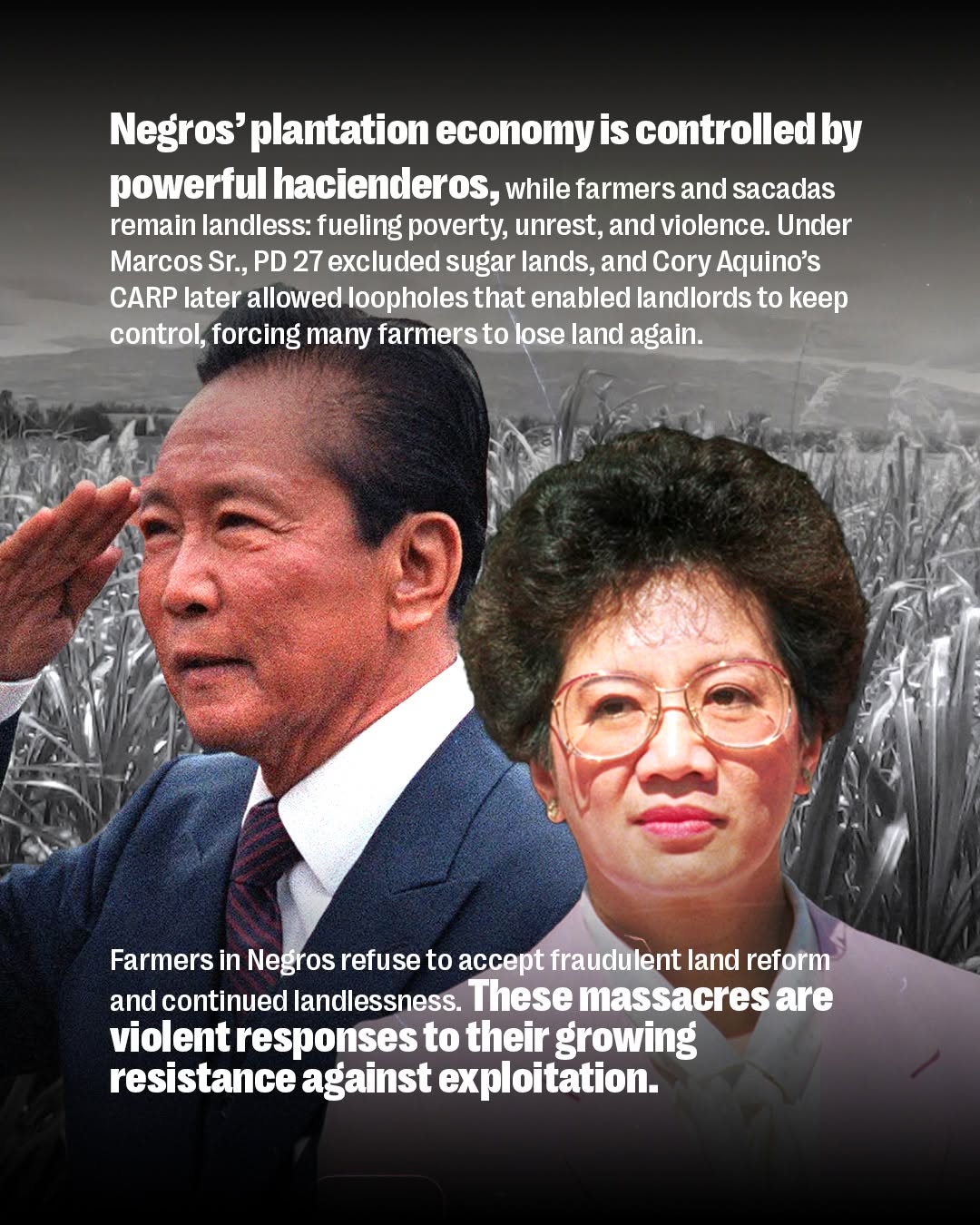
Negros’ plantation economy dates back to Spanish colonization, when vast haciendas were controlled by elite families while farmworkers (sacadas) remained landless. This inequality persists, shaped by incomplete land reform policies that often reinforced elite dominance. A key example is Presidential Decree No. 27, issued by Ferdinand Marcos Sr. during martial law. Though framed as reform, it focused on rice and corn and excluded sugar, leaving Negros’ plantation system intact. This allowed allies like Roberto Benedicto to consolidate control over the sugar industry through state-backed mechanisms, while farmworkers remained landless and vulnerable, especially during the 1980s sugar crisis.
After the dictatorship, amid unrest including the Mendiola Massacre, the government introduced the Comprehensive Agrarian Reform Program (CARP). Loopholes like stock distribution and amortization allowed landlords to retain control, while weak support left many beneficiaries unable to sustain and “pay back” their land.
However, farmers and farmworkers in Negros have refused to accept the reality of fraudulent land reform and continued landlessness. These massacres are violent responses to the growing resistance of the peasant movement, as peasants fight back against systemic exploitation.
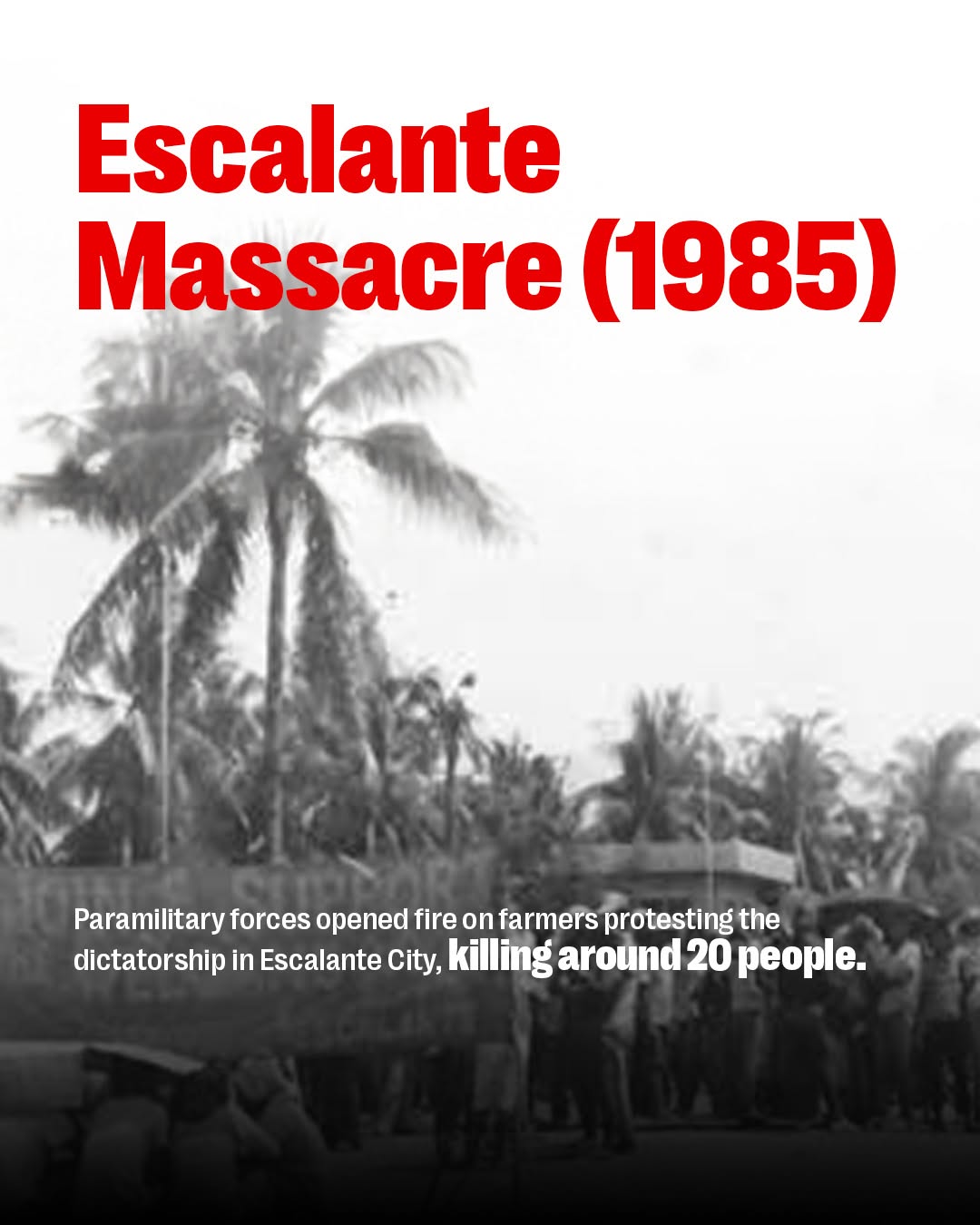
Escalante Massacre (1985)
On September 20, 1985, thousands of farmers and workers gathered in Escalante City to protest the Marcos dictatorship and call for land reform. Government paramilitary forces opened fire on the demonstrators, killing around 20 people and injuring dozens.
The massacre became one of the most infamous symbols of state violence during martial law. It also established a pattern: farmers organizing for rights being treated as threats.
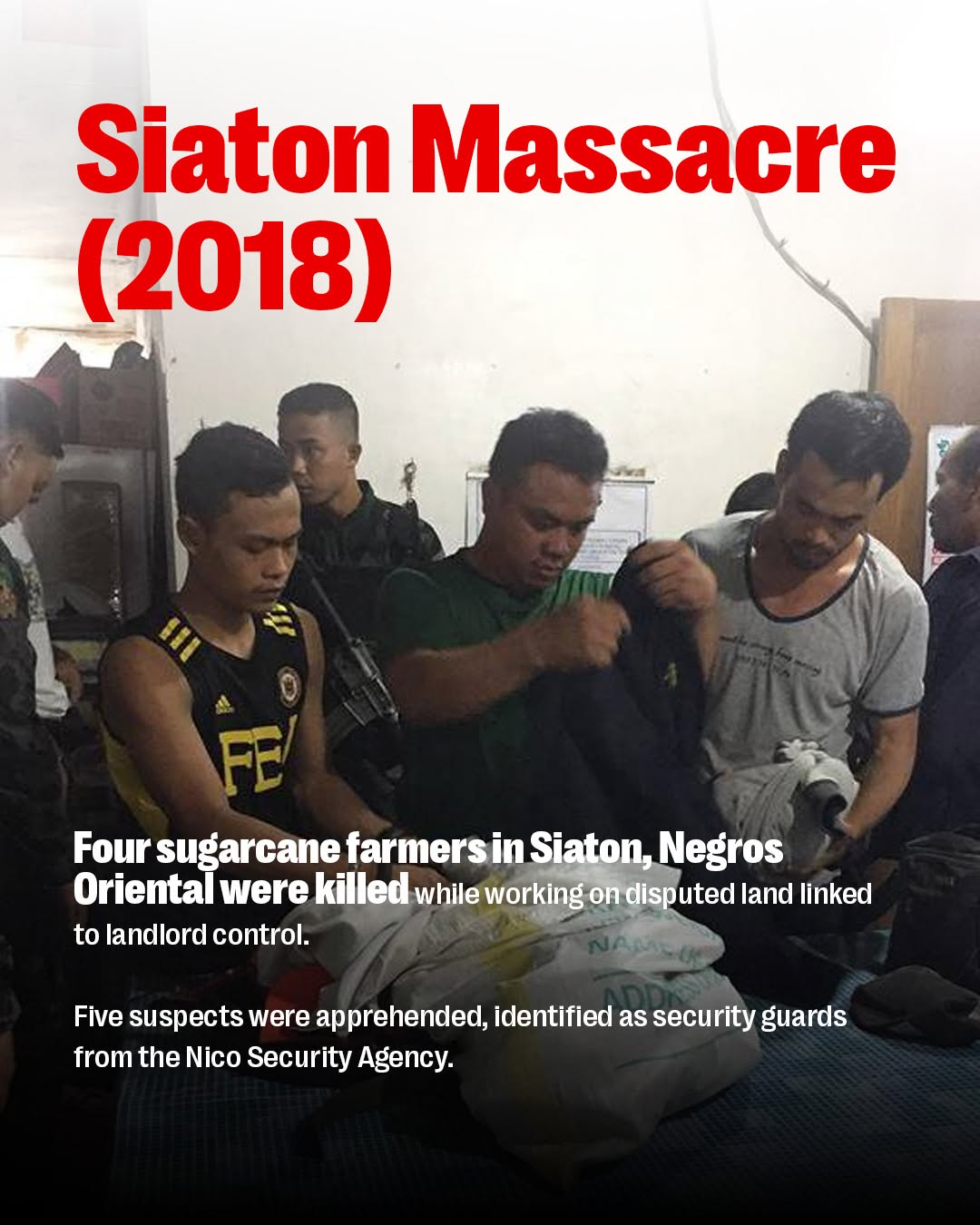
Siaton Massacre (2018)
On February 22, 2018, four sugarcane farmers were killed in Siaton, Negros Oriental while working on disputed land, reportedly shot by armed security forces linked to a landlord. Another farmer survived the attack but was wounded.
Five suspects were apprehended, identified as security guards from the Nico Security Agency.
Sagay 9 Massacre (2018)
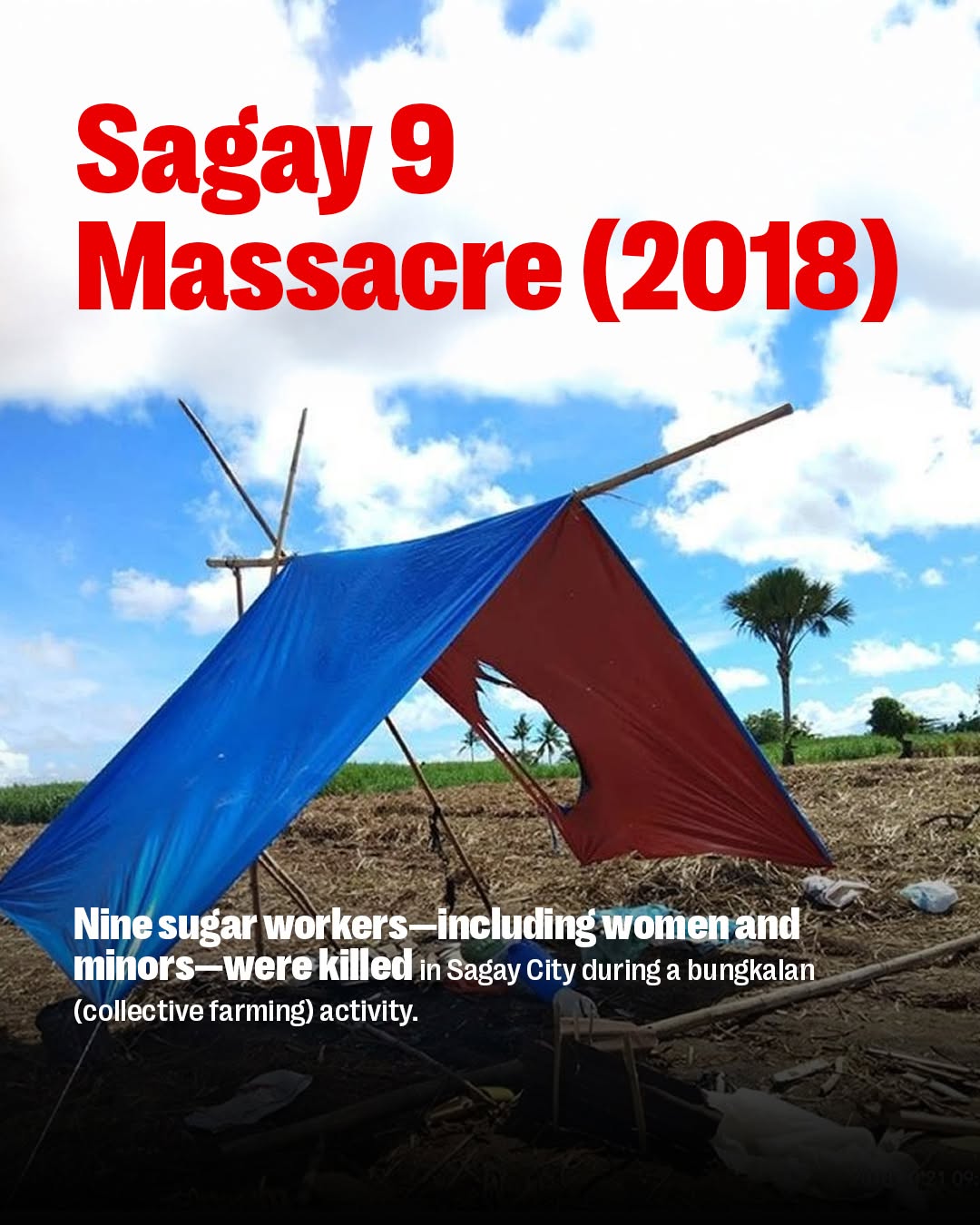
On October 20, 2018, nine sugarcane farmers were killed in Purok Pine Tree, Barangay Bulanon, Sagay City, Negros Occidental. The victims—members of the National Federation of Sugar Workers—were resting in makeshift shelters after joining a bungkalan (collective farming) activity on a contested 75-hectare land when armed men attacked them at night. Three men, four women, and two minors were killed in the assault, with reports indicating that some victims were chased, shot, and others burned after being killed.
The farmers had begun cultivating the land amid a dispute involving a claimed landowner, and the attack drew widespread condemnation locally and internationally. The Sagay 9 massacre became one of the most high-profile cases in a long history of violence against peasant communities in Negros, underscoring the deadly risks faced by farmers asserting land rights.
Guilhulngan Massacre (2018)
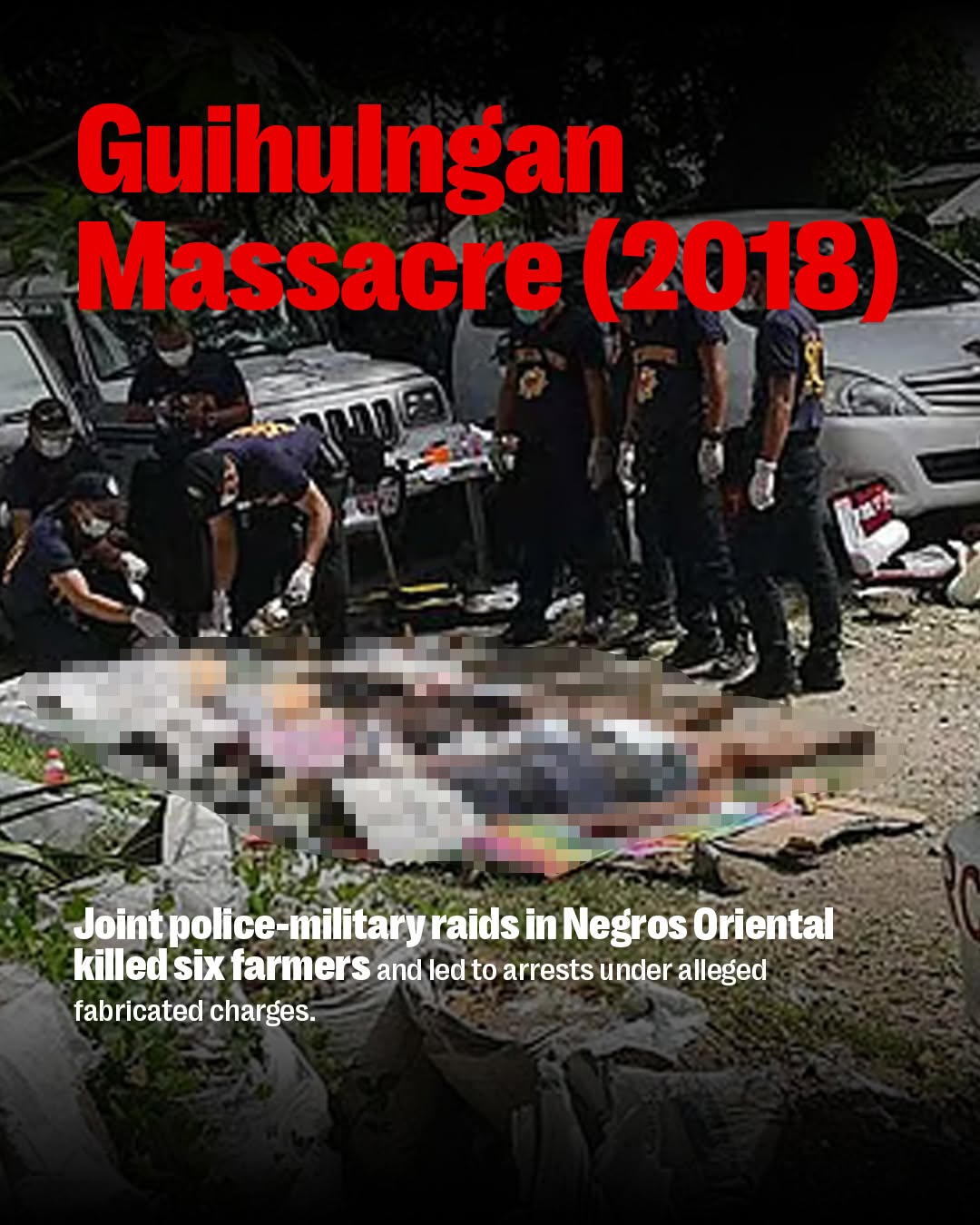
On December 27, 2018, joint police and military forces carried out synchronized operations in Guihulngan City, Sta. Catalina, and Mabinay in Negros Oriental under the SEMPO campaign. In the early hours of the morning, homes in farming communities were forcibly entered while residents were asleep. Families reported being woken up by armed personnel, with men separated from women and children, who were left under threat inside their homes.
Six farmers were killed during the operations, while several others were arrested and allegedly charged with fabricated cases. The raids continued for days across affected communities, leaving residents traumatized and reinforcing fears of widespread abuses in the conduct of counterinsurgency operations in rural Negros.
Negros 14 Massacre (2019)
On March 30, 2019, coordinated police and military operations across Negros Oriental left 14 farmers dead in what authorities described as anti-criminal and counterinsurgency raids. However, accounts from families and witnesses challenged the official narrative, describing a pattern of nighttime raids in which armed men entered homes, separated victims from their families, and later claimed they had fought back.
The killings occurred in multiple towns, including Canlaon, Manjuyod, and Sta. Catalina, and were widely linked to operations under Oplan Sauron and broader security frameworks like Memorandum Order No. 32. Human rights organizations noted that many of those killed were farmers and community members, raising serious concerns about the use of lethal force and the targeting of civilians.
Negros Oriental Massacre (2019)
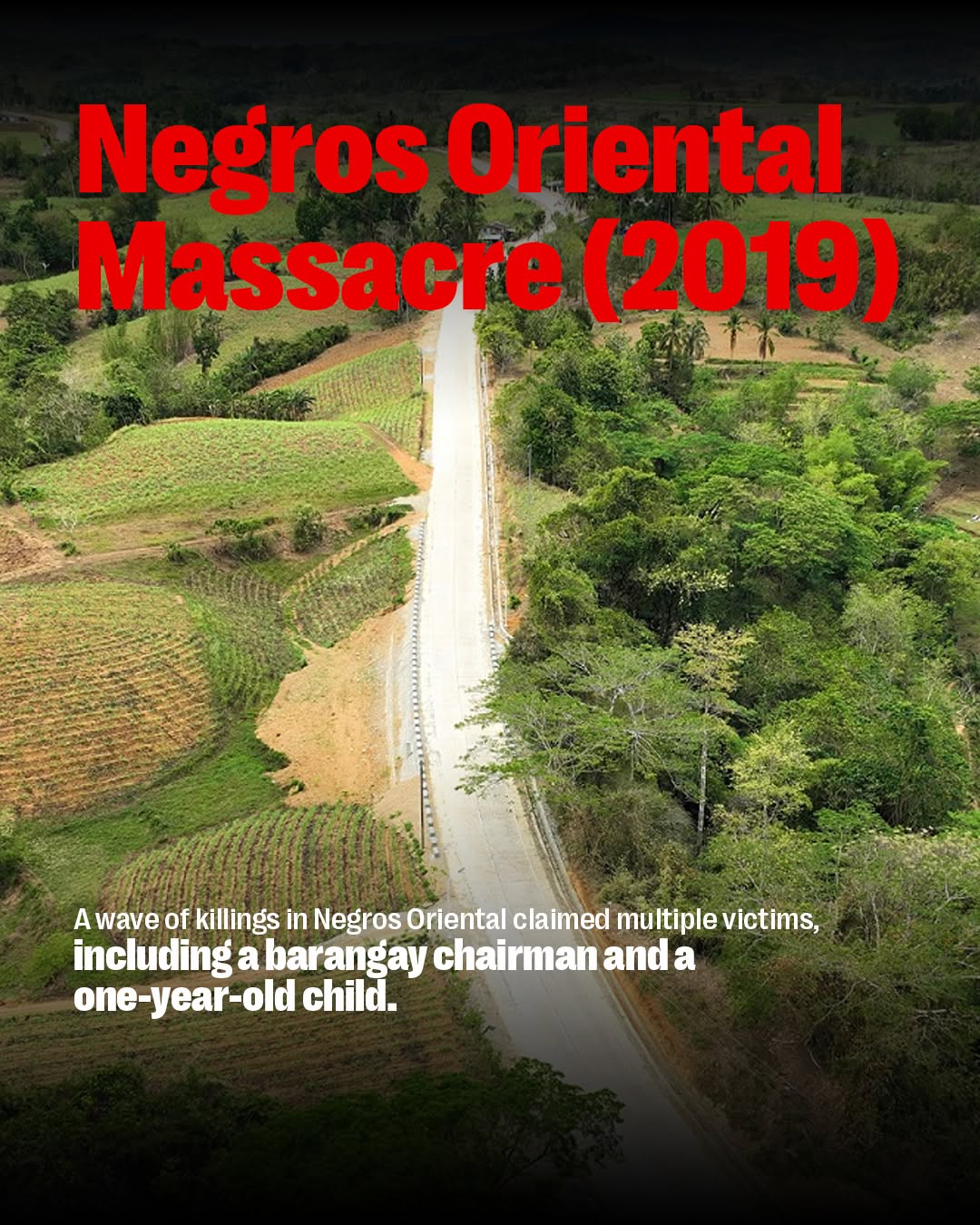
On July 25, 2019, a series of killings in Negros Oriental claimed the lives of multiple victims, including a barangay chairman and a one-year-old child, in attacks widely linked to the escalating cycle of political violence and armed retaliation in the province.
Fausto Family Massacre (2023)
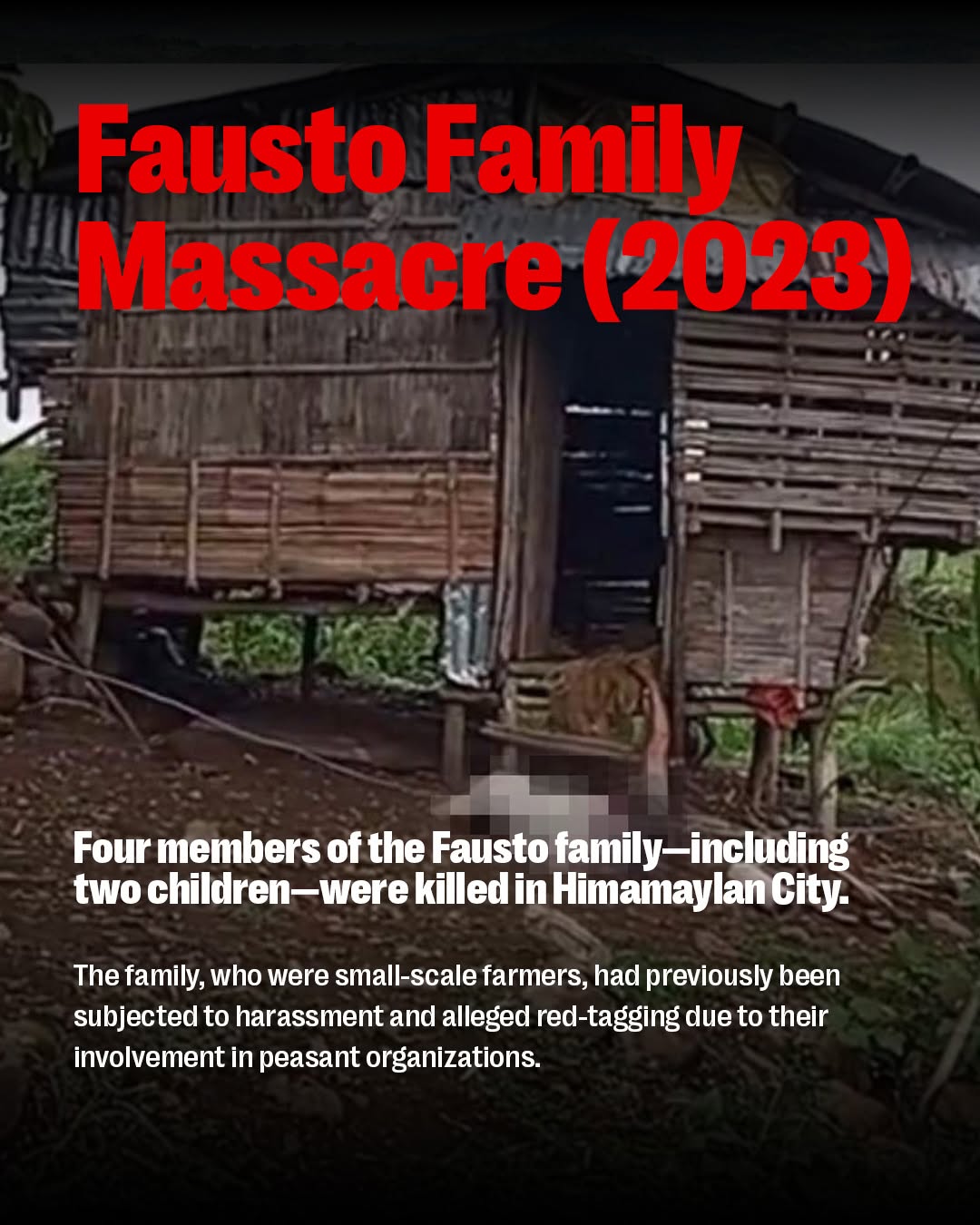
On June 14, 2023, four members of the Fausto family—including two children—were killed in Himamaylan City.
The family, who were small-scale farmers, had previously been subjected to harassment and alleged red-tagging due to their involvement in peasant organizations.
Negros 19 Massacre (2026)
On April 19, 2026, the 79th Infantry Batallion of the Armed Forces of the Philippines mounted an armed excursion in Brgy. Salamanca, Toboso, Negros Occidental that killed 19 people, including peasant advocates Errol Wendel and Maureen Keil Santuyo, student leader Alyssa Alano, journalist RJ Ledesma, and solidarity activists Lyle Prijoles and Kai Sorem.
—
These are not isolated tragedies. A continuing pattern where farmers and peasant advocates are treated as enemies for asserting land rights and demanding justice thrives in the Negros island. These killings reflect the deadly consequences of land monopoly, militarization, and impunity. Justice must be served for the victims of state violence.
Beyond accountability, the roots of poverty and conflict in Negros must be confronted through genuine agrarian reform: free land distribution, support for farmers’ livelihoods, and an end to landlord domination.

