
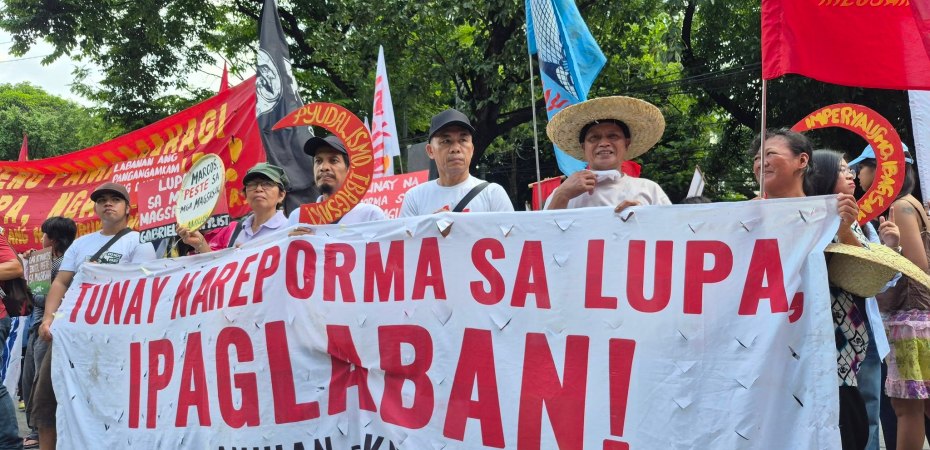
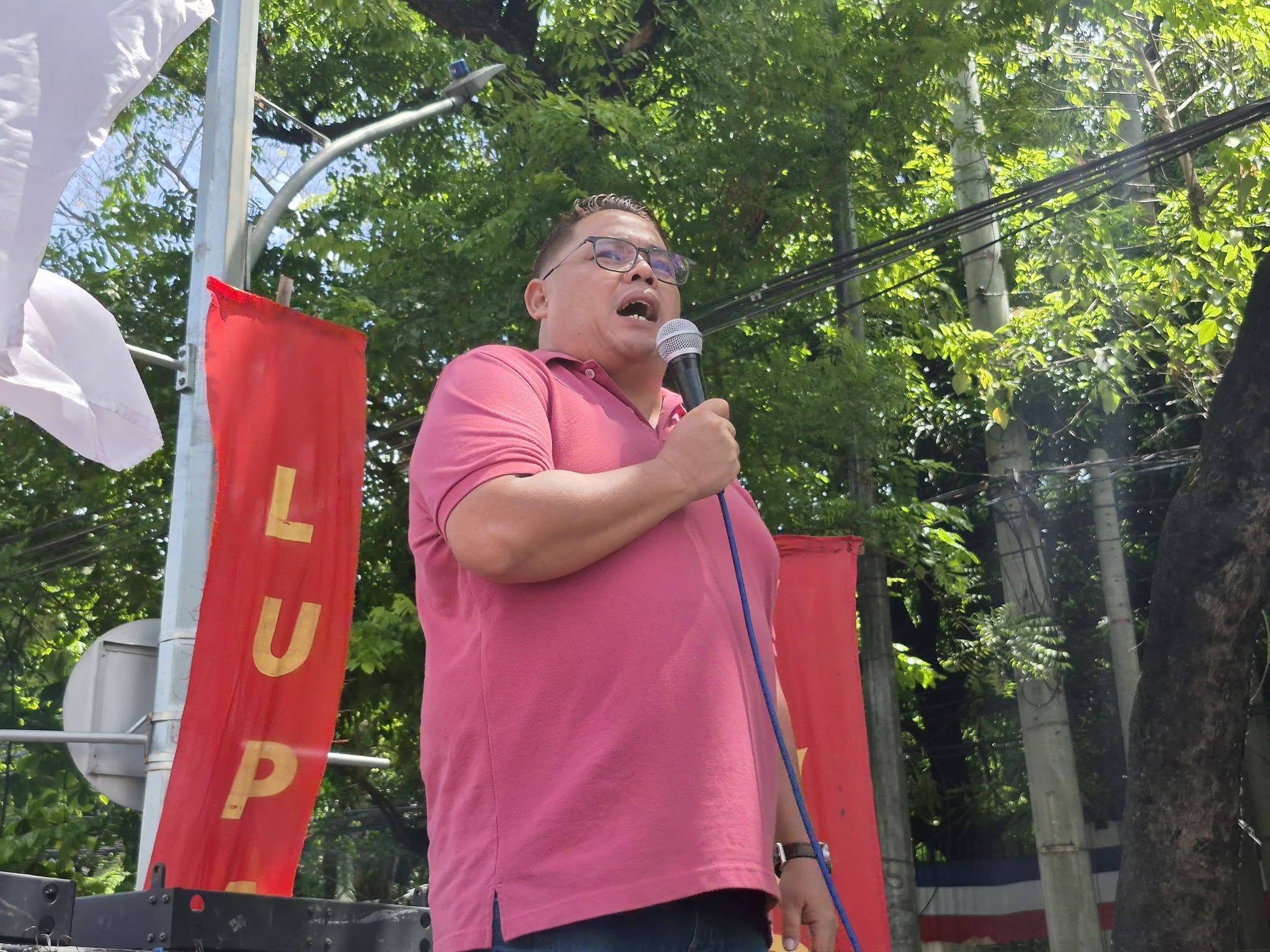
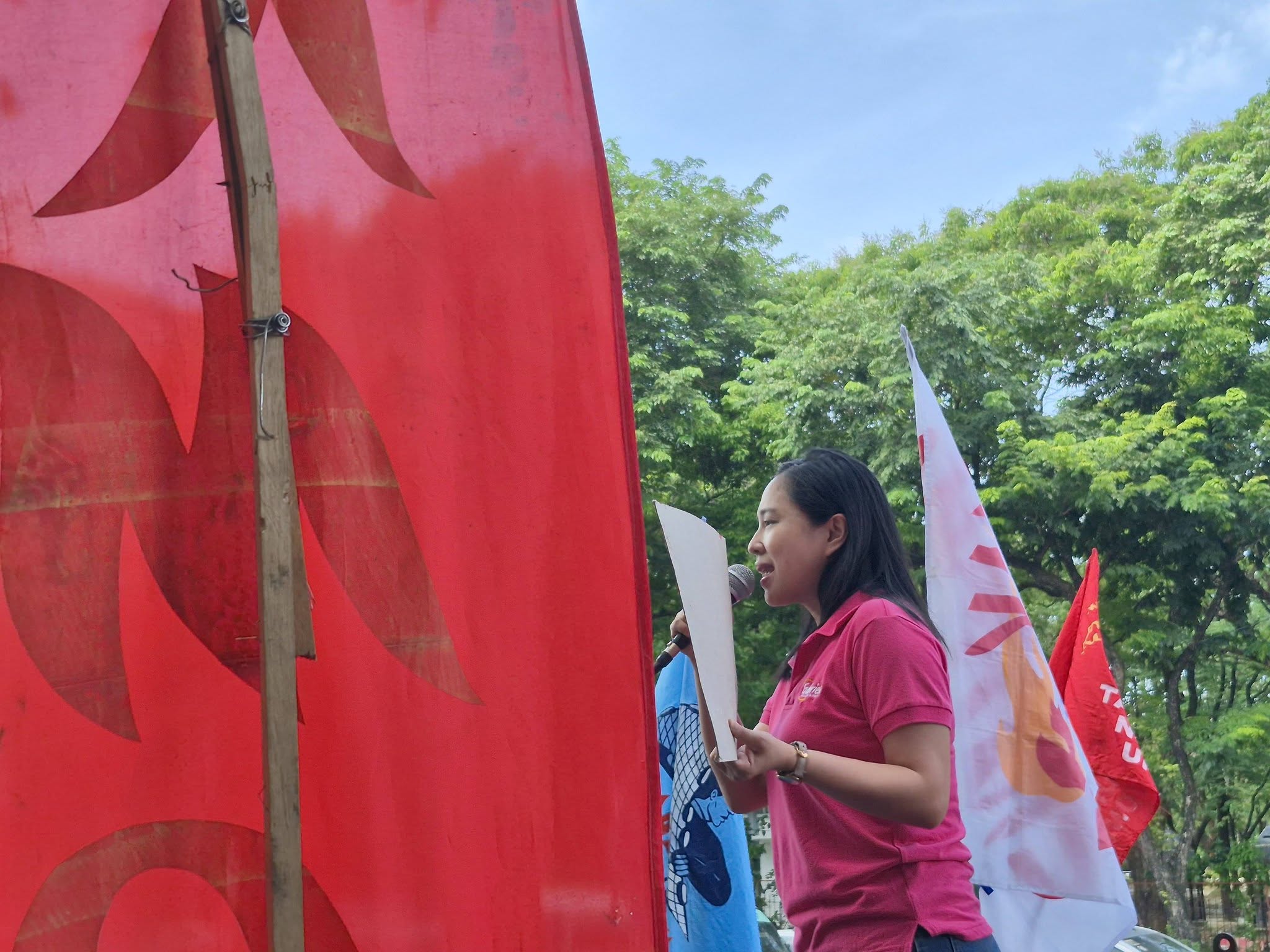
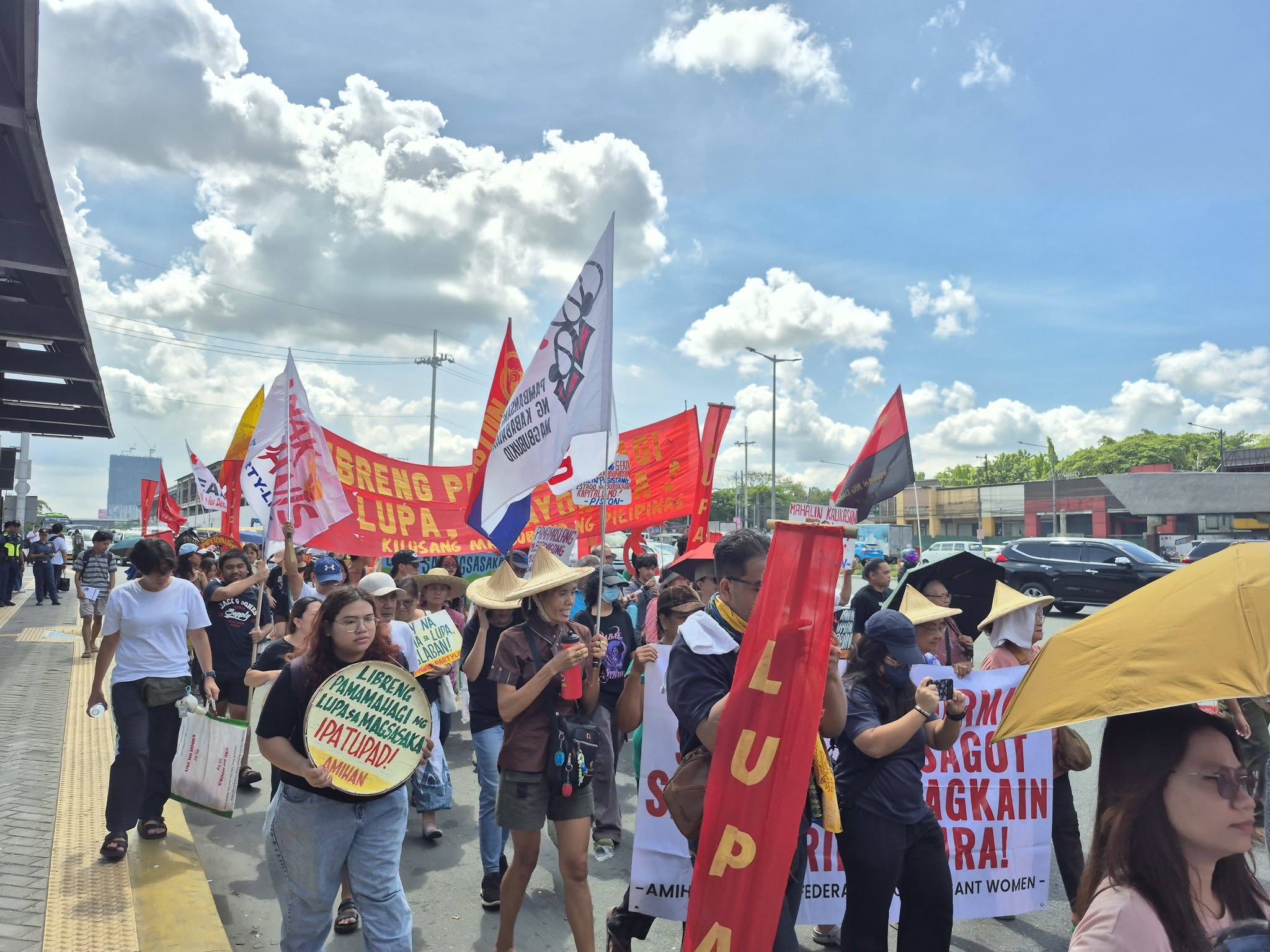
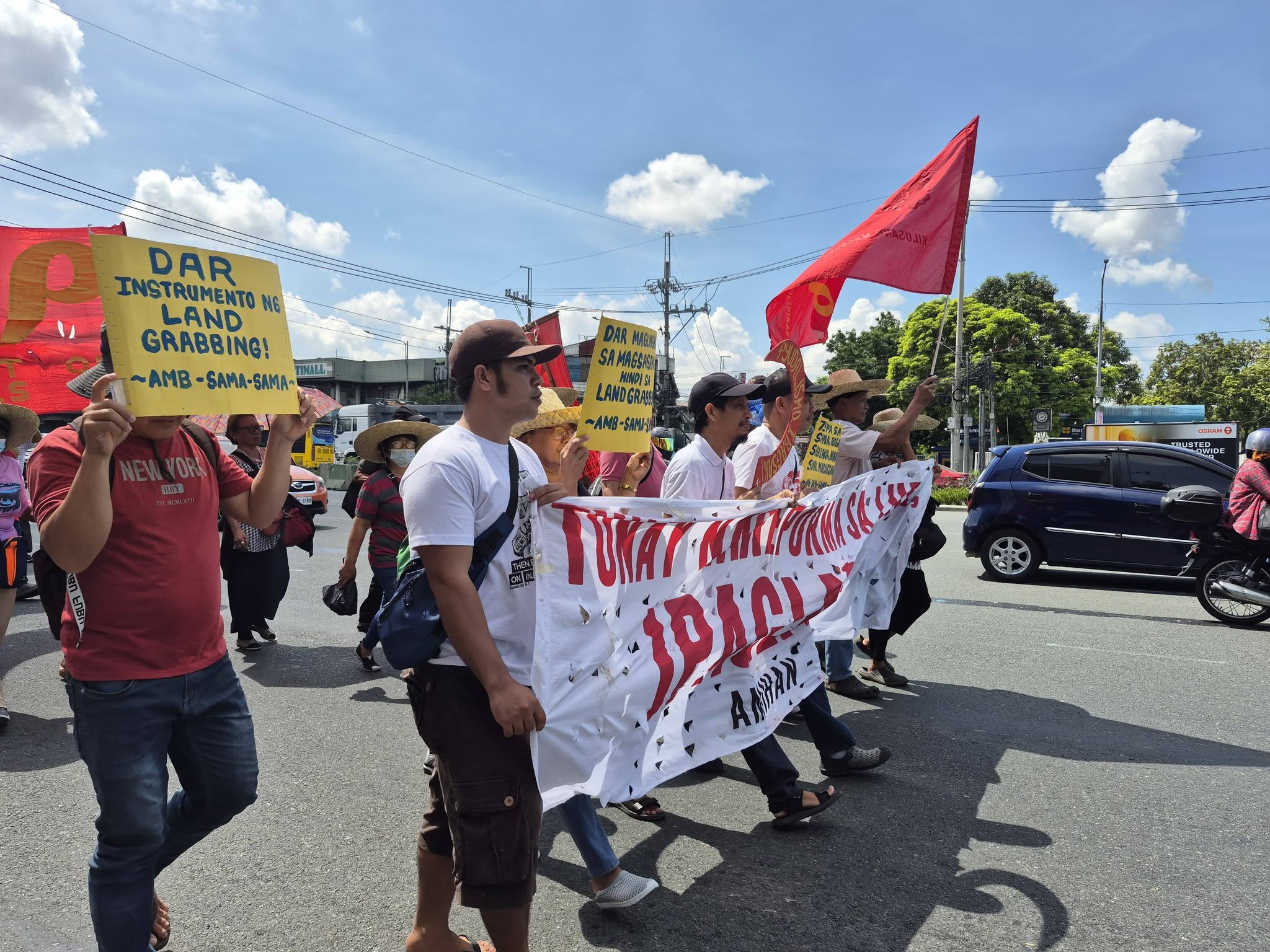
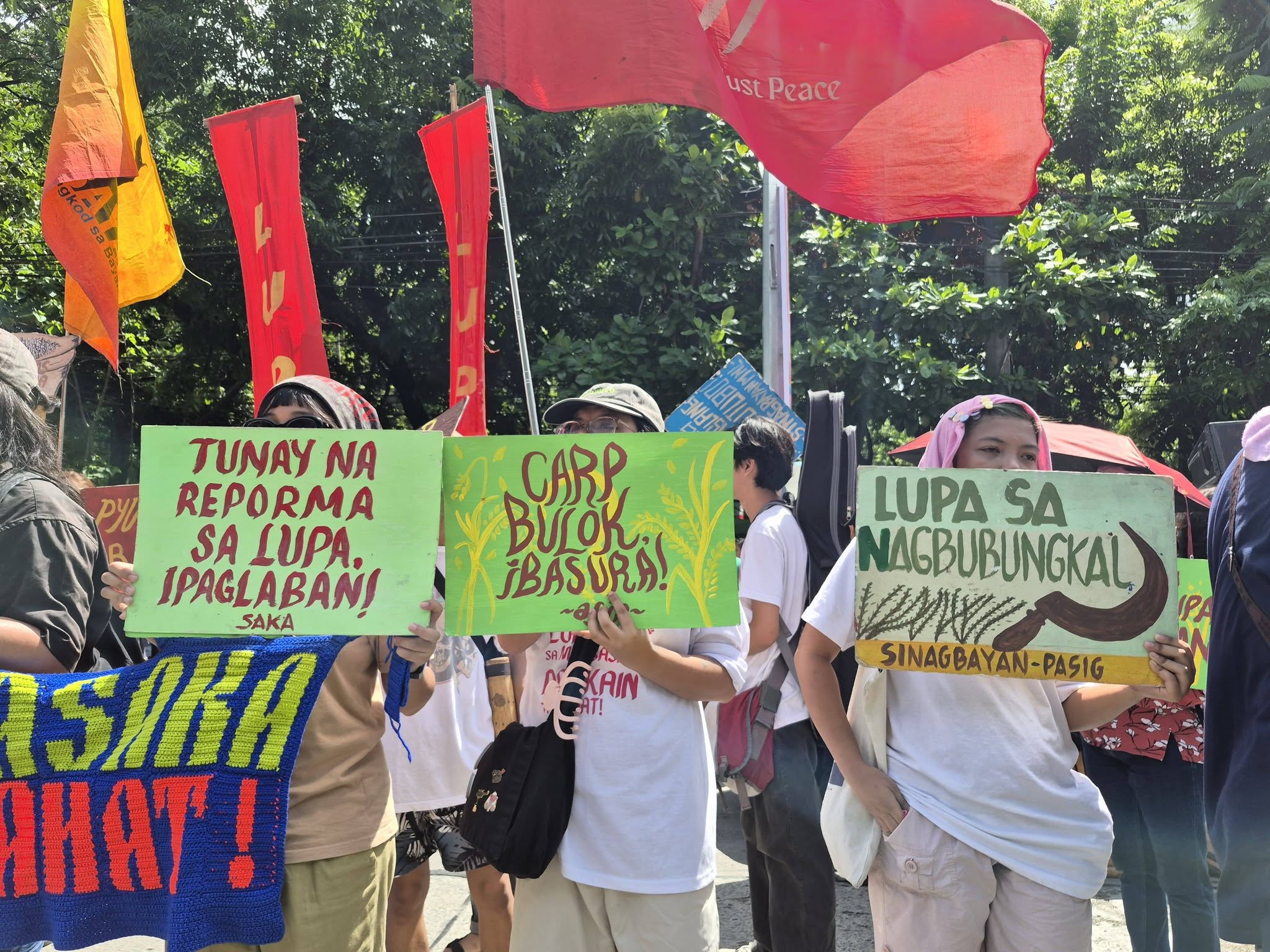
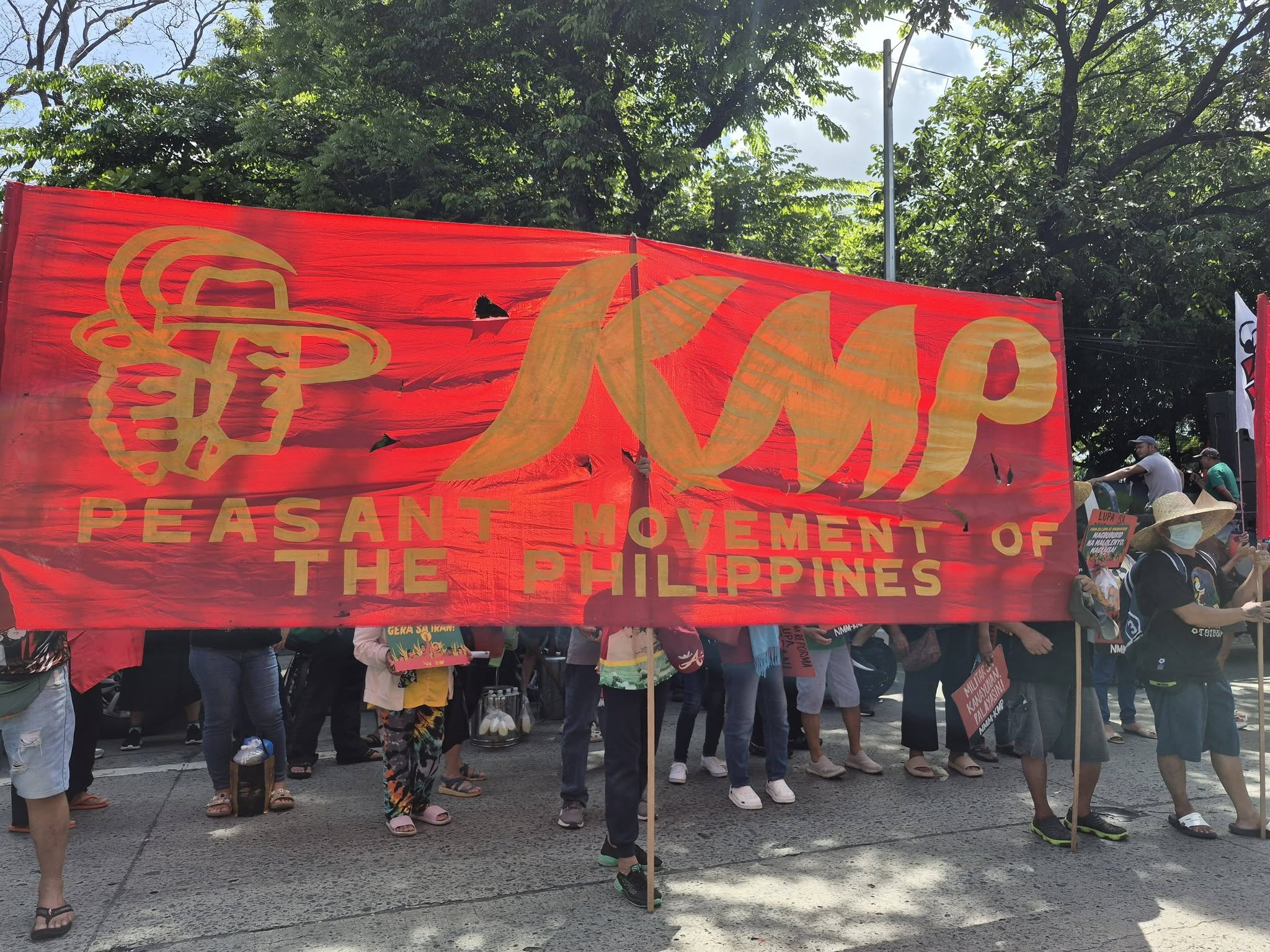
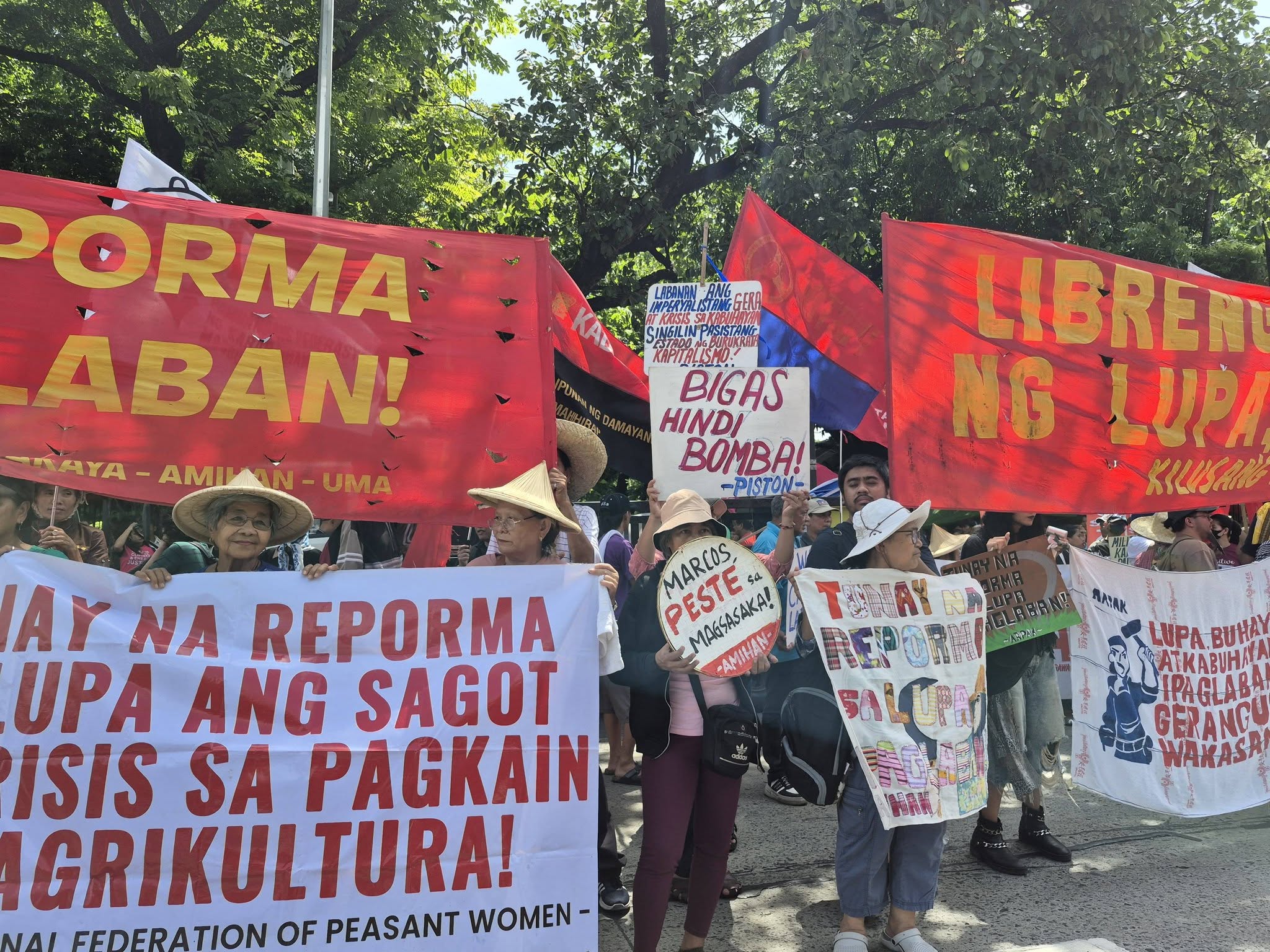
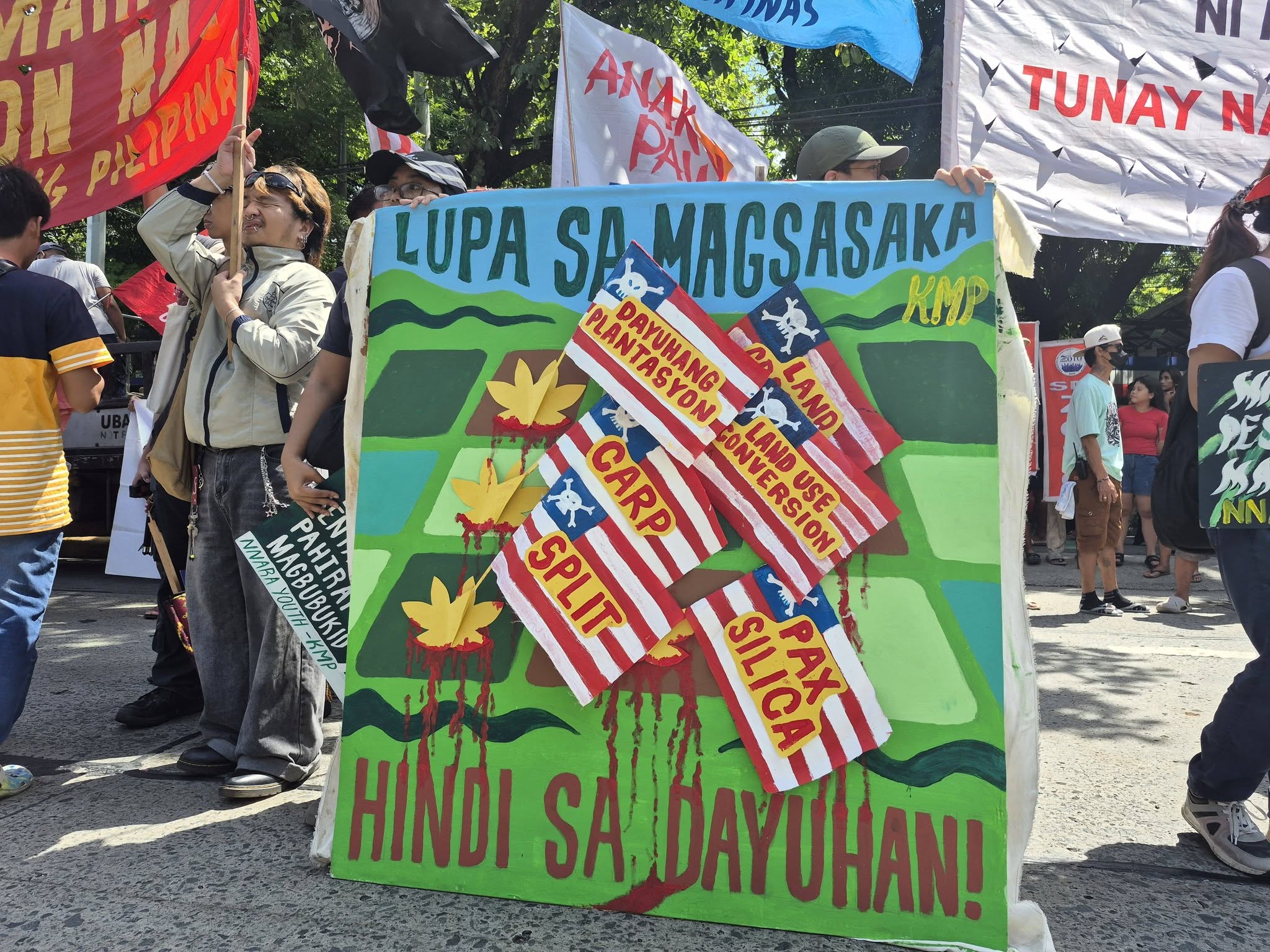
As the government’s failed Comprehensive Agrarian Reform Program (CARP) marks its 38th year, farmers are holding the Department of Agrarian Reform (DAR) accountable for long-standing agrarian disputes and the continued failure of land reform programs to provide genuine land ownership to actual tillers.
The Kilusang Magbubukid ng Pilipinas (KMP) said the unresolved struggles of farmers in the disputed Araneta lands in San Jose del Monte, Bulacan; Hacienda Roxas in Nasugbu, Batangas; Coral ni Lopez in Calaca, Batangas; the Moluccan estate in Norzagaray, Bulacan; and various Presidential Decree 27 (PD 27) landholdings in Bulacan expose the shortcomings of CARP and its market-oriented approach to agrarian reform.
KMP criticized DAR for postponing the scheduled dialogue with farmers today to discuss the aforementioned agrarian cases. Taun-taon, pabalik-balik ang mga magsasaka sa DAR, hindi natatapos ang mga kaso sa lupa. Ito ay dahil sa bulok, huwad at maka-landlord na CARP na wala talagang intensyong lutasin ang kawalan ng lupa ng mga magbubukid,” according to KMP Secretary General Ronnie Manalo.
“Thirty-eight years after CARP’s enactment, millions of farmers remain landless, indebted, and vulnerable to displacement. The program failed to dismantle landlord monopoly over land and instead protected the interests of landlords and corporations. Now, Marcos Jr. is poised to further open the country’s land and resources to investors through the proposed 99-Year Investor Land Lease Act,” KMP said.
According to KMP, CARP was never designed to implement genuine land reform. Through compensation schemes, land-use conversions, exemptions, stock distribution options, and corporate partnerships, the program accommodated landlord interests while denying farmers full ownership and control of the lands they cultivate.
Decades of unresolved land cases
In San Jose del Monte, Bulacan, farmers continue to assert their rights over more than 300 hectares of disputed Araneta lands in Barangay Tungkong Mangga. More than 1,000 farming families face displacement due to land conversion and real estate development projects linked to a DAR conversion order issued in 1992.
In Hacienda Roxas, Nasugbu, Batangas, nearly 3,000 hectares remain embroiled in a decades-long dispute involving around 1,200 farmer-beneficiaries. Farmers have opposed compromise agreements and legal maneuvers that reduce the land available for distribution.
Agrarian reform beneficiaries in Coral ni Lopez, Calaca, Batangas, continue to face threats to their land rights despite receiving Certificates of Land Ownership Award (CLOAs) as early as 1993.
In Norzagaray, Bulacan, the 75.5-hectare Moluccan estate was exempted from CARP coverage despite the absence of a proper field investigation. In 2018, around 50 farming families were forcibly evicted from the area.
Disputes involving PD 27-covered lands in Malolos, Bulacan likewise show how farmers who have cultivated land for generations continue to face title cancellations, land grabbing, and eviction threats despite previous agrarian reform coverage.
“These cases reveal the real legacy of CARP—endless legal battles, delayed distribution, land conversion, and the continued concentration of land in the hands of a few,” KMP said.
Farmers burdened, landlords compensated
KMP also criticized CARP for requiring beneficiaries to pay land amortization while guaranteeing billions of pesos in compensation to landlords.
Under CARP, farmers were required to pay for lands they cultivated, often accumulating debts due to low farm incomes, unstable prices, and rising production costs. “Instead of liberating farmers from exploitation, CARP trapped many beneficiaries in debt,” KMP said.
Meanwhile, landlords received substantial government compensation. As of September 2025, Land Bank data showed that P72 billion of the P95 billion in scheduled CARP compensation had already been paid to around 170,000 landowners.
“The government acted as a broker between landlords and farmers. While landlords were compensated, farmers were forced to pay for land that should have been distributed free of charge,” KMP added.
The group said the Marcos Jr. administration’s New Agrarian Emancipation Act merely condoned accumulated amortization and arrears imposed under CARP instead of implementing free land distribution. KMP noted that the measure covers only about 610,000 agrarian reform beneficiaries out of an estimated 9.8 million registered farmers nationwide. “Marcos’ condonation program and COCROM program are deceptive schemes meant to appease farmers’ dissent,” the group said.
Private landholdings remain intact
KMP emphasized that the expiration of CARP’s Land Acquisition and Distribution (LAD) component in 2014 effectively ended the government’s commitment to acquiring new agricultural lands for redistribution. It added that successive administrations—from Aquino to Duterte and Marcos Jr.—have failed to establish a new land reform program capable of addressing widespread landlessness.
“The most important component of agrarian reform—the acquisition and distribution of land—was abandoned. Yet farmers continue to assert their rights because the agrarian problem remains unresolved,” KMP said.
On CARP’s 38th anniversary, KMP and affected farming communities are demanding accountability from DAR and the Marcos Jr. administration for unresolved land disputes, land conversions, delayed land distribution, and policies that continue to favor landlords and corporations over farmers.
“After 38 years, CARP has become a symbol of the failure of neoliberal land reform. Filipino farmers continue to demand genuine agrarian reform, free land distribution, food sovereignty, and rural development,” KMP concluded. ###

