
The Marcos Jr. administration’s budol revival of P20-per-kilo rice in the Visayas is not an act of relief, but a desperate ploy to salvage crumbling public trust. It is a thinly veiled electoral gimmick, aimed at deflecting criticism and pacifying growing unrest and discontent from the public and among Duterte loyalists in the region.
This cheap publicity stunt comes at a time when the country is reeling from the devastating impact of the Rice Liberalization Law (RLL)—a policy hailed by the government as a path to cheaper rice, but in reality has led to deeper food insecurity, heavy dependence on imports, and the further misery of millions of rice farmers.
Since the RLL’s passage in 2019, rice prices have steadily increase based on a research by the Kilusang Magbubukid ng Pilipinas (KMP). The average retail price of rice has climbed from Php 37.40 per kilo before RLL to Php40.90 in the years after. While consumers pay more, farm gate prices have remained stagnant at Php18.40 per kilo, slashing the income of farmers already struggling with high production costs. The rice price index has soared from its 2018 baseline of 100 to 117.1 in 2024, reflecting how much heavier the burden has become for the average Filipino household.
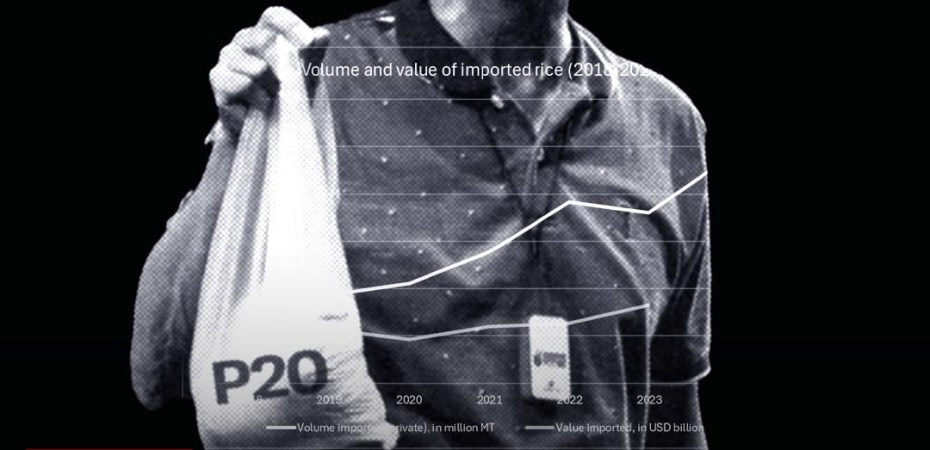
Despite importing a record 4.78 million metric tons of rice in 2024—more than double the 2018 levels—these imports have only enriched a handful of large traders or the rice cartel. From 217 rice importers in 2019, the number of importers has dropped to just 154 in 2024, even as their control over the market ballooned. This consolidation has squeezed out smaller players while giving the rice cartel even greater power over pricing and supply.
For rice farmers, the result has been catastrophic. In 2023, the average net income per hectare fell to Php27,085—the lowest in nearly two decades. Women farmers, who often face more layers of discrimination and lack of access to support services, have borne the brunt of this collapse. The promise of modernization and food security under the RLL has proven to be a myth.
Marcos Jr.’s P20 rice promise is nothing more than a political smokescreen. It is meant to buy goodwill in a region where anger over broken promises and failed policies continues to grow. But no PR campaign or gimmickry can hide the truth: the rice crisis is a direct result of government policies that prioritize imports over local production, and the interests of business over the welfare of the people.
We, the Kilusang Magbubukid ng Pilipinas (KMP) and the Amihan National Federation of Peasant Women, stand firm in our call to reject this deception. The Filipino people deserve genuine reforms—not theatrical stunts from a government and President who has no genuine compassion for Filipinos.
The Rice Liberalization Law must be repealed. Government resources must be redirected toward revitalizing local production through genuine land reform, rural development, and food sovereignty. Until then, every “cheap rice” announcement will remain what it truly is: an insult to the dignity and survival of Filipino farmers and consumers alike. ###
 updates from the peasant movement of the Philippines