
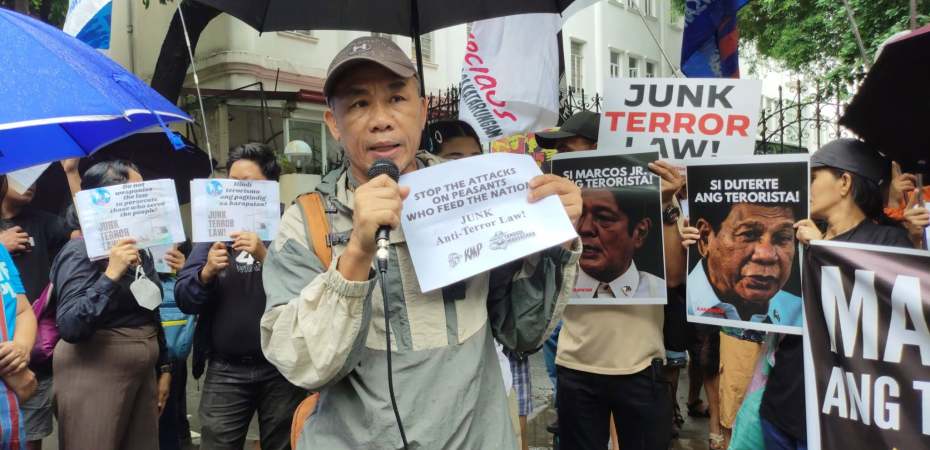
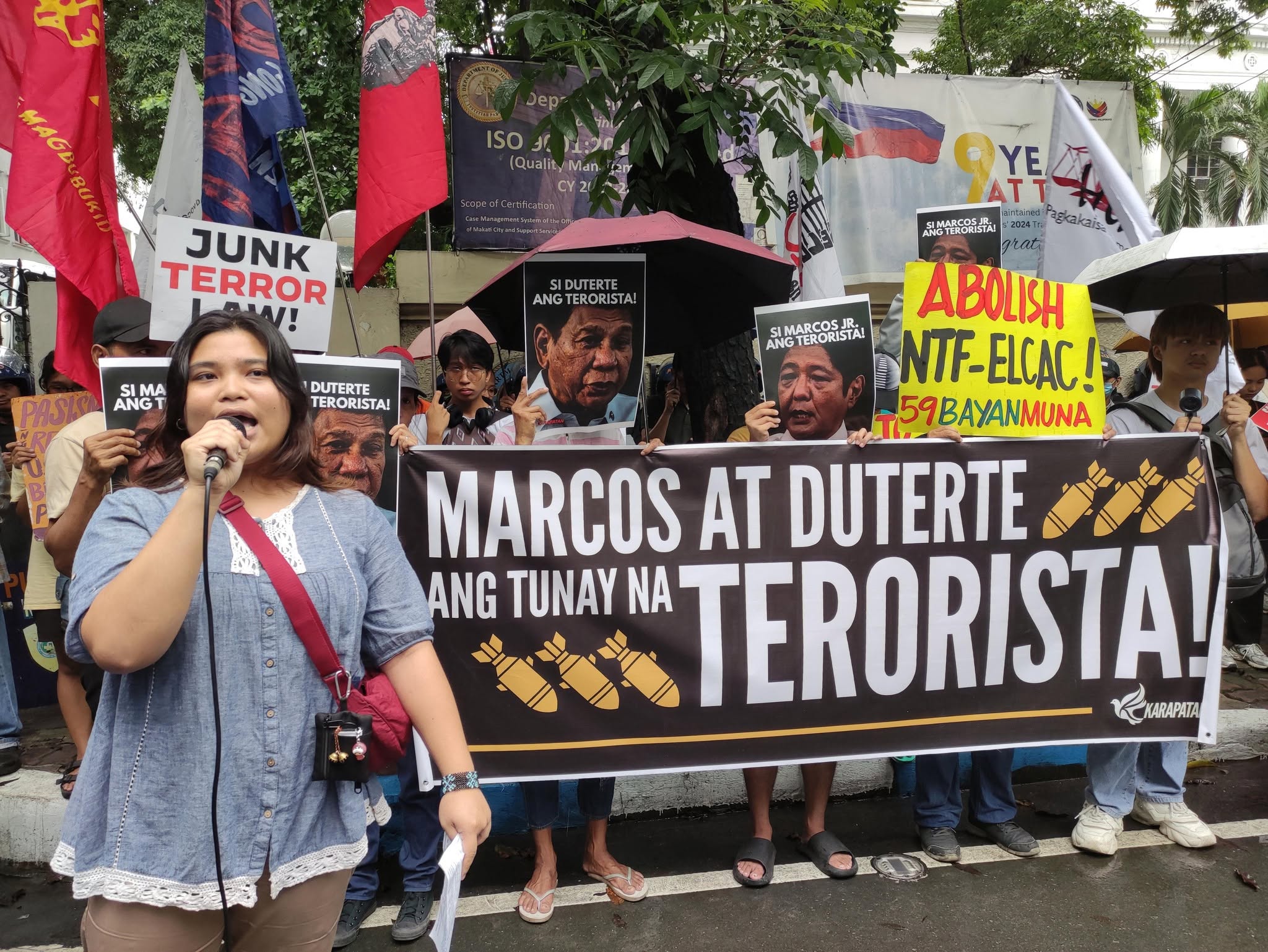
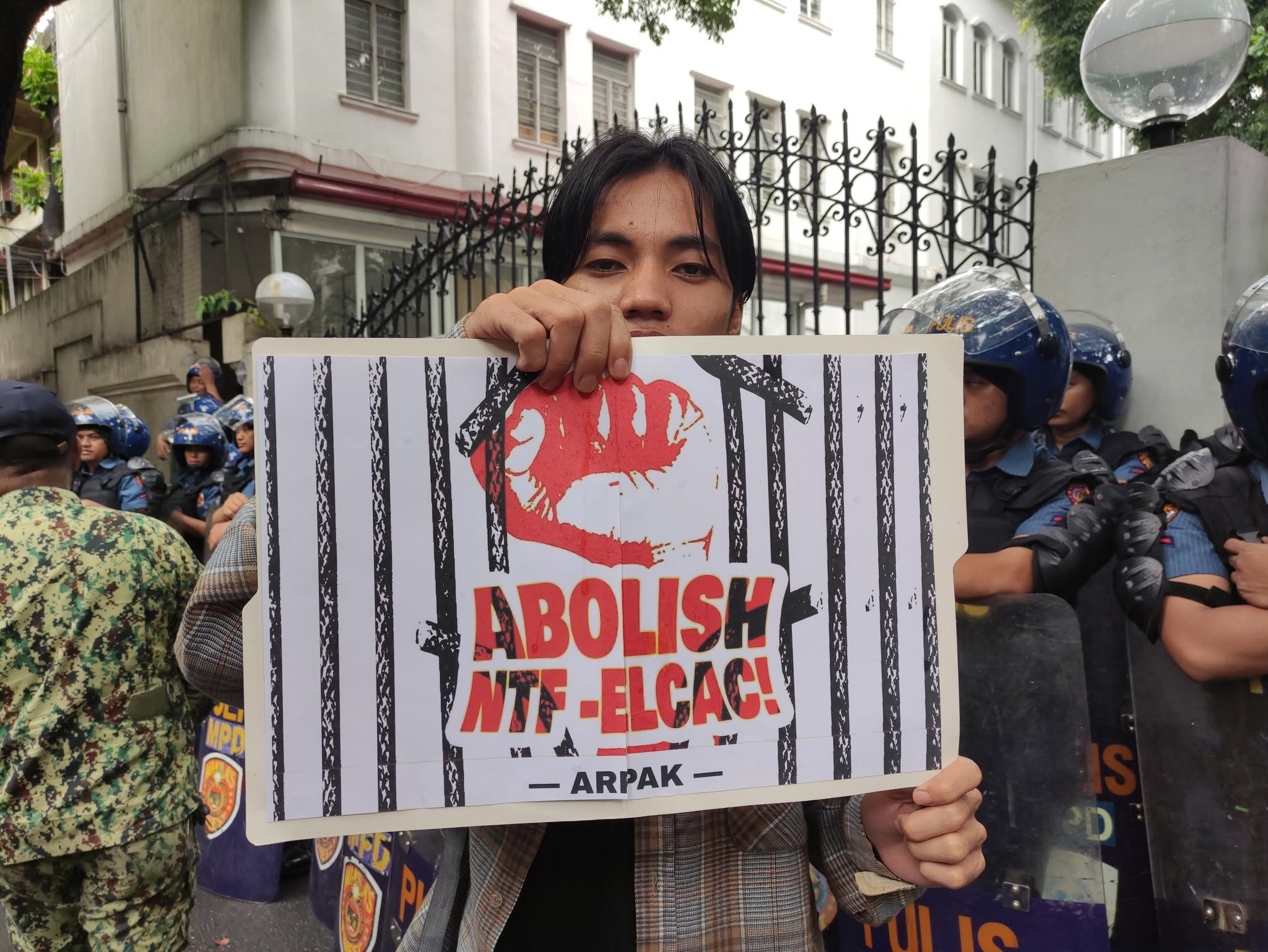
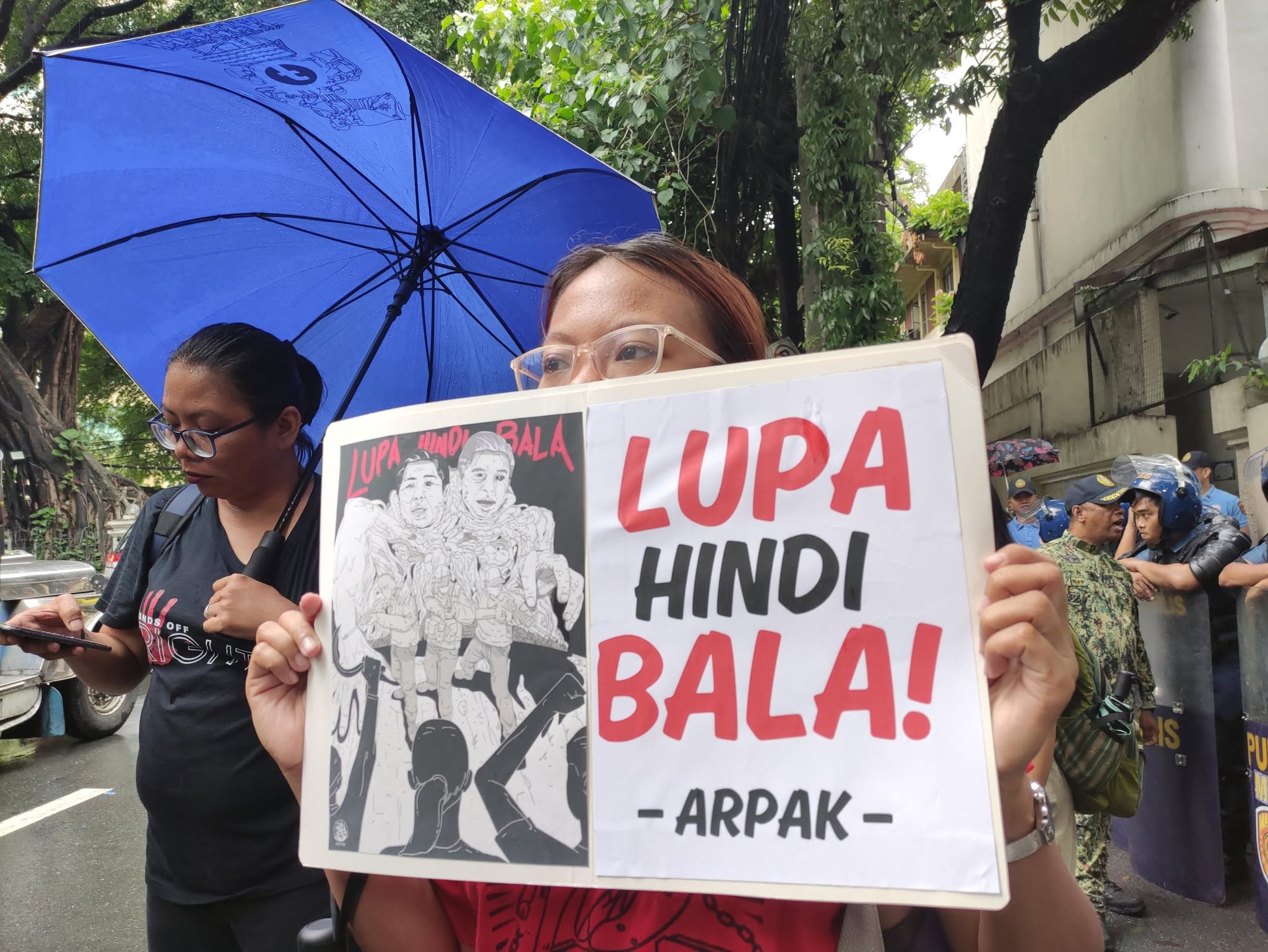
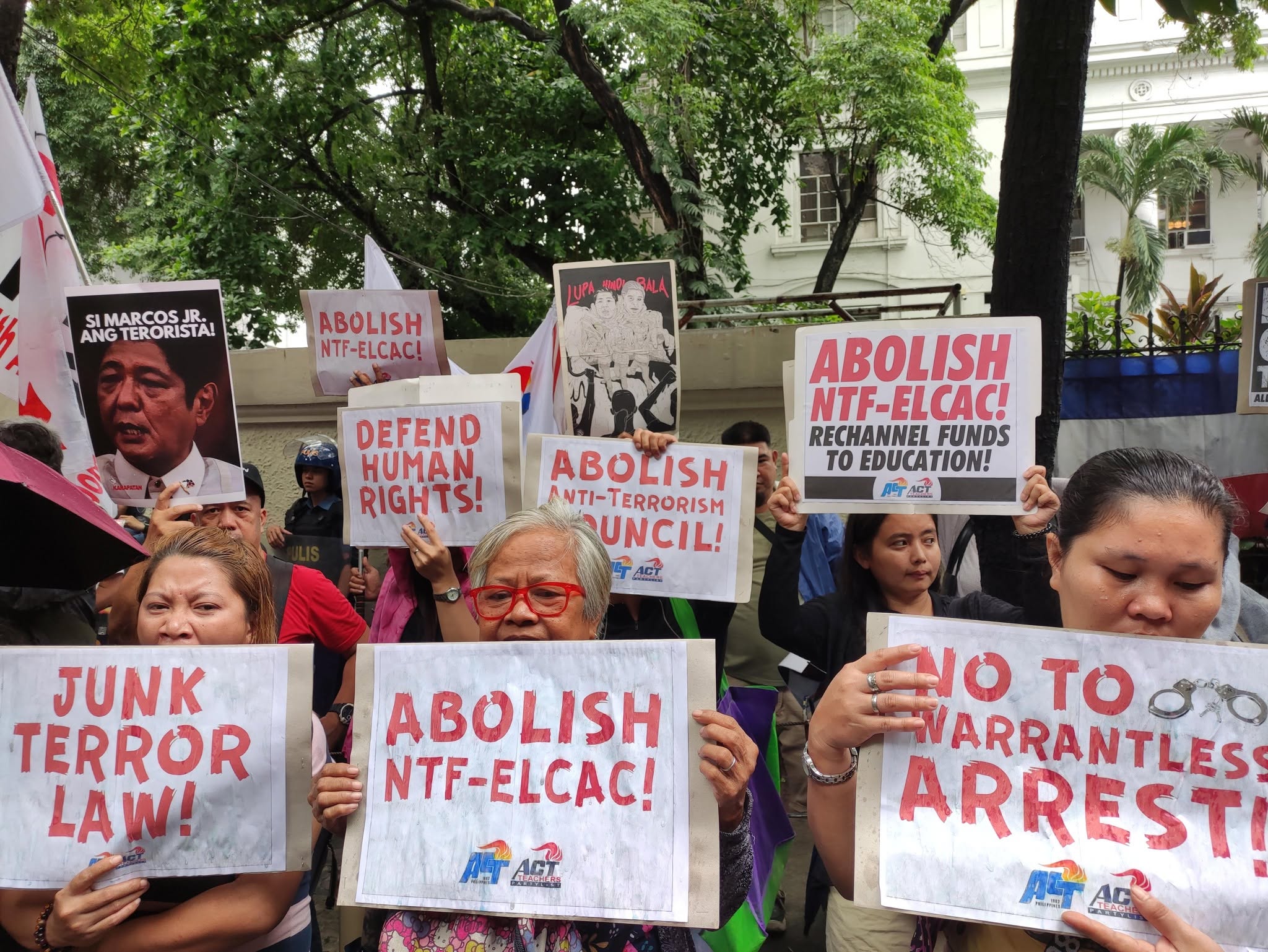
Today marks five years since the passage of Republic Act No. 11479 or the “Anti-Terrorism Act of 2020”: a draconian law that has served as a license for the state to wage unrelenting attacks on dissenters, activists, and ordinary citizens, especially farmers in the countryside.
The Kilusang Magbubukid ng Pilipinas (KMP) strongly condemns this fascist law and its bloody legacy. Under the current Marcos Jr. regime, the Anti-Terror Law (ATL) has intensified militarization, red-tagging, illegal arrests, and extrajudicial killings targeting peasant communities, leaders, and land rights advocates.
The Marcos Jr. administration, through the National Task Force to End Local Communist Armed Conflict (NTF-ELCAC), has weaponized the ATL to justify military occupation of rural areas under the guise of “counter-insurgency.” In reality, these operations have displaced hundreds of families, disrupted farming activities, and sown fear in communities righteously demanding land, justice, and livelihood.
Under this climate of repression, KMP national leaders have themselves become targets of political persecution. KMP chairperson Danilo Ramos experienced red-tagging and surveillance during the early months of 2024, while in June 2024, secretary general Ronnie Manalo’s house was raided and planted arms followed by a military occupation of their community violating International Humanitarian Law. In Cagayan Valley, peasant leaders Cita Managuelod and Isabelo Adviento, along with three others dubbed the “Cagayan Valley 5”, were unjustly charged under the Terrorism Financing Prevention and Suppression Act of 2012—despite their legitimate work in peasant and rural organizing. Adviento, who was just previously acquitted of false Illegal Possession of Firearms and Explosives charges, is once again harassed by the state through lawfare.
Across the country, rural communities continue to bear the brunt of state and landlord-sponsored violence. In Cebu, on September 22, 2024, armed goons opened fire and threatened to kill members of the Baybay II Farmers Association in Hacienda Borromeo, Barangay Pandacan, Pinamungajan, in a clear attempt to intimidate and suppress their fight for land. Just days later, on September 26, nearly 100 combined police and military troops under Task Force Ugnay and the 202nd Infantry Brigade of the 2nd Infantry Division tried to forcibly enter the community of organized farmers in Lupang Ramos, Dasmariñas City, Cavite, where decades-long agrarian disputes persist. Meanwhile, in Occidental Mindoro, at least 31 Iraya Mangyan farmers and residents, including 16 elderly and 15 minors, were illegally arrested on October 18, 2024 by private goons and members of the Police Regional Mobile Group in Hacienda Almeda, Abra de Ilog, on false charges of trespassing. The land in question, covering over 1,500 hectares, has been under agrarian reform coverage since 1988 through the Comprehensive Agrarian Reform Program (CARP), yet remains violently contested by landlords and their armed agents. These attacks highlight the continuing and systemic use of violence to suppress legitimate land struggles and peasant assertion of their rights.
According to human rights group Karapatan, at least 86 peasants have been killed in political-related attacks under Marcos Jr. as of mid-2024. Meanwhile, the Anti-Terror Council (ATC) has arbitrarily designated individuals and organizations as “terrorists” without due process, bypassing the courts and silencing lawful dissent.
Within the five years of ATL not really concerned with quashing terrorism, and now its realities and dangers fully bared, Ferdinand Marcos Jr. has shown that he is neither a break from the bloody Duterte regime nor from the fascist dictatorship of his father, Marcos Sr. His term has only continued the same brutal policies of repression, militarization, and silencing of dissent.
The newly elected lawmakers who assumed office in 2025 now face a historic responsibility: their mandate must include the repeal of the ATL and the dismantling of all institutional mechanisms that violate civil liberties. We challenge these legislators, especially those who ran on platforms of human rights, democracy, and reform—to uphold their commitments by filing and supporting bills that will abolish this repressive law. The Filipino people, particularly the farmers and rural poor, are watching and demanding concrete action.
We call on all democratic sectors to resist this fascist legislation and hold the Marcos Jr. regime accountable for the continuing political repression in the countryside. We demand justice for all victims of state-sponsored terror. We call for addressing the roots of armed conflict: primarily genuine land reform, as landlessness remains the pertinent cause of poverty in the countryside. ###

