
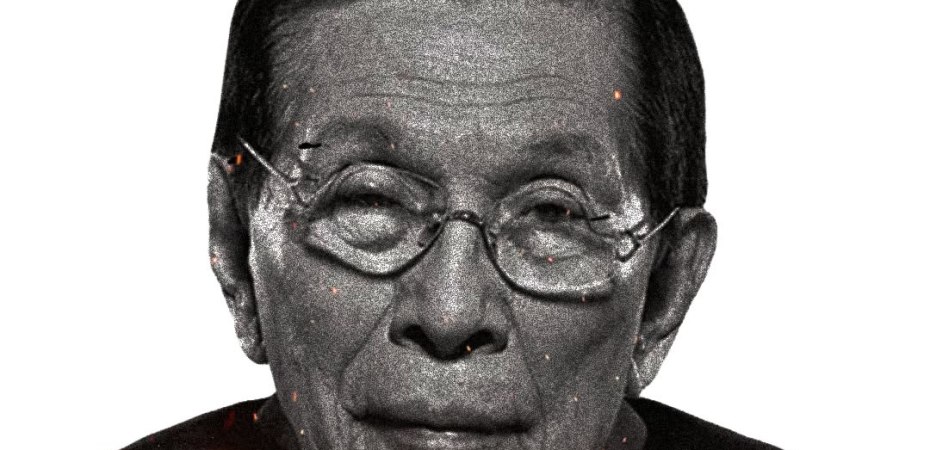
Juan Ponce Enrile is dead but justice remains elusive for the countless victims of Ferdinand Marcos Sr.’s Martial Law. As the architect and chief enforcer of the dictatorship’s repression, Enrile’s hands were stained with the suffering of farmers, workers, and activists who were tortured, jailed, and disappeared under the Marcos Sr regime. His death does not erase accountability for the crimes of the past.
Throughout several administrations, Enrile personified the ruling elite’s betrayal of the people. He defended the interests of landlords and oligarchs while farmers remained landless. As the former chief of the Ministry of Defense and later a top official under Marcos Sr, Enrile was directly implicated in the coco levy scam that robbed millions of pesos from small coconut farmers. The coco levy funds, stolen from the sweat and labor of coconut farmers, were never fully returned, a lasting symbol of injustice and state-sponsored plunder.
President Ferdinand Marcos Jr. effectively exonerated Enrile by keeping him close to power, appointing him as Chief Presidential Legal Counsel and shielding him from accountability for his numerous graft and human rights cases.
Enrile’s crimes against farmers were not left behind during his stint as a Macoy mastermind. JAKA Investment Corporation (JAKA Corp) and its affiliates, has thrusted a saga of land-grabbing and overt militarization on the 155-hectare tract of Lupang Kapdula in Dasmariñas, Cavite illustrates the continuity of agrarian injustice in the post-Martial Law era. Farmers who had tilled the land since the mid-1970s were awarded Certificates of Land Ownership (CLOAs) by the Department of Agrarian Reform (DAR), only to see them cancelled and the land folded into a joint venture scheme with JAKA Corp, South Cavite Land Company Inc. (SCLCI) and Sta. Lucia Realty & Development Inc. Private security forces backed by JAKA terrorised farmers: in 2021 alone, reports describe armed guards fencing off access roads, destroying crops and huts, and preventing organising amongst the peasant community. JAKA, itself linked to the Enrile family estate, harnessed state and para-state violence to enforce development and displacement: a hallmark of Marcosian tactics to put the peasantry under its heel.
Enrile also showed how the theater of repression was itself weaponised for authoritarian ends, as it snowballed today to various other means. Investigations and contemporaneous reportage point to his earlier admission in February 1986 alongside Fidel V. Ramos that the attack was in fact faked as a pretext for the imposition of Martial Law in the Philippines under Marcos Sr. He however vehemently denied it in his 2012 memoir, but this reversal signals not only the manipulation of violence to manufacture a state of emergency but also the deep fragility of accountability in a regime where the faces of truth and myth are continually being revised by those in power. Such is its continuity in the current Marcos Jr. regime, which Enrile intensely backed, facing calls of accountability.
Enrile’s legacy reminds us that impunity persists in a State that protects the powerful and abandons the poor. To confront Enrile’s legacy is to confront the system that created and protected him: a system that weaponizes law and capital against the people. True justice lies not in the passing of tyrants, but in the collective struggle to dismantle their structures of power and reclaim the future stolen from generations of Filipinos.

