
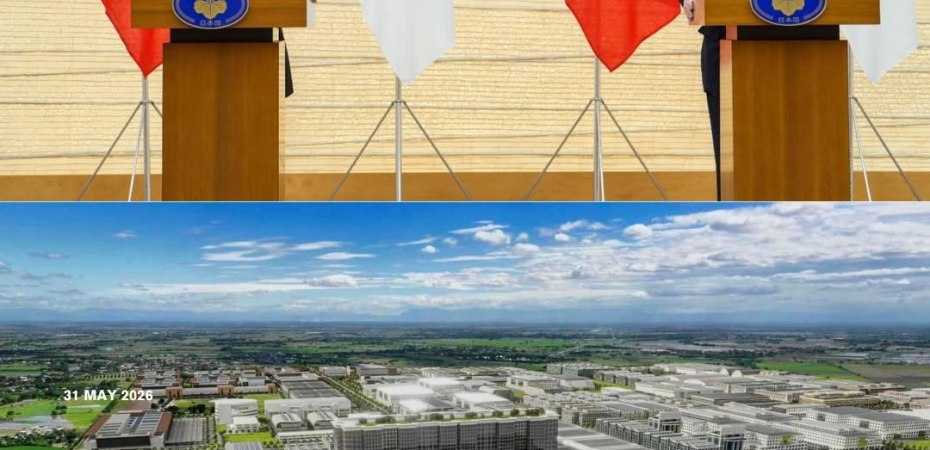
The Kilusang Magbubukid ng Pilipinas (KMP) condemned the Marcos administration’s renewed commitments to the Luzon Economic Corridor (LEC) during President Ferdinand Marcos Jr.’s recent state visit to Japan, warning that the project will accelerate land-use conversion, displace farming communities, and deepen foreign control over strategic Philippine lands and resources.
During his visit to Japan, Marcos secured approximately US$3.4 billion (around Php210 billion) in investment commitments from Japanese corporations and reaffirmed plans to further develop the Luzon Economic Corridor linking Subic, Clark, Manila, and Batangas. The administration has promoted the corridor as a “world-class economic hub” for infrastructure, logistics, energy, digital connectivity, and semiconductor supply chains.
According to KMP, the government is aggressively marketing the corridor as a development project while concealing its real costs to Filipino farmers and rural communities.
“These developments reveal the real character of the Luzon Economic Corridor – a massive foreign-driven economic project that threatens agricultural lands and farming communities across Luzon,” said Ronnie Manalo, KMP Secretary General.
“The Marcos government is selling the LEC as so-called development, but for farmers it means one thing: more land conversion, more displacement, and greater foreign control over our land and resources.”
“Habang ipinagdiriwang ng gobyerno ang bilyun-bilyong dolyar na pangakong investments mula sa Japan, ang mga magsasaka naman ang magbabayad ng tunay na halaga nito sa pamamagitan ng higit na kawalan ng lupa, kabuhayan, at seguridad sa pagkain,” Manalo added.
KMP noted that the corridor’s development model prioritizes industrial estates, logistics hubs, export-oriented manufacturing zones, digital infrastructure, energy facilities, and large-scale transport projects that require vast tracts of land, including productive agricultural areas.
The peasant group also linked the LEC to broader geopolitical and economic initiatives being advanced by the United States and Japan in the Indo-Pacific. “The Luzon Economic Corridor is part of a broader effort to integrate the Philippines into foreign-controlled supply chains for semiconductors, digital technologies, strategic minerals, logistics, and advanced manufacturing for war production,” Manalo said.
KMP said the LEC also forms part of the emerging framework known as Pax Silica, an economic and geopolitical order centered on semiconductor production, digital infrastructure, artificial intelligence, strategic minerals, and technology supply chains dominated by powerful states and multinational corporations.
“Sa ilalim ng Pax Silica, itinutulak ang Pilipinas na maging supplier ng murang paggawa, mga critical minerals, at estratehikong lokasyon para sa pandaigdigang supply chains ng Estados Unidos, Japan, at iba pang dayuhang kapangyarihan,” Manalo explained.
The group further warned that the economic agreements announced during Marcos’s Japan trip cannot be separated from expanding security and military cooperation among the United States, Japan and Philippines.
“Kasabay ng economic corridor ang pagpapalalim ng mga kasunduang militar at ang pagsasanib ng interes pang-ekonomiya at pangmilitar ng mga dayuhang kapangyarihan sa ating bansa,” Manalo said.
KMP called on farmers, workers, fisherfolk, indigenous peoples, and other democratic sectors to oppose projects under the Luzon Economic Corridor that threaten agricultural lands and rural livelihoods, and to continue advancing the struggle for genuine agrarian reform, food sovereignty, and national industrialization.
“Lupa para sa magsasaka, hindi para sa mga economic corridor at economic security zones ng dayuhan. Seguridad sa pagkain, hindi land conversion. Tunay na reporma sa lupa at pambansang kaunlaran, hindi dayuhang pandarambong.” ###

